Lifetime Citizen Portal Access — AI Briefings, Alerts & Unlimited Follows
COR3 tells transition committee billions are obligated for recovery but federal reviews and deadlines pose risks
Loading...
Summary
COR3’s executive presented updated counts of FEMA obligations and disbursements, defended working-capital advances used to mobilize projects, and urged continuity to secure federal time extensions and avoid de-obligation of funds.
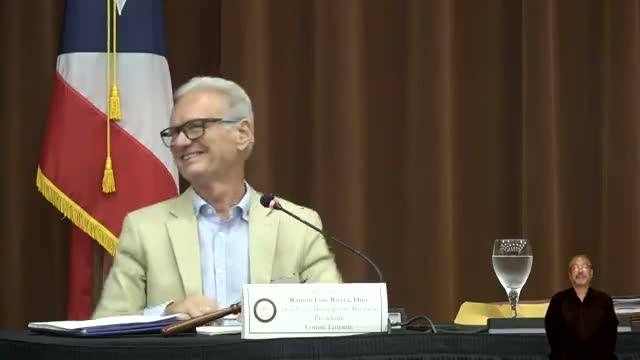
San Juan — Manuel Lavoe Rivera, director executive of COR3 (the Puerto Rico reconstruction office and authorized representative to FEMA), told the incoming transition committee that tens of billions in federal recovery funds are obligated for Puerto Rico’s post‑María reconstruction but that many projects remain in early stages of the federal approval process and therefore face risk if FEMA does not extend deadlines.
Lavoe Rivera told the committee that the total universe of FEMA‑related funds is often reported differently depending on which programs are included. “Cuando incluimos el universo completo de FEMA es casi cincuenta billones; ahora asistencia pública e mitigación de riesgo serían treinta y nueve,” he said, and he clarified that some high‑dollar programs (energy, aqueducts, education, public housing and the University of Puerto Rico) are tracked on separate metrics. He also warned that “Este dinero no lo tenemos físicamente, este dinero está en el departamento de salud federal,” describing how FEMA disburses by reimbursement and project‑by‑project transfers rather than by sending a stockpile of cash to the island.
Why it matters: COR3 described a portfolio of roughly 23,000 projects across planning, design, permitting and construction. That means many projects are “obligated” on paper but still must clear environmental and historic‑preservation reviews, engineering design, procurement and other steps before construction and final disbursement can occur. If FEMA denies extensions to the period-of-performance for unfinished projects, some funds could be de‑obligated, COR3 said.
COR3 summarized the office’s key tools and performance. The agency has used a Working Capital Advance program that provides subrecipients a 25% advance to start work and has expanded internal technical assistance so municipalities receive direct support on disbursements rather than relying on contractor intermediaries. Lavoe Rivera highlighted improvements in project counts and disbursements over the past four years and pointed to transparency upgrades and FEMA audits with low reported error margins.
Committee members pressed COR3 on numbers shown in the office’s public portal, apparent discrepancies across reports, and the distribution of projects between municipalities and central agencies. Lavoe Rivera said the numbers are accurate for their defined scopes and that differences arise from program definitions and reporting filters; he agreed to provide updated tables and to circulate lists of priority projects the incoming administration should protect if extensions are at risk.
On federal deadlines and extensions, Lavoe Rivera said COR3 has requested a multi‑year extension (typically two years) but FEMA granted an initial six‑month provisional extension while it evaluates projects. He said that, while FEMA has authority to deny extensions, COR3 has successfully secured extensions to date and that the office is preparing project‑level justifications to support additional time requests.
The committee asked about the role of outside contractors and whether federal procurement rules limit local firms’ opportunities. COR3 said it supports local participation and that competitive processes allow local firms to bid, but firms must meet federal and state eligibility criteria; COR3 also noted efforts to reduce contractor dependence and grow internal staff capacity.
COR3 answered questions about specific categories (Prepa/LUMA claims, emergency funding and the state emergency fund that is designed as a line of credit), and provided examples of strategic projects to prioritize — including energy mitigation, the Mayagüez pier and other regional infrastructure — along with a projection that many larger projects will take four to ten years and that a reconstruction “peak” is expected in the mid‑2020s.
The committee asked COR3 to deliver in writing: (1) updated portal tables through the latest dates available; (2) a prioritized list of projects the new administration should protect if funding is threatened; and (3) a set of recommendations to improve local firms’ ability to compete in RFPs. COR3 agreed and the hearing recessed.
No formal votes were taken. The committee scheduled additional agency presentations and requested that future updated materials be shared at least one day in advance of testimony.