Lifetime Citizen Portal Access — AI Briefings, Alerts & Unlimited Follows
Transition committee: Missing data, costly contracts and health gaps leave Puerto Rico corrections 'flying blind'
Loading...
Summary
Committee reviewing the Department of Correction and Rehabilitation found numerous outdated or missing statistical reports, questioned use of ARPA and FEMA funds for recurring pay items, flagged a private-guard contract billing with no inmates, and raised health and oversight concerns including opioid deaths and the Hermes Ávila Vázquez case.
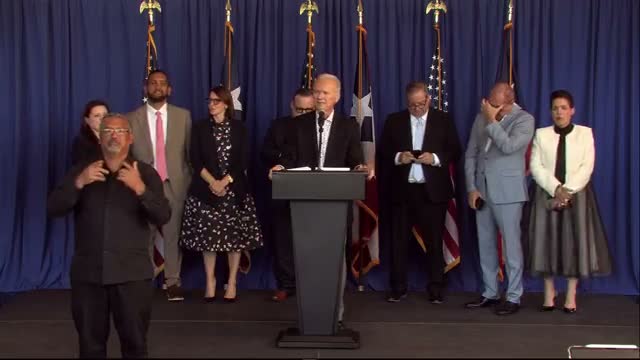
A transition committee reviewing Puerto Rico’s Department of Correction and Rehabilitation told the agency on Nov. 25 that critical data needed to evaluate prison operations, rehabilitation and public-safety outcomes are missing or years out of date, leaving the incoming administration and lawmakers without the evidence needed to plan policy or budget priorities.
Committee members said repeated requests for monthly and topic-specific reports — including inmate profiles, juvenile and women’s profiles, escape-and-capture logs, drug-detection results, disciplinary measures, inmate deaths and recidivism studies — were not produced despite assertions the materials were 'ready' for 2024. "No nos pudo dar un solo detalle de esas áreas," Speaker 1 told the committee when the secretary failed to deliver the files on request.
Professor Jorge Colbert Toro, who led a detailed review of the department’s online records, listed specific gaps: the inmate profile was last updated in January 2019, the juvenile profile in 2016, the women’s profile in 2015, drug-test records through 2017 and the latest inmate-deaths report in 2021. He said those lags made it impossible to verify claims that correctional programs are reducing recidivism. "Estamos a ciegas," Colbert Toro told members, noting the absence of empiric data undermines evidence-based policy and funding requests.
Budget and contract questions
Committee members said the department used American Rescue Plan Act (ARPA) funds to raise correctional-officer pay without a written sustainability plan. Speaker 1 raised a near-term funding cliff: ARPA funds cited for raises expire in December, prompting concern about absorbing recurring costs into the central government budget for 2025.
Separately, a committee member described a contract signed Aug. 1 for private guards at the Salinas penitentiary that continued to bill while no federal inmates remained at the facility after a July 23 transfer. The member said contractors may have billed roughly $465,000 "for guarding the air," and that no formal contract amendment had been filed to reflect the changed population.
Health and safety concerns
Health-focused questioning flagged 67 reported opioid-related deaths, mostly attributed to fentanyl, inside correctional facilities and noted naloxone (Narcan) is reportedly available only to staff, not to incarcerated people. "Narcan no está a la disposición de los confinados," Speaker 6 said; committee members stressed correctional-health guidance recommends immediate availability because bystanders frequently need to administer the antidote.
Case reviews and oversight
The committee also revisited the high-profile case of Hermes Ávila Vázquez, noting the department did not impose disciplinary measures and did not cancel a contracted medical services agreement after an internal audit. Several members criticized the quality of the auditing process, noting that evaluations used to inform contract or administrative actions were prepared by people who were not medical doctors or licensed lawyers. Speaker 5 called the inquiry "pro forma" and urged deeper investigation.
Independence of investigations and next steps
Multiple speakers argued the pattern of internal complaint handling — the committee cited that roughly 98% of investigated complaints did not yield action — shows the need for independent, external investigation capacity. Committee members discussed reviewing Law 25 (the statute referenced as enabling a particular inmate release) and possible regulatory conflicts that could require legislative or regulatory changes.
What happens next
The committee asked the department to deliver the missing reports and documentation to the Institute of Statistics or directly to the committee by the end of the transition period; it also signaled it will pursue further inquiries into contracts, the use of ARPA and FEMA funds for recurring pay, health protocols including naloxone availability, and whether to refer particular cases for external review. The session closed after members said they would continue oversight and expect more documentation before Dec. 31.