Get Full Government Meeting Transcripts, Videos, & Alerts Forever!
Get email alerts on the University Infrastructure Fema topic
No spam. Unsubscribe anytime.
UPR president details enrollment gains, FEMA pipeline and infrastructure needs amid budget cuts
Summary
University of Puerto Rico leaders reported a modest enrollment uptick to ≈42,000 students after admission‑policy changes, described an obligation of over $1 billion in FEMA projects, and outlined a 10‑year infrastructure plan that prioritizes buildings essential to academics and research.
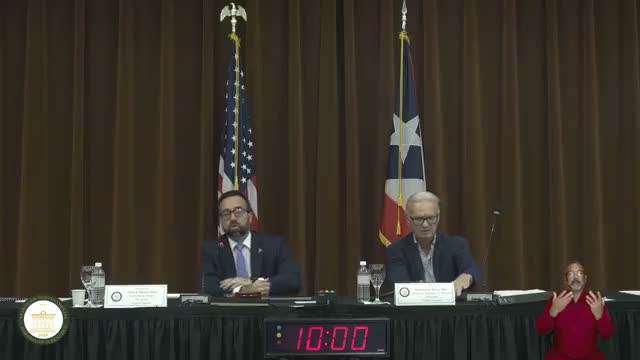
University of Puerto Rico President Dr. Luis Ferrao Delgado told the transition committee that UPR has stabilized a recent enrollment decline and has a growing pipeline of FEMA‑funded repair and reconstruction projects, but continues to face a structural fiscal shortfall driven by the plan‑of‑adjustment reduction in central government support.
Dr. Ferrao said total system enrollment is roughly 42,000 students, reversing several years of decline after the university revised its admissions weighting to de‑emphasize standardized College Board scores and to expand alternative admission pathways. The university reported an academic portfolio of roughly 518 program offerings and said 1,423 faculty hold doctoral degrees. University officials said the change in admissions policy was intended to expand access for students from public schools and to arrest a multi‑year enrollment slide.
The president also reported a substantial FEMA pipeline for the university. He said 188 FEMA project works (PWs) have been initiated and that the university has more than $1 billion in FEMA‑obligated projects across recintos; staff described 8 projects under construction and 16 ready for public subasta (procurement). They cautioned that FEMA reimbursements arrive after insurance and other offsets and that project timing can span multiple years; the university has submitted an extension request to FEMA for multi‑year execution of a broader project set.
On infrastructure and housing, the university presented a ten‑year plan to address deferred maintenance and capital needs. Officials noted a maintenance funding gap (recommended $3 per sq. ft. vs current ~$1 per sq. ft.), and described targeted investments including residence‑hall projects (Recicampus inner residence rebuild estimated at $30M) and large FEMA‑funded campus repairs prioritized by academic and research function. Committee members pressed for a programmatic list of projects and timelines; university staff agreed to provide project status lists and the schedules for subasta and construction phases.
The university also discussed expansion of online offerings and targeted degree programs. Staff said about 23 online certificates/degrees were active (plus planned additions in medical sciences) and that the institution is developing stackable credentials and specialized campus strategies to match labor‑market needs. Officials noted the fiscal reality: central government contributions fell under the plan of adjustment and the UPR must expand non‑appropriated revenue streams and donor fundraising while protecting academic quality.
Committee members requested several follow‑ups: a detailed breakdown of FEMA disbursements and project statuses, a roster of programs proposed for online delivery and expected ROI, and enrollment‑by‑campus metrics showing retention and graduation rates. The university committed to provide the requested documentation to the committee in writing.