Get Full Government Meeting Transcripts, Videos, & Alerts Forever!
Get email alerts on the Education Special Education topic
No spam. Unsubscribe anytime.
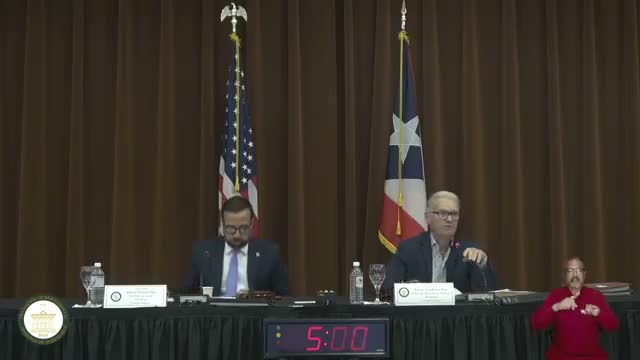
Committee presses Education officials on surge in special‑education enrollment and IDEAR decentralization pilot
Summary
Transition committee questioned education officials about a reported large rise in special‑education enrollment, reimbursement and eligibility processes, recruitment of coordinators, and the department’s multi‑year decentralization plan (IDEAR) with a Ponce LEA pilot aiming for certification by July 2025.
Transition committee members on day seven pressed the Department of Education about what officials called a significant increase in students receiving special‑education services and how the department plans to control costs and service quality. Lic. César Alvarado opened the questioning, citing department figures he said show a consolidated education budget of about $584 million and a student population near 236,000, and reporting that roughly 44.5 percent of that population was described as receiving special education services.
Department staff said intake and eligibility are driven by evaluations and teacher or parent referrals and emphasized that an evaluation alone does not automatically place a student in the special‑education program. Officials described steps now taken to train staff who determine eligibility, and noted a shortage of specialists in some districts that can complicate accurate diagnosis. The department acknowledged resource constraints: related services are offered across regions, and officials said roughly 82 percent of services related to therapies are being provided while capacity gaps remain.
On financing, officials briefed the committee about remedio provisional spending and other federal allocations. They reported remedio provisional program expenditures of about $46 million in the current year, compared with $124 million the prior year, and that $112 million in non‑recurring federal funds and about $22 million in state funds were assigned for remedio provisional. Committee members asked for detailed, itemized follow‑ups about these line items and about which federal grants were supporting particular services.
Recruitment and staffing also drew sustained attention. The department said the current budget funded recruitment for 20 special‑education coordinators and that 17 had been hired so far; the remaining vacancies were open. Officials said the coordinator job description requires, at minimum, a bachelor’s degree in special education. Committee members and some participants raised concerns that moving teachers into coordinator roles could reduce classroom capacity unless those slots are backfilled and that incentive structures should be considered so experienced teachers take coordinator roles without harming instruction time.
Committee members further questioned the department about its reimbursement and digital intake system. Parents and staff described problems uploading documents and navigating the online portal; the department said it implemented system changes about six months earlier and has been training school directors to assist parents, but acknowledged the portal still requires additional improvements and that some parents require in‑person help to submit claims. The department reiterated the 30‑day regulatory requirement to guarantee services, which it said remains a major operational constraint when resources are scarce.
On decentralization, department officials outlined IDEAR (the implementation management office for decentralization), described benchmark studies across jurisdictions (including Hawaii among others), and said the administration is pursuing a multi‑year transition to local education agencies (LEAs). The department said the plan contemplates as many as 11 LEAs across the island and that Ponce is the pilot region; staff reported hiring roughly 62 people for Ponce, delivering dozens of trainings and working toward a target certification as an LEA in July 2025, subject to budgets and approvals from the Office of Management and Budget and the Fiscal Oversight Board. Officials emphasized ADEAR/IDEAR will not fully detach regions from the central office but will shift many routine approval processes to regional offices to reduce multi‑step procedures.
Committee members requested follow‑up documents, including the department’s detailed metrics for special‑education compliance and eligibility, a breakdown of remedio provisional and federal fund expenditures, the staff recruitment plan and vacancy list, and technical details on the reimbursement portal’s recent changes and outstanding fixes. The session closed with the department agreeing to submit those items in writing.