Lifetime Citizen Portal Access — AI Briefings, Alerts & Unlimited Follows
House committee hears CASP faces 13,689 active cases and seeks more staff, funding
Loading...
Summary
At a public hearing on Oct. 22, the House Committee on Public Safety, Science and Technology examined CASP’s backlog and staffing limits. CASP reported 13,689 active employment cases and asked for more examiners and a larger recurring budget; lawmakers pledged follow-up with budget authorities.
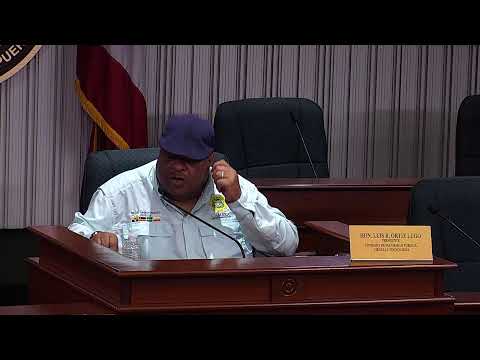
The Puerto Rico House Committee on Public Safety, Science and Technology convened on Oct. 22 to review House Resolution 1125 and hear whether the Comisión Operativa del Servicio Público (CASP) has the capacity to process employee appeals, promotions and transfers. CASP officials told the committee they face a large backlog, constrained staff and budget limits.
Laudelino Francisco Molero Clash, identified in the record as president of the Comisión Operativa del Servicio Público, told the committee the commission had ‘‘teníamos casos activos trece mil seiscientos ochenta y nueve casos’’ as of Oct. 15 and described a breakdown of those files into appeals, arbitration and other special procedures. He told lawmakers the commission’s current roster includes eight examining officers for appeals, six career arbitrators and four contracted arbitrators, and that investigative capacity has only recently increased by two hires.
Why it matters: CASP adjudicates personnel disputes under Puerto Rico’s public labor statutes; delays or under‑resourcing can leave public employees waiting years for final resolution. Committee members repeatedly pressed CASP on the causes of delay and what resources would be required to reduce elapsed times.
CASP officials attributed delays to several concrete factors: incomplete filings that require follow-up, the inherently complex nature of public labor law, turnover in adjudicators and a historic shortage of permanent staff. ‘‘Nosotros operamos con dificultad, pero operamos,’’ Molero Clash said when rebutting suggestions the commission was entirely inoperable.
On finances, CASP reported the fiscal-year 2025 budget at $2.8 million, of which about $2.3 million is payroll, $356,000 operational and roughly $148,000 listed for pay‑go retiree payments. Molero Clash said the commission routinely must prepare a higher “optimal” budget request but then reduce it to the baseline the Office of Management and Budget (OGP) and the Financial Control Board permit.
CASP recommended a phased increase in career staff rather than reliance on short-term contracts; the agency estimated it would need roughly ten additional examining officers and more arbitrators to approach case-per-adjudicator ratios comparable with courts. Officials said contracting for professional services has been used selectively to manage spikes in workload—six contract arbiters were hired recently but two resigned for personal reasons, leaving four active contractors.
Committee members signaled they would press for legislative follow-up. One lawmaker said they would meet with the House Budget Committee, the House speaker and the chair of the chamber’s labor-relations committee to explore options for recurring funding and other remedies.
The hearing closed with CASP reiterating that much of the commission’s data is public and that consolidated status conferences have already begun to reduce delay in select dockets. The committee set no formal vote at the hearing but said members would pursue additional budget conversations in the coming weeks.