Get Full Government Meeting Transcripts, Videos, & Alerts Forever!
Get email alerts on the False Albacore Bonito topic
No spam. Unsubscribe anytime.
DMF moves false albacore and bonito bag/size options to public hearing after broad public support
Summary
DMF staff proposed a combined 5‑fish possession limit (with alternatives such as a 16‑inch minimum) and will take a range of options for false albacore and bonito to public hearing this winter after widespread support by guides, retailers and anglers during public comment.
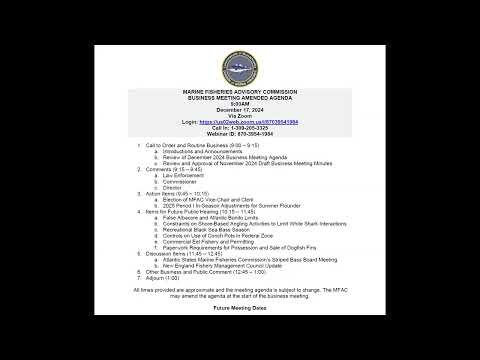
DMF presented proposed conservation options for false albacore and bonito at the Dec. 17 Marine Fisheries Advisory Commission meeting and will take multiple alternatives to public hearing this winter, including a staff‑preferred 5‑fish combined possession limit and a minimum‑size alternative.
Director Dan McCarron and staff framed the action as precautionary: "So we're proposing a 5 fish, per person possession limit for those two species combined," Dan said, while noting staff could add minimum‑size alternatives (one option discussed was a 16‑inch minimum) to the public‑hearing packet. Staff also signaled potential small exemptions for bona fide mackerel jigging operations or tournament situations where species are difficult to distinguish.
Public commenters — charter captains, guides and tackle‑shop owners — gave near‑unanimous support for a suite of options. Anthony Frederick of the Guides Association said the industry appreciates Massachusetts’ "proactive measures" and urged inclusion of both bag and size options; several captains testified that bonito/albie fisheries make up 30–40% of their trips and that precautionary measures would help filling gaps as striped bass and bluefish pressures grow.
DMF staff said the department will publish the hearing package, include both bag‑limit and size‑limit alternatives for comment, and consider exemptions (mackerel jigging, tournaments, and shore v. boat possession distinctions) where enforcement and practicality require it. The department expects public hearings in late February or early March and final recommendations by late March or early April 2025.