Get Full Government Meeting Transcripts, Videos, & Alerts Forever!
Get email alerts on the Accounts Receivable topic
No spam. Unsubscribe anytime.
Committee approves receivable write-offs after questioning collection practices and small-company balances
Summary
The Committee approved second-quarter receivable write-offs after members pressed staff on collection steps, account flagging and why small balances for large companies (e.g., CVS, Hertz) appeared on the list.
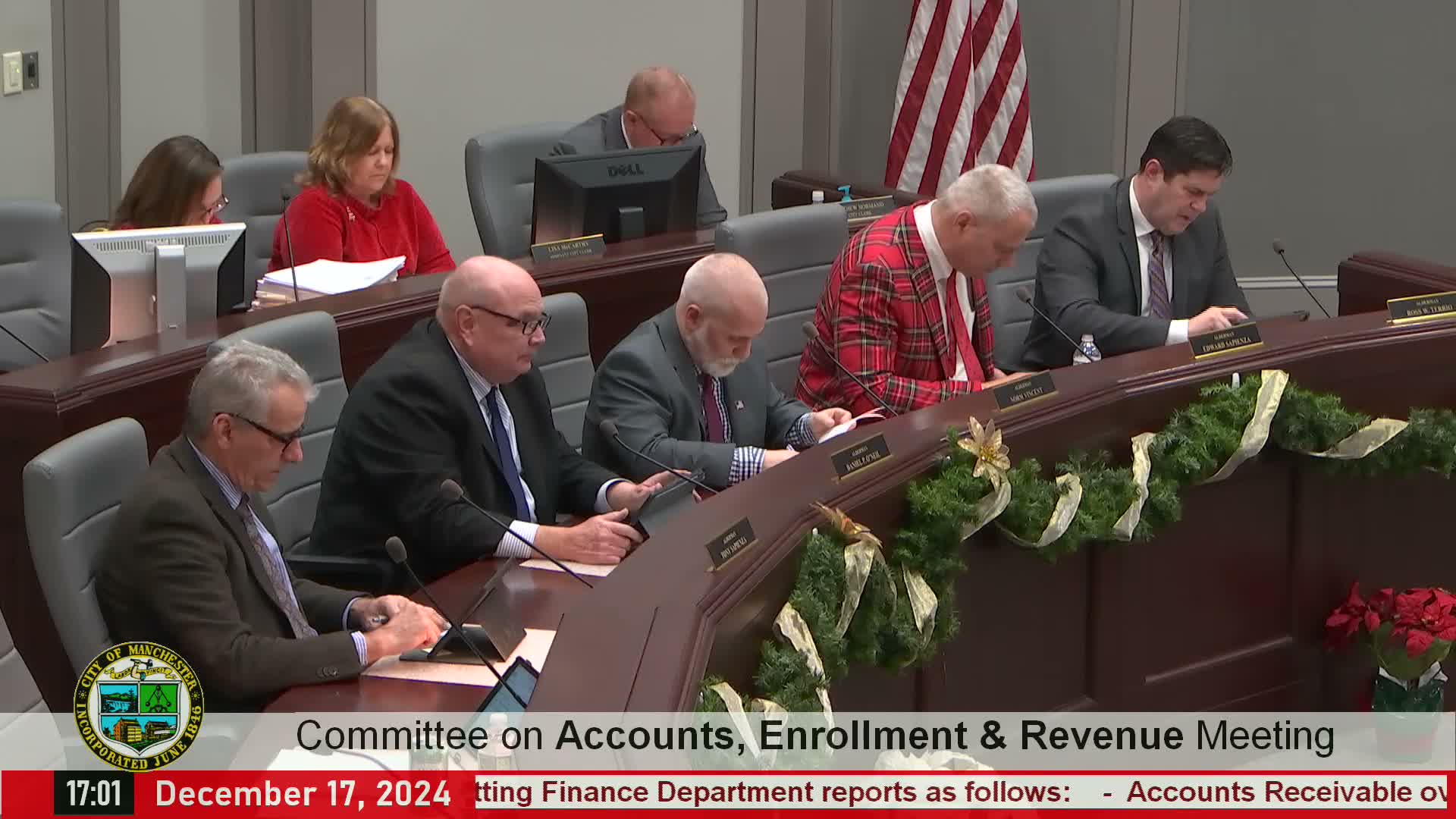
The Committee on Accounts, Enrollment and Revenue Administration voted to accept a request to write off a set of second-quarter outstanding receivables, after members questioned collection practices and whether new financial software will help flag indebted parties.
The request, submitted by the finance department, was described by staff as routine. "This is also just very routine. I don't really have any particular comments on any account unless you guys had a question," said Kim LeBlanc, financial analyst, introducing the accounts receivable and aging report.
Committee members pressed staff about how and why specific accounts were selected for write-off. Chief Flores, answering questions about the Fire/Rescue billing, said repeated attempts were made to collect and that the city solicitor—s office advised writing some small balances off: "For CVS, made a number of attempts. We billed them throughout the years, and like Kim said, it went back to the city solicitor's office. They decided to write it off." An alderman noted the small size of some balances and said, "I believe that a company that large should be able to pay a $135 bill."
LeBlanc outlined the collections workflow: departments pursue billing, accounts may go to a collection agency, and "then those solicitor's office will take it under advisement if it's over $1,000," she said. She added that the finance department places flags on accounts after write-off so that, if the parties later seek to do business with the city, the history can be checked.
Members also discussed operational issues that complicate collection, including weigh-station procedures at the municipal drop-off center and the recent acceptance of credit cards at DPW facilities. One member urged requiring prepayment for services when feasible, including police details, to reduce future write-offs.
After discussion the committee moved and seconded acceptance of the write-off request; the chair called for the vote and the ayes carried.