Get Full Government Meeting Transcripts, Videos, & Alerts Forever!
Get email alerts on the Planned Development topic
No spam. Unsubscribe anytime.
Manchester draft limits planned developments for detached single‑family housing, brings back cluster subdivisions
Summary
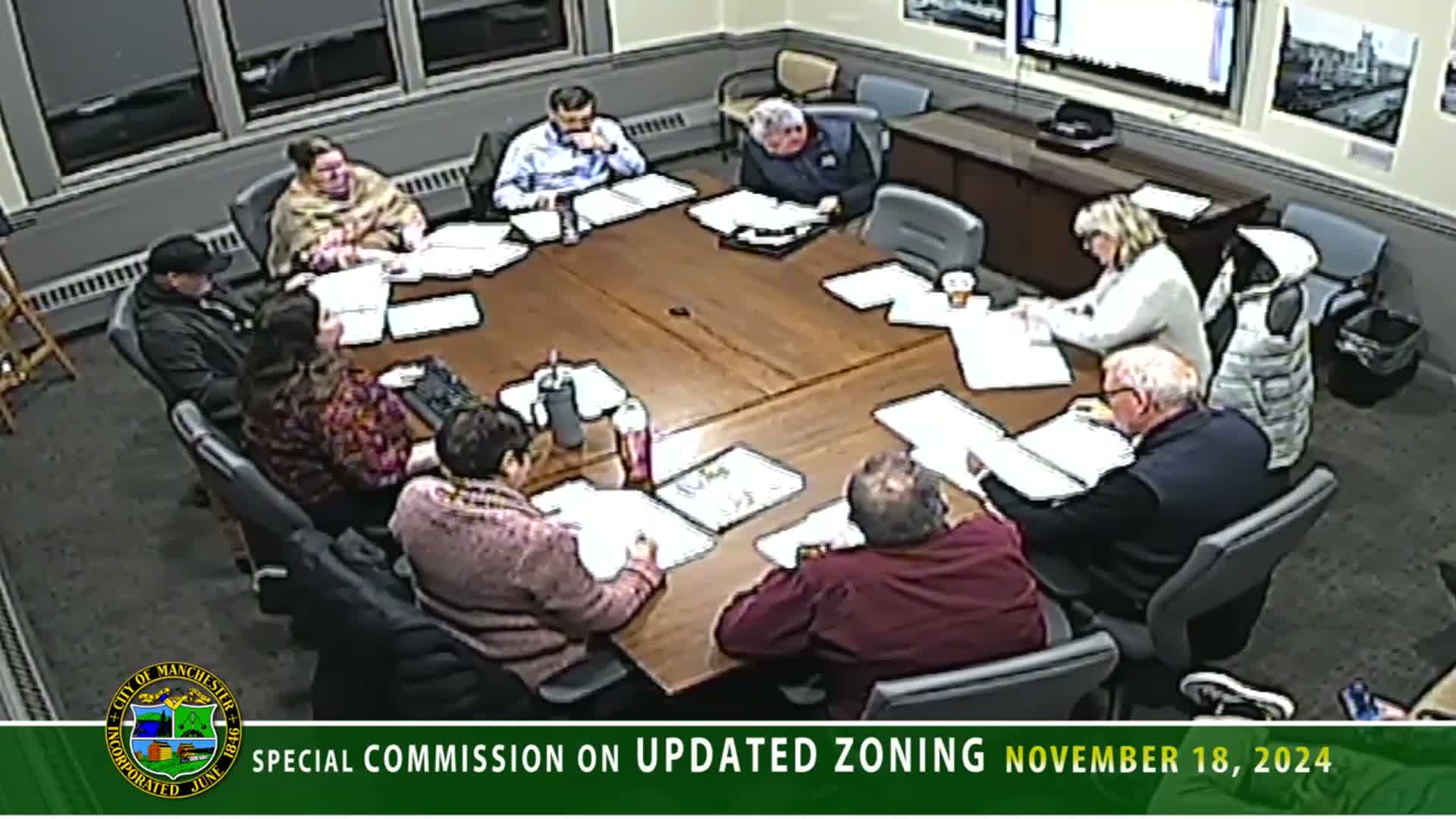
Staff presented a rewrite of Section 6 that would narrow where planned developments (PDs) are allowed—prohibiting PD‑style detached single‑family condos—and reintroduce cluster subdivisions with standards and shared open‑space requirements; the draft preserves ADU allowances but warns HOA rules may still restrict them.
Presenter introduced changes that would restrict where planned developments (PDs) can be used and remove PD eligibility for detached single‑family neighborhoods, while offering a renewed cluster‑development option for some residential rezoned areas. The proposal is intended to reduce homeowner confusion that has arisen when condominiumized PDs leave residents unclear about road ownership, setbacks and maintenance responsibilities.
Why it matters: staff said PDs that function like condominium projects have generated repeated public inquiries when new owners discover private ownership of roads and shared maintenance obligations. The cluster alternative would allow smaller owner‑occupied lots to be created while preserving open space, reducing road and utility construction costs and protecting environmental corridors.
Key provisions and implementation details: the draft limits PDs to certain districts (staff singled out multifamily and business corridors as appropriate locations) and would require cluster subdivisions in specified RS and R1A areas to maintain an aggregate average acreage comparable to the current lot‑size requirements (presenter described keeping total acreage equivalent while allowing smaller individual lots and shared common open space). Accessory dwelling units (ADUs) would remain allowed in cluster developments as accessory structures, but city staff noted homeowners associations could still prohibit ADUs by private covenant.
Discussion and tradeoffs: commissioners and staff debated whether to allow clusters in R1B (where existing lot sizes and topography leave little undeveloped tracts). Participants explored minimum tract and lot sizes and whether allowing cluster subdivisions in R1B would yield meaningful units given the limited available land. Staff emphasized the option could be tailored with minimum track/lot thresholds to limit unintended density increases.
Next steps: staff will return with redlined language and numeric density calculations to show realistic yields under townhouse and small‑multifamily building types. The proposed direction does not itself change property ownership rules; private covenants and HOA governance remain separate legal instruments that can limit uses permitted by zoning.
Ending: the commission asked staff to refine minimum tract and lot sizes for cluster subdivisions and to model yields to inform whether R1B should be included.