Get Full Government Meeting Transcripts, Videos, & Alerts Forever!
Get email alerts on the Zoning Survey topic
No spam. Unsubscribe anytime.
UNH survey shows homeowner-heavy turnout, strong concern about housing costs and mixed views on zoning
Summary
Staff presented results from a UNH Survey Center mailing (1,499 responses) showing widespread concern about housing affordability, majority support for some smaller multifamily types and mixed attitudes on parking and mixed-use zoning; staff and commissioners discussed how to weigh citywide goals against ward-level preferences.
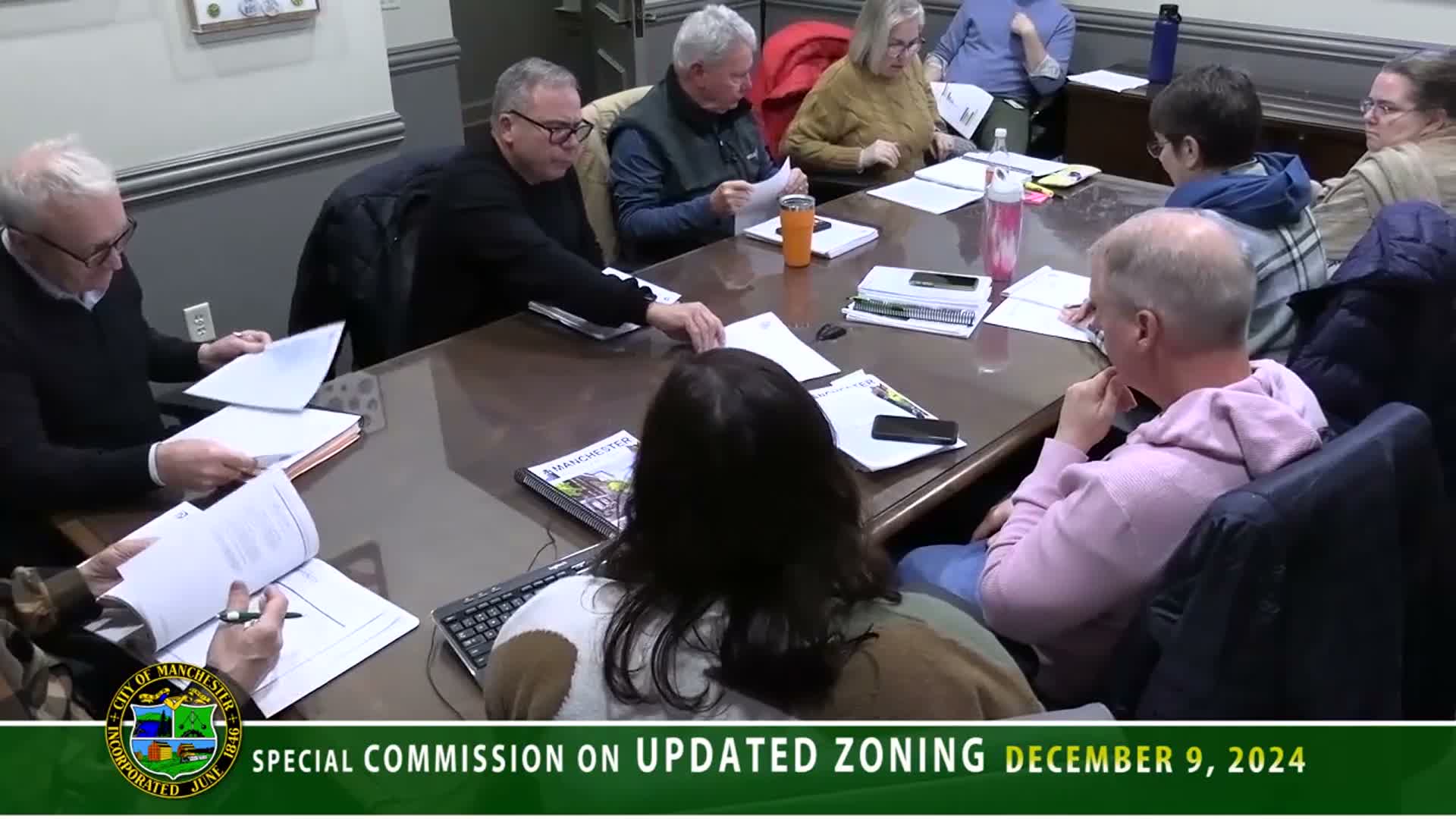
City staff presented findings from a 2024 ordinance survey conducted by the University of New Hampshire Survey Center, telling the Manchester City Commissions on Dec. 9 that 1,499 residents responded to a mailed questionnaire sent to about 56,000 households. The presentation, led by Speaker 2, said just over 1,000 respondents entered a unique identifier that let the survey center map many responses to proposed zoning districts.
The survey showed notable demographic skew: Speaker 2 said roughly 77% of respondents were homeowners and that older residents (55 and older, especially 65+) were overrepresented. That distribution, staff warned, can shape answers to questions about parking and development priorities.
Among the headline findings, Speaker 2 said the most common open-response themes were affordable housing, parks/green space and parking. On a direct measure of perceived affordability, Speaker 2 pointed to figure 11a, saying 74% of respondents described the price of housing in Manchester as “not very reasonable” or “not at all reasonable.” Commissioners agreed zoning changes are not an immediate remedy but could increase housing supply over time.
On building types, staff reported higher acceptance for smaller-scale multifamily forms: for example, Speaker 2 said duplexes and apartment houses scored relatively high on fit-in-neighborhood questions, while stacked flats and larger multi-family forms were less acceptable to many respondents. Staff noted the survey materials included illustrations to help respondents, but cautioned that some confusion about terms remained.
The presentation also flagged a petition (about 70 signatures) that urged broader upzoning and removal of parking standards; staff said petition responses are treated as part of the public input but may include non-Manchester addresses and require filtering.
Speaker 1 and other commissioners urged staff to combine the UNH survey results with a forthcoming UNH Cooperative Extension report on ward meetings to create a fuller picture before making final zoning-boundary decisions. Speaker 2 said roughly 1,367 responses could be matched to proposed zoning districts (about 90% of respondents), but that some small-n cells (notably BC1, n=19) should be treated cautiously.
The commission reserved final map changes and specific zoning decisions for later meetings after digesting the additional report and the open-response coding staff are preparing.