Get Full Government Meeting Transcripts, Videos, & Alerts Forever!
Get email alerts on the Utility Rates topic
No spam. Unsubscribe anytime.
Perry officials outline utility rate options as residents warn of hardship and business loss
Summary
City officials presented options to address a multi-million-dollar water and sewer shortfall, citing a 69% initial calculation to cover capital and transfers but noting offsets and potential phased approaches; residents raised affordability, low-income hardship and accusations of department misconduct.
City of Perry leaders said the city must raise utility rates to fund urgent water-infrastructure repairs and other capital needs, and asked residents for feedback on how quickly to implement increases.
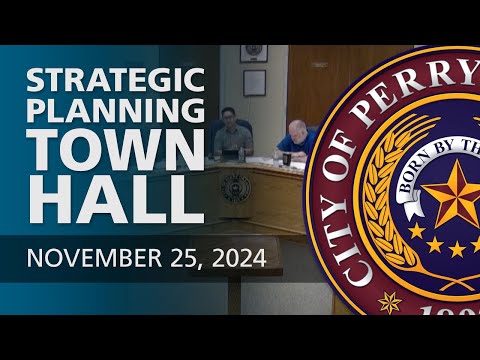
At a televised town hall, city manager Nate (Speaker 4) told residents the water and sewer operations each run about a $1.4 million annual deficit. He said a roughly 52% increase would be needed for the utilities to break even; the higher 69% figure cited in early reporting, Nate said, reflects additional needs — capital projects, debt service and transfers to the general fund for police, fire, library and other services — not only operations. "If we just break even, that's not enough; we need to fund projects and help the general fund," Nate said.
Council members and residents pressed for alternatives. Mayor (Speaker 1) and several councilors said they had asked Nate to return with options that would spread increases over time. One councilor said changes would not be implemented before the holidays and were likely to take effect next year. "We asked him to take another look at it and present options for doing this over time," the mayor said.
Residents questioned the scale and timing of any increase. Several attendees said a steep, immediate rise would disproportionally hurt fixed-income households and small businesses and could accelerate out-migration. Louisa Hunt (Speaker 15), a social-services worker of 42 years, gave a case example of a household with $1,035 monthly income and $600 rent, saying an increased water bill could leave the household with only about $33 for other expenses. "These people are going to be devastated," she said.
Others warned of a broader economic effect. Multiple residents described Perry as already struggling to attract and retain residents and businesses, and said sudden rate jumps could worsen vacancies. One resident called a large, immediate increase a path toward a "ghost town." Councilors responded that the city had gone long periods without matching inflation and that deferred maintenance has created the current urgency.
Nate outlined financing and offset options. He said the city is seeking external help — including a principal-forgiveness loan program (up to $1 million) and a $600,000 CDBG grant — and identified roughly $1.1 million in other near-term capital needs across departments, from a bucket truck to water-plant repairs. He also described the city's current reserves: $1.25 million in an unrestricted rainy-day fund and other restricted funds in CDs earmarked for projects (for example, the hospital renovation).
Councilors and residents debated whether to spend the rainy-day funds on capital. Nate said the $1.25 million could be tapped but that doing so would consume roughly a month of city operating cash and would require a plan to replenish reserves. Councilors asked for scenarios that would blend some immediate funding with phased increases to avoid pushing vulnerable households over the edge.
The meeting also surfaced other issues tied to utilities and local services. Tom Tremblay (Speaker 12), a longtime resident, raised concerns about local health care quality and empty buildings; another attendee (Speaker 7) alleged thefts and improper equipment use within the water department, a claim Nate said he would investigate and asked to discuss after the meeting.
Council members emphasized transparency and community input. They said the original public framing of the proposal had been confusing — an initial public message that suggested a single across-the-board 69% increase did not reflect the nuance of the council's review — and pledged to post budget materials and return with clearer options. One councilor urged focusing rate increases on water and sewer while minimizing changes to electric rates, which the city’s review found did not require the same increase.
Next steps: the city asked the administration to model phased-rate scenarios, show the risks of slower implementation, and present options at upcoming council meetings. No formal vote or ordinance was taken at the town hall.