Get Full Government Meeting Transcripts, Videos, & Alerts Forever!
Get email alerts on the Commission Organizing topic
No spam. Unsubscribe anytime.
Permanent Commission on the Status of Latinos and Latinas elects officers, outlines staffing and budget plans
Summary
In a brief organizational meeting members nominated and unanimously approved leadership for the new Permanent Commission on the Status of Latinos and Latinas, reviewed an initial $150,000 line item plus a shared $200,000 pot, agreed to seek an executive director and interim administrative support, and set a regular monthly meeting date.
Members of the Permanent Commission on the Status of Latinos and Latinas used a short organizational meeting to elect internal leadership, confirm an initial budget allocation and set early staffing priorities.
The commission moved and seconded nominations for three officer roles. A motion to nominate "Aneida" as chair was made and seconded and approved unanimously. A separate nomination for vice chair (named variously in the transcript as "Soyla"/"Soila") was seconded and approved unanimously. A volunteer for treasurer — later referenced in the meeting as Doctor Rivera — offered to serve and was approved unanimously.
The session’s facilitators told members the commission has a dedicated line item of $150,000 and that the three commissions created under the police reform legislation share an additional $200,000 to be divided among them. "The commission does have a line item for $150,000," a facilitator said during the meeting. Members discussed using those funds for an executive director, part‑time or intern support, and routine administrative costs such as digital services.
On staffing, members agreed to pursue hiring an executive director while relying on Sasha Severino, a legislative aide assisting representative Andy Vargas, to provide interim administrative support and meeting facilitation until an ED is hired. A facilitator proposed an introductory conversation with the executive director and chair of the Commission on the Status of Persons with Disabilities to learn how that commission has organized operations and staffing.
Members emphasized the importance of building on existing research rather than starting from scratch. Participants cited existing work from UMass Boston, the Gaston Institute, Amplify Latinx, Latinos for Education and MassBudget as sources the new commission could use to create an initial report or synthesis.
On authority and reporting, members clarified the commission is intended to operate independently; its statutory reporting obligations require submissions to the Legislature and the governor. A commissioner noted a statutory requirement for a report by next summer, and participants discussed whether the timeline is feasible absent an executive director and staff, concluding year one could focus on synthesizing existing material and identifying priorities for deeper work.
The commission agreed to a standing meeting schedule on the second Wednesday of every month; the next meeting was set for December 11. Staff were asked to circulate calendar invitations and Zoom links.
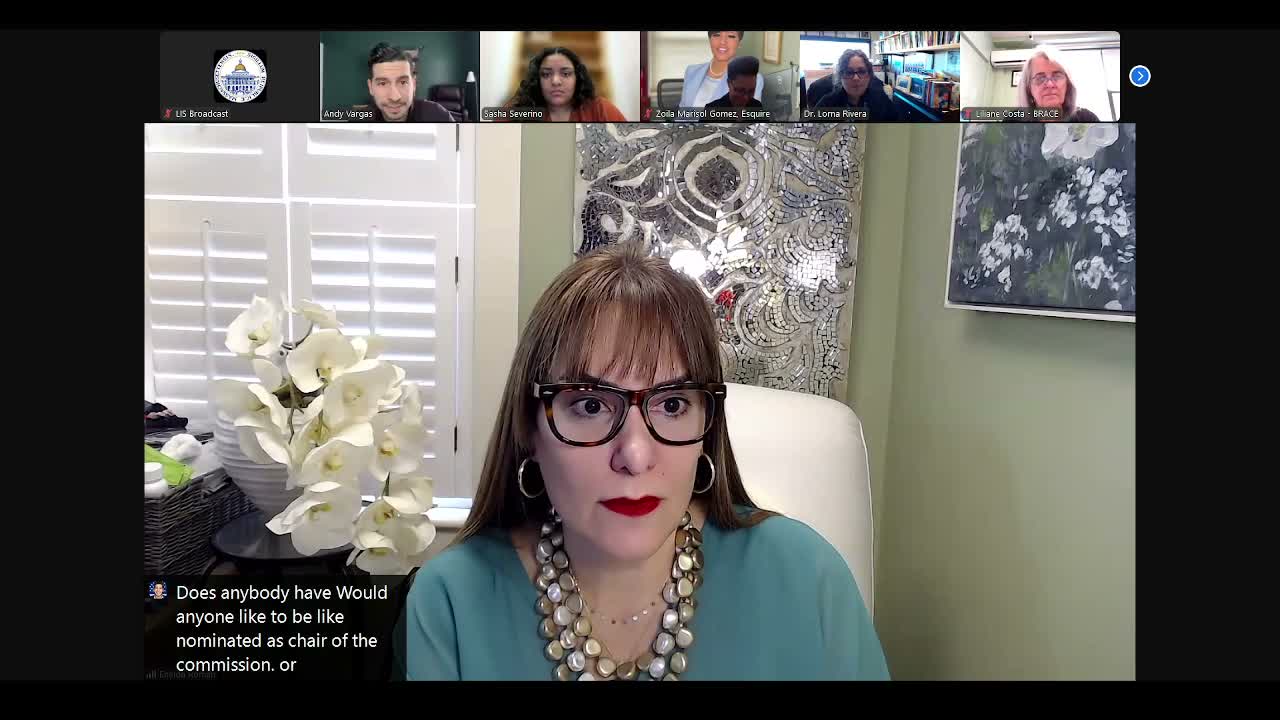
The meeting featured brief member introductions from representatives and community leaders across the Commonwealth, including Eneda Roman (president and CEO of Amplify Latinx), Professor Lorna Rivera (UMass Boston and director of the Gaston Institute), Soila Gomez (immigration attorney, Greater Lawrence), Rita Mendez (state representative, Brockton), Andy Vargas (state representative, Haverhill), Sasha Severino (legislative aide), Lilian Coste (Bridal American Center, Framingham), Norielis (district 3 representative in Chelsea and council president), and State Representative Fernando Ramos (Springfield). The meeting adjourned after the scheduling confirmation.
Next steps: hire an executive director, confirm interim administrative support and office arrangements, reach out to existing commissions and research partners for orientation, and prepare a plan for a first-year report or synthesis of existing research.