Get Full Government Meeting Transcripts, Videos, & Alerts Forever!
Get email alerts on the Utilities Rates topic
No spam. Unsubscribe anytime.
Columbus staff propose 2025 water, sewer, storm and power rate increases with expanded low‑income discounts
Summary
Department of Public Utilities outlined recommended 2025 rate changes — water +7%, sewer +6%, storm +1% (aggregate ~6% bill impact) — and proposed raising low‑income discounts from 20% to 25% and eligibility from 150% to 200% of federal poverty level; advocates urged stronger public engagement before final passage.
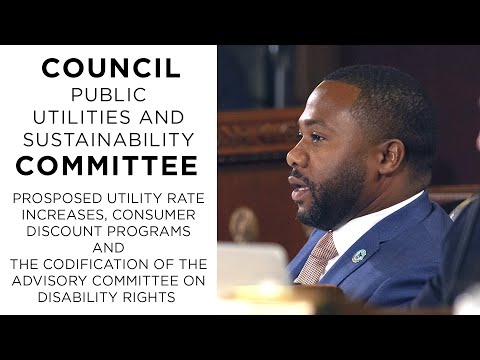
City utility staff and an advisory board told the Public Utilities and Sustainability Committee that proposed 2025 rate adjustments are necessary to fund operations, meet regulatory requirements and support a multibillion‑dollar capital program.
Jason Coma, chair of the Sewer Water Advisory Board, summarized the board's October recommendations: water rates +7%, sanitary sewer +6% and stormwater +1% for 2025. He said the combined impact on the average residential customer is about 6.06%, or roughly $13.67 more per quarter (about $54.67 per year). The board also recommended continuing the clean‑river surcharge and increasing water and sewer low‑income commodity discounts from 20% to 25% while raising eligibility from 150% to 200% of the federal poverty level.
John Lee, deputy director of the Department of Public Utilities, told the committee those increases are driven by operations, maintenance and a multiyear capital plan that includes a fourth water plant, a major transmission line and upgrades to the southerly wastewater treatment plant. Lee said the department's six‑year capital plan is approximately $6,800,000,000 and highlighted ongoing programs including a $100,000,000‑per‑year lead replacement program over 10 years and an expansion of smart meters and sewer tunnel projects.
On power, DPU officials proposed a multi‑year approach: a five‑year plan of residential increases (with council to approve one year at a time) and a three‑year commercial plan. City materials shown at the hearing estimated monthly power bill increases between $5.85 and $8.90 for typical customers; administrators projected approximately $1.4 million additional residential revenue and about $10.8 million additional commercial revenue under the plan.
Department staff emphasized measures to reduce hardship: increasing the low‑income and senior discounts to 25%, aligning eligibility with HEAP so approved HEAP applicants are automatically eligible, offering ARPA credits (a $65 credit for current discount enrollees and a new $50 power credit for new program enrollees), and expanding outreach (Spanish applications and targeted zip‑code outreach to reach an estimated 70,000 households who could qualify for water/sewer discounts).
Nolan Rushling, managing director of energy policy for the Ohio Environmental Council Action Fund, said his group supports necessary rate increases but urged stronger public engagement and more specific reporting requirements for the new Utility Advisory Board, recommending that council provide residents more opportunity for input before finalizing rates.
Committee members asked about outreach partnerships, language access, smart streetlight data collection and the time required for neighborhood assessment projects for decorative or additional lighting. DPU said it will increase outreach resources, work with area commissions and community organizations and phase streetlight upgrades to reach unlit neighborhoods.
The ordinances that would set the 2025 rates were presented for committee review; no formal vote was recorded at the hearing. DPU officials said the rates in the ordinances would be effective Jan. 1, 2025, pending City Council approval.