Get Full Government Meeting Transcripts, Videos, & Alerts Forever!
Get email alerts on the Signs topic
No spam. Unsubscribe anytime.
Board reviews sign ordinance updates; commissioners seek broader language on changing lights and animation
Summary
Staff summarized revisions to Article 6A of the zoning ordinance covering prohibited signs, exemptions and general provisions; commissioners asked the draft be broadened to cover changing-color illumination and animated effects that could distract drivers.
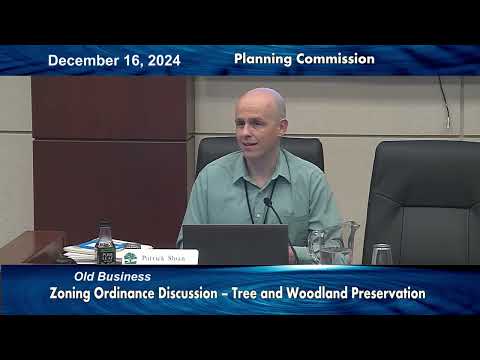
Canton Township planning staff presented updates to the zoning ordinance's sign provisions and collected commissioner feedback on prohibited sign types and illumination standards.
Staff said the sign ordinance work stretches back to November 2023 and January 2024 Planning Commission reviews and that tonight's packet corrected a typographical alignment issue while continuing in-sequence review through Sections 4–8. "At the October 21st meeting, we looked at the first 4 sections," staff said, adding the current meeting continued with Section 5 (prohibited signs) and related sections.
Why it matters: the draft lists 26 types of prohibited signs, including flashing, blinking or strobe lights as well as animated signs such as scrolling text or graphics. Commissioners expressed concern that the current language might not capture modern sign technologies that change color or intensity without explicit flashing and asked staff to broaden prohibited language to include changing lights and animated effects that could distract drivers.
Key details: staff said prohibited categories include animated signs and scrolling text; the draft also contemplates illumination types that could create traffic hazards and cross-references police input and the ordinance enforcement division. Staff noted nine sign types that do not require a permit (decorations, maintenance, window signs, certain temporary or noncommercial signs) but emphasized those are still regulated by size, number and district-specific rules and that enforcement is largely complaint-driven.
Legal context and substitution: staff explained Section 6A.07 (substitution) ensures noncommercial messages are permitted on compliant signs, a content-neutral requirement derived from U.S. Supreme Court case law that prevents favoring commercial over noncommercial speech in time, place and manner regulations.
Next steps: staff will compile comments and continue review; Article 9 (district- and type-specific sign standards, including commercial and temporary residential signage) will be addressed next month before the board considers consolidated changes and a public hearing.
Quotes in context: commissioners asked specifically that phrasing about flashing signs be broadened to capture 'changing color' and 'animated' effects; staff agreed to review cross-references and to consult ordinance and police staff on distraction concerns.