Get Full Government Meeting Transcripts, Videos, & Alerts Forever!
Get email alerts on the Residential Generators topic
No spam. Unsubscribe anytime.
Zoning board approves small-generator setbacks for two homeowners
Summary
On Dec. 18, 2004 the Cheektowaga Zoning Board of Appeals granted area variances allowing two homeowners to place backup generators that encroach inside the five-foot side-yard buffer; board members cited safety and neighbor consent in unanimous votes.
The Cheektowaga Zoning Board of Appeals on Dec. 18 unanimously granted area variances to two residents seeking to place backup generators closer than the five-foot side-yard minimum.
James Whitman of 357 Barbados Drive told the board his household — he and his wife, both in their seventies — needs a winter-ready generator because “after a couple of snowstorms … we haven't even been able to get to the back of the house” to use appliances. He said installers measured the proposed location and the unit would be about three inches inside the required five-foot buffer. Whitman said both companies that inspected the site recommended either the proposed side placement or a rear location; he argued the rear location would be unusable after heavy snow.
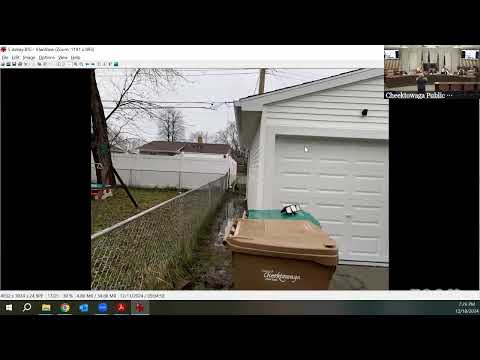
Eric Klapka, applicant for 102 Cherrywood Drive, described a similar practical constraint after National Fuel raised concerns about running a long gas line to a backyard location. Klapka said the generator he plans to install would be “2 feet wide by 4 feet” and about “10.10 k w,” intended to serve essential systems such as the furnace and refrigerator. He told the board the unit would sit 4 feet from the property line, about 13 feet from an adjacent garage, and roughly 6 feet from any furnace intake; he also submitted a neighbor letter indicating the nearby resident had no objection.
Board members questioned both applicants about proximity to windows, noise and exhaust. Whitman said the installers found no problem with distance to the basement windows; Klapka said there are no operable windows on the side facing the proposed unit and that the glass-block window is enclosed. One board member noted the units are tested periodically; the applicants said testing is infrequent and installers recommended the siting.
Motions to grant the requested variances carried unanimously in each case; the board told Whitman he would receive a written decision from the town in about seven to ten days.
The approvals allow the homeowners to proceed with installation subject to any building- or code-related permits required after the zoning decision.