
Senate approves Lawrence home‑rule plan for school governance after amendment
Get AI-powered insights, summaries, and transcripts
Subscribe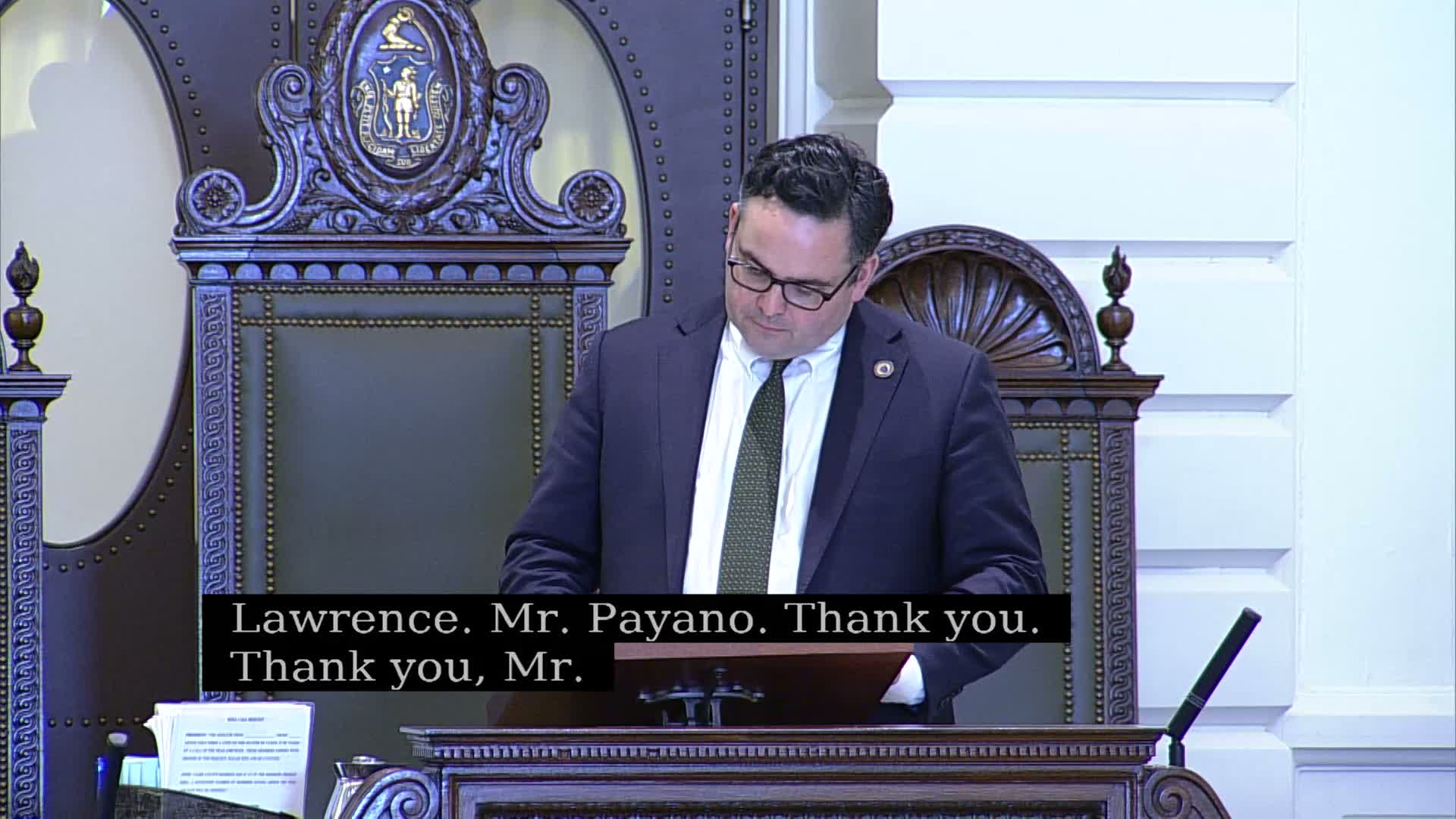
Summary
The Senate approved House Bill 5098, a Lawrence home‑rule petition to define the city’s school‑board governance on exit from state receivership, adopting an amendment offered by Senator Payano after hours of debate about representation and precedent.
Senate leaders on the floor approved House Bill 5098, a home‑rule petition setting a new governing structure for the Lawrence School Board upon the district’s exit from state receivership, and adopted an amendment to the measure.
The senator who introduced the petition, identified in the transcript as Senator Movado (the senator from Lawrence), asked members to support the bill as a locally shaped compromise after months of public engagement. He described the district’s troubled history and cited state data: “according to DESE, 2010 Lawrence High School cohort saw 46.7% of the class graduate, and 26.6% drop out,” framing the proposal as part of a long term effort to improve student outcomes.
Supporters said the plan responds to local needs and was approved by the city council. The introducer said seven of nine Lawrence city councilors backed the compromise and that the proposed board’s composition would include “the mayor, who serves as chair, three elected at‑large members, and three members appointed by the city council,” a mix the sponsor argued would provide necessary expertise and oversight.
Opponents pressed democratic and precedent concerns. Senator Jalen (identified in the transcript as representing Middlesex) said appointed members in the minority would make the school committee less accountable to neighborhoods: “Appointed school committees members can't advocate for the school budgets they think students need,” she said, arguing district or ward representation makes officials more directly accountable to constituents. Several senators, including Senator Aldridge, raised similar worries and noted union and resident opposition in Lawrence.
Senator Tarr asked whether the home‑rule petition was a precondition for Lawrence exiting receivership and requested written documentation for the Senate record. Senator Ayanna, speaking later, emphasized that governance structure and the timeline for exiting receivership are separate questions and said DESE had indicated governance alone does not determine when receivership ends.
During the session Senator Payano moved an amendment “by striking out all after the enacting clause,” substituting the text identified as Senate document 2999. The chamber voted to adopt the amendment, and, immediately afterward, voted to pass the bill as amended. The chair announced, “The ayes have it,” and the measure was ordered to be engrossed.
Next steps: the Senate passed the bill as amended on the floor; the transcript records that the bill was ordered to be engrossed and will follow the usual post‑passage steps noted on the Senate floor.