Get Full Government Meeting Transcripts, Videos, & Alerts Forever!
Get email alerts on the Public Comment topic
No spam. Unsubscribe anytime.
Students urge more mental‑health support and activity funding; robotics mentors cite resource losses
Summary
Student speakers at the Highline board meeting called for increased culturally competent mental‑health staff and higher club funding; robotics mentors and students said resources for robotics have been reduced and urged district support.
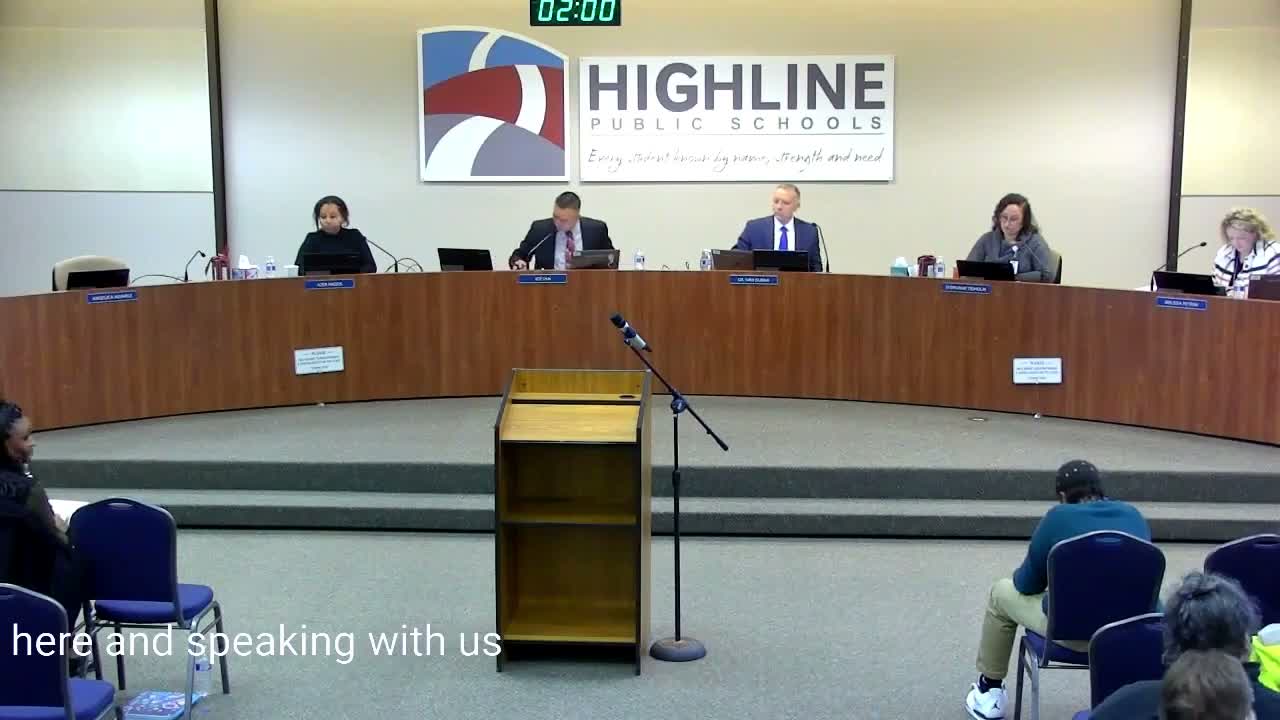
Multiple student and community speakers addressed the Highline School District board on Dec. 18, focusing on mental health services, extracurricular funding and robotics resources.
Afifa Chow, a senior at Evergreen High School, told the board the district needs a "significant investment in mental health resources," urging the board to "hire culturally competent mental health professionals" and to provide programming and outreach targeted to underserved students. "Failing to address these gaps perpetuates the cycle of inequity," she said.
Ursa Amos Agai, also a senior at Evergreen and co‑founder of the Coalition for Social Justice, described limited funding for student clubs and student‑led projects, saying each club receives a one‑time allocation of $50 and that district rules limiting transactional fundraising add barriers.
Representatives from the Skunk Works/Skunk Horse robotics community also spoke. Meg Vater, an electrical engineer and mentor, described the value of a mentor‑rich, project‑based FIRST Robotics program and said it is open to all Highline students. Student Lewis Press and others said partners and resources have been reduced over time, leaving team members frustrated about lost district support for robotics activities.
Other public comments included criticism of recent rhetoric at a prior meeting and a call to reevaluate aspects of district DEI policy from Patricia Bailey; board members acknowledged differences of view and reiterated meeting norms.
Board members and staff did not take immediate policy action in response to the public comments but thanked speakers and encouraged follow‑up communications. The board later approved related funding items on the consent agenda and in action items.