
Residents urge county to pause EIP development over Superfund and radiological concerns
Get AI-powered insights, summaries, and transcripts
Subscribe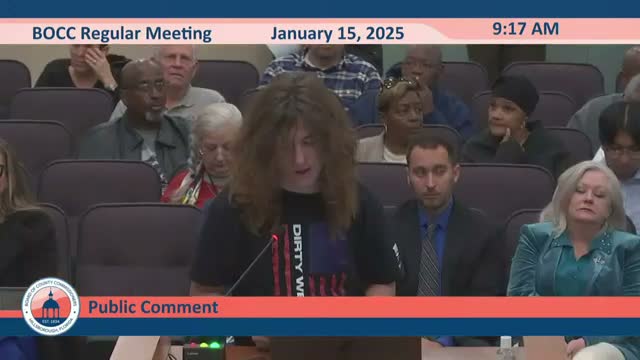
Summary
Multiple residents and neighborhood coalitions urged Hillsborough County to postpone decisions on CPA 2315 and related items affecting a 3,000‑acre former phosphate mine (the Sydney site), citing EPA and FDEP records, radiological tailings and data gaps in ecological and radiological assessments.
At the Jan. 15 Hillsborough County Board of County Commissioners meeting, a succession of residents and neighborhood leaders urged the board to pause consideration of land‑use changes related to a 3,000‑acre former phosphate mine known locally as the Energy/Industrial Park (EIP) or Sydney mine.
Chris Gentry, a seventh‑grader who described the site as a Superfund location, told commissioners the property "used to be a phosphate mine and is now a superfund site filled with over 20,000,000 gallons of toxic sludge," and warned the site could threaten the Hawthorne aquifer that provides drinking water to multiple states. Josie Gentry displayed rock samples and said field technicians and an EPA contact documented radioactive tailings on the property, adding, "These rocks ... are radioactive and contain harmful metals and chemicals that do cause cancer." Penny Martin, speaking remotely, summarized a decades‑long record of mining and waste disposal and said the parcel is wetlands and within surface‑water protection areas.
Several speakers cited technical reviews that, they said, identify outstanding data gaps. Renee Madison read a summary of a Dec. 11 communication from Tetra Tech that she said requested three follow‑up studies: 1) ecological receptor studies across the property; 2) delineation of 1,4‑dioxane beyond institutional controls; and 3) comprehensive radiological surveys. Madison concluded by asking the board to "postpone any decisions regarding CPA 2315 and 2406 until Miss McCurdy's team of professionals have concluded all their radiation and ecological assessments." George Niemann, representing a coalition called Fix Hillsborough, said his group found more than 30 inconsistencies between the amended plan and the county comprehensive plan and said they have collected more than 1,000 petitions opposing the project.
County staff did not act on the land‑use items during the public comment period. Commissioners and staff acknowledged the volume and technical nature of the concerns; staff later described planning and regulatory steps that remain before any rezoning or development approvals can be finalized.
The public record for the project now includes petitions and technical material offered by community members; several speakers asked that sampling, ecological and radiological assessments be completed and made public before any board action. The transcript contains a number of technical claims and historical references the speakers attributed to EPA, FDEP and Tetra Tech documents; county staff said the consultant and agency reviews will be part of the formal planning record.
What happens next: the planning process for CPA 2315 and related items will continue through the planning commission and county staff reviews. Community leaders said they plan to submit compiled petitions and technical files to the clerk to be entered into the public record.