Get Full Government Meeting Transcripts, Videos, & Alerts Forever!
Get email alerts on the Sign Regulations topic
No spam. Unsubscribe anytime.
Arkansas City meeting approves tighter rules for billboards and bans electronic displays
Summary
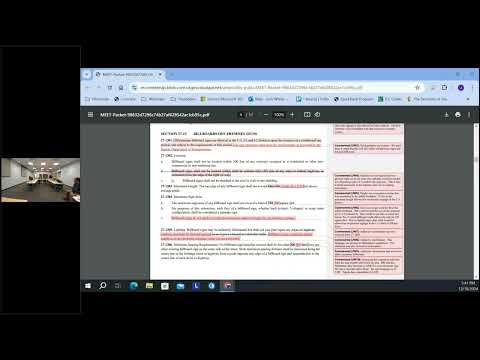
After a public hearing, the commission approved amendments to Article 27 of the sign regulations that lower maximum billboard height to 25 feet, reduce permitted area to 300 square feet, ban flashing/electronic displays and increase minimum spacing between off-premise signs to 800 feet.
At a public meeting in Arkansas City, members voted unanimously to adopt amendments to Article 27 of the city’s sign regulations following a public hearing and staff presentation. The changes cut the allowable height for off-premise billboards from 50 feet to 25 feet and reduced the maximum total sign area from 750 square feet to 300 square feet (150 square feet per side).
The changes were introduced by a staff member who said the revisions stem from a previously denied billboard application and public feedback earlier this year. The staff summary said the amendments remove an interior-sign regulation, clarify that off-premise signs will not count against a site’s on-premise signage allotment, and update district language to place billboard-specific rules in the billboard section of the code.
The draft also removes a previously listed 50-foot setback requirement after staff confirmed it was not a Kansas Department of Transportation (KDOT) right-of-way standard, and explicitly requires sign structures adjacent to highways to meet any applicable KDOT requirements. The proposal tightens lighting rules to prevent traffic hazards and prohibits flashing signs and electronic message centers; staff said the current proposal is for static signage only.
Staff recommended increasing the minimum spacing between off-premise signs on the same side of the street from 300 feet to 800 feet to reduce sign density. During the presentation staff cited examples in other cities — including Topeka, Manhattan and a large digital sign observed near Tulsa — to illustrate the scale of electronic and large-format signs elsewhere and the commission’s intent to avoid similar impacts locally.
A commission member asked whether citizens would have recourse if they disliked the adopted regulations; staff replied that affected property owners could apply for variances where the regulation addresses numerical standards (for example, height), but prohibitions that are expressly written into the code (such as the current roof/wall-attachment ban) would require amending the code itself.
After the hearing was closed, the commission moved to approve the amendments "as lined out by Josh," and conducted a roll-call vote as required by the bylaws. The record shows Mike Berganini, Lloyd Colston, Chris Johnson, Duane Eastman, Cody Richardson and Dottie Smith voted "Aye." The motion passed.
The meeting record indicates staff will upload the meeting recording promptly and will bring minutes for approval at a subsequent meeting.