Get Full Government Meeting Transcripts, Videos, & Alerts Forever!
Get email alerts on the Economic Development topic
No spam. Unsubscribe anytime.
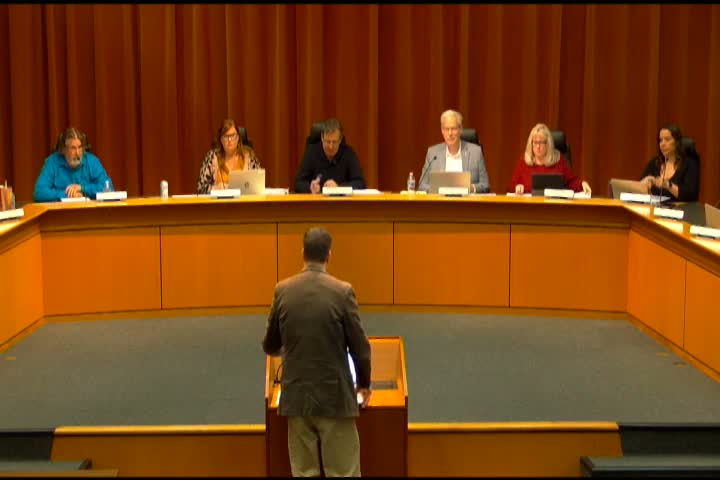
Taylor Council Approves Industrial Development District for CMAC Project; Council Seeks Written Job and Benefit Commitments
Summary
After extended questioning, Taylor City Council voted 4–2 to accept an industrial development district established by the Detroit Region Aerotropolis for a proposed CMAC facility, authorizing Aerotropolis to handle the next steps of a PA 198 industrial facilities exemption. Council members demanded concrete job metrics and a community-benefit agreement before any abatement is finalized.
Taylor City Council voted 4–2 to accept the establishment of an industrial development district covering a 44-acre parcel on North Line Road that would allow the proposed CMAC Christy Land North LLC project to pursue an industrial facilities exemption under Michigan’s PA 198.
Chris, a representative of the Detroit Region Aerotropolis, told the council the project envisions a roughly 377,000-square-foot building that could create “300 to 500 jobs” and require about $20 million to $30 million in capital investment for the structure. He said a 50% real and personal property tax abatement for up to eight years was part of the package being considered and that the abatement’s fiscal impact would likely total in the “$4 to $6,000,000 over 8 years.”
The council’s debate focused on process and protections for Taylor residents. Council members repeatedly asked whether Aerotropolis would negotiate the detailed terms — including the number and timing of hires, duration of the abatement and enforcement mechanisms — or whether the council would have a final say. Councilwoman Brandon asked, “Shouldn’t every all those come before council? Are you signing an agreement on behalf of the city?” Mayor Woolley and staff replied that Aerotropolis would prepare the paperwork and the city retains a 30-day window to deliver a resolution disapproving the ADC’s approving resolution, effectively providing a local off-ramp.
Chris described the PA 198 process as two steps: first, establishing the industrial-development-district boundary (the council action taken Oct. 15), and second, negotiating an industrial-facilities-exemption certificate that will specify capital investment, personal property, abatement duration, and the job-creation timeline. He said the community-benefit agreement — which could require the company to hold job fairs and give hiring preference to Taylor residents — would be negotiated at that second step and could be written into the industrial facility exemption.
Mayor Woolley and administration staff told the council they would provide the city’s existing abatement schedule and baseline benchmarks used in prior approvals as a minimum floor and that the administration expects to bring the negotiated terms back to council for review. The council then voted; the clerk recorded roll call and the motion passed 4–2.
What happens next: approving the district does not automatically grant tax relief. The industrial-facilities-exemption certificate — which spells out the abatement percent, length and job commitments — still must be negotiated and presented. Council members requested that the mayor and staff return with the draft benchmarks and the community-benefit agreement language once those terms are developed.
Votes and procedural note: the council’s recorded roll call on the item produced four votes in favor and two opposed. The council and Aerotropolis repeatedly referenced a historical abatement schedule the city adopted years earlier as the minimum standard to be enforced, and the administration said it would share that document with council members.