Veterans-fee proposal capped at five-times monthly increase draws scrutiny and is tabled
Loading...
Summary
Major Ben Tipton testified for a bill that would cap contingent fees by private veteran-service companies at five times a veteran—s monthly benefit increase, ban upfront fees and aggressive solicitation, and require referrals to VSOs; the committee tabled the measure pending more industry information.
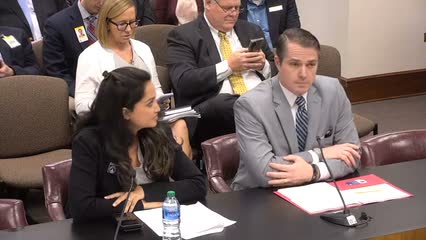
The Senate Banking and Financial Institutions Committee heard Major Ben Tipton, U.S. Army (ret.), present a substitute to Senate Bill 451 that would impose consumer-protection rules on private companies that assist veterans with Department of Veterans Affairs benefit claims.
Tipton said the proposal—framed as the “Preserving Lawful Utilization for Services for Veterans” act—responds to a large backlog in VA disability claims and to what he described as variable industry practices among private companies that assist veterans for contingent fees. He described the bill as preserving veterans— choice to use private firms while protecting veterans from bad actors.
Tipton outlined key provisions: fees would be contingent on a successful outcome and could not exceed five times a veteran—s monthly increase in disability benefits; initial or nonrefundable fees would be prohibited; veterans within a one-year presumptive period after leaving active duty should be referred to the veteran service organization (VSO) of the veteran—s choice; providers must obtain written confirmation that veterans were informed of free services; the bill would prohibit aggressive direct solicitation and advertising guarantees of success; and violations could carry civil or criminal penalties.
Committee members pursued substantive questions. Members asked whether the bill would affect contingency-fee arrangements for attorneys; Tipton said it would not, because federal law governs attorney fees for appeals. Senators pressed on industry practices, the number and age of private companies in the space (Tipton estimated 50–60 companies nationwide and said Veterans Guardian has been in business seven years and helped more than 3,200 Georgia veterans), and whether guardrails promoted by the trade group NAVR should instead remain voluntary. Tipton said most companies charge a five-times cap but that some charge higher fees or upfront initiation fees.
Senator Jones questioned whether the committee should enshrine industry standards into state law without broader industry participation and longer track records. The chair asked Tipton to provide letters of industry support (NAVR) and to work with Senator Jones for further explanation. A motion to table the bill was made and seconded; the committee voted to table the substitute, and the chair recorded the bill as tabled but not dead.
Tipton said he believes enforcement would be handled under the state—s consumer-protection framework (the Fair Business Practices Act) and that any enforcement would likely involve the attorney general. Committee members asked for additional materials and industry sign-on letters before further action.
The committee closed the hearing and adjourned.