Get Full Government Meeting Transcripts, Videos, & Alerts Forever!
Get email alerts on the Homelessness Policy topic
No spam. Unsubscribe anytime.
Commission approves first reading of ordinance to implement Florida's ban on public camping
Summary
On first reading the commission approved an ordinance rewriting city code to implement House Bill 1365's ban on regular public camping and sleeping on public property; staff said enforcement will be tiered and tied to police response and outreach but some residents asked about shelter options and services.
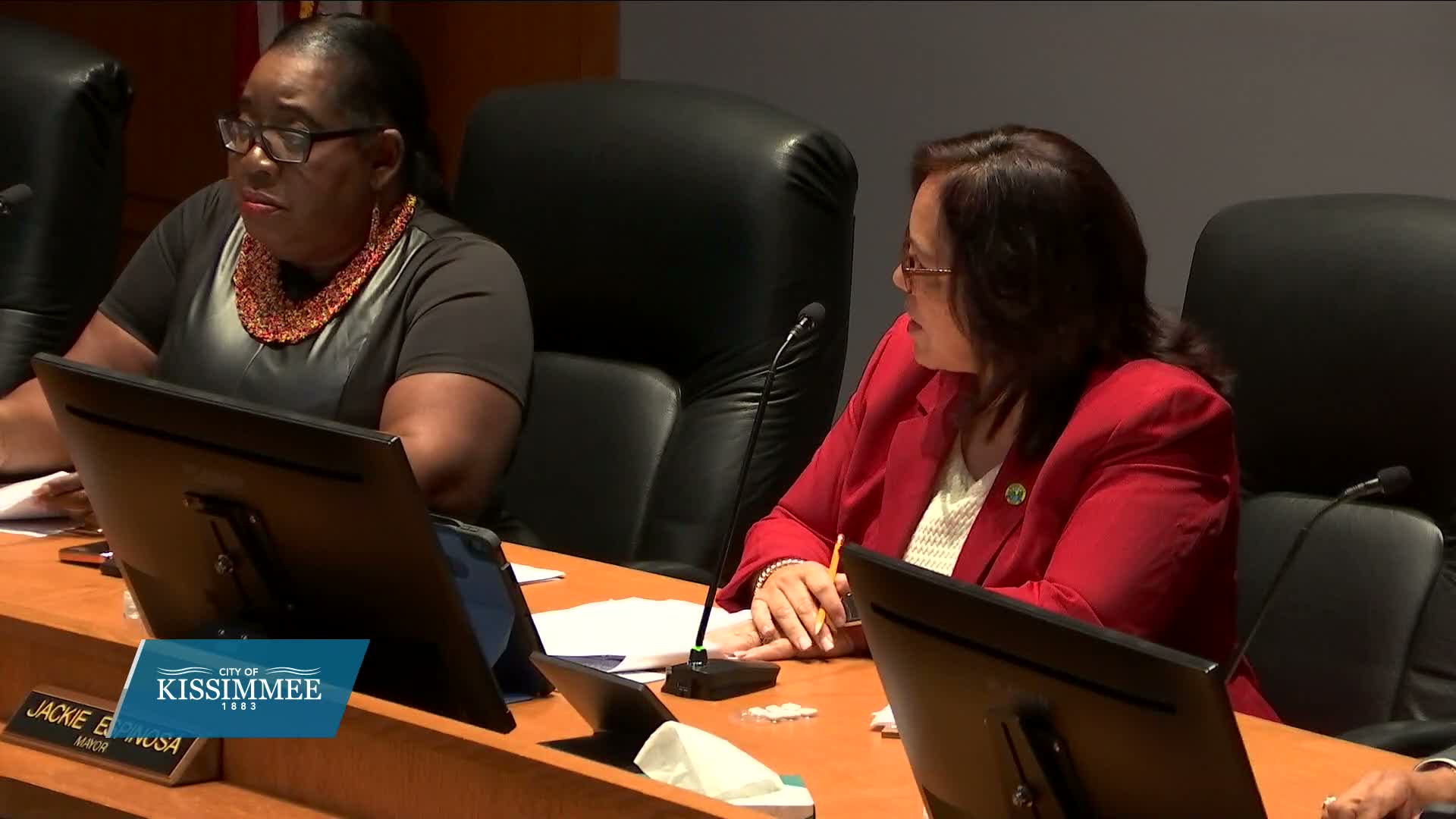
The Kissimmee City Commission approved on first reading an ordinance to amend the city code to implement House Bill 1365, which the city attorney said prohibits municipalities from authorizing regular public camping or sleeping on public property, including rights-of-way and sidewalks. The ordinance creates Chapter 38 (Streets, Sidewalks and Other Public Places), updates general penalty provisions and revises relevant parking and panhandling sections.
City Attorney explained the ordinance reflects state law going into effect Jan. 1 and that the approach is tiered: enforcement will involve outreach and connections to services where possible, then progressive penalties, trespass and arrest in cases where individuals refuse to move. During the public hearing, a resident asked whether the ordinance creates an explicit shelter or placement option; staff replied that the law permits, but does not require, municipalities to create shelter programs and the city is engaging local partners to provide services. The attorney and city manager noted the city would implement the statutory minimums and work with local providers where feasible.
Commissioners approved the ordinance on first reading after a motion and voice vote; one commissioner recorded a dissenting vote for the record. The action constitutes the first reading required by the charter; additional readings or follow-up implementing procedures may be needed to finalize enforcement details and related social-services arrangements.