Get Full Government Meeting Transcripts, Videos, & Alerts Forever!
Get email alerts on the Higher Education Policy topic
No spam. Unsubscribe anytime.
Regents post and move forward with institutional neutrality bylaw after debate
Summary
The Board of Regents advanced a supplemental bylaw on institutional neutrality after public comment and board discussion; supporters said it protects faculty autonomy while critics warned it could chill academic speech and bypass faculty governance.
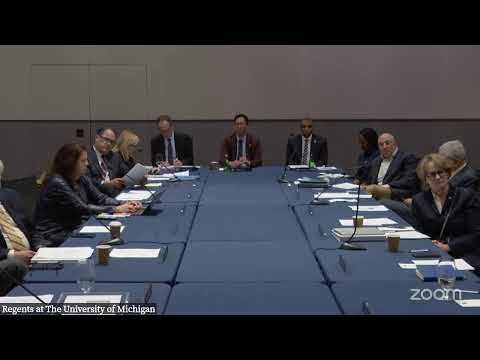
The University of Michigan Board of Regents voted to post and consider a supplemental bylaw on institutional neutrality during the Flint meeting after hearing public comment and internal discussion.
Professor Kimberly Sachs addressed the board and urged them to table the vote, saying the proposed bylaw (referred to in the meeting as Regents bylaw 14.08) is overbroad and risks chilling speech and academic freedom: “The policy is overbroad in its application…putting a chilling effect on even the most basic academic speech,” she said. Sachs argued the bylaw’s scope could create uncertainty for faculty about when they are speaking for themselves versus the institution.
Several regents responded. Regent Bernstein and Regent Hubbard defended the proposal’s intent, saying it preserves the university as a forum for open inquiry and elevates individual faculty voices: Regent Bernstein noted the bylaw was the product of committees that received thousands of comments and emphasized the need for institutional neutrality to avoid institutional statements that could be mistaken as the university’s position.
Vice President Kinsey and other administration officials committed to public communication resources and follow‑up reporting; one regent requested a six‑month and one‑year report back on implementation and community feedback. The motion to post the supplemental bylaw for consideration passed by voice vote.
What’s next: The bylaw will be considered per the board’s supplemental item process and administrators were asked to create a public communications portal and return to the board with implementation updates.