Get Full Government Meeting Transcripts, Videos, & Alerts Forever!
Get email alerts on the Assessment Results topic
No spam. Unsubscribe anytime.
Middletown board reviews 3–8 test results, lays out extended-day supports
Summary
District leaders presented New York State 3–8 ELA, math and science results, noted higher opt-out rates in upper grades and outlined expanded interventions — including extended-day instruction, targeted learning academies and a 10th-period high school schedule — aimed at improving proficiency.
District staff on Thursday presented the Enlarged City School District of Middletown’s New York State 3–8 assessment results and a set of interventions intended to raise proficiency and reduce opt-outs.
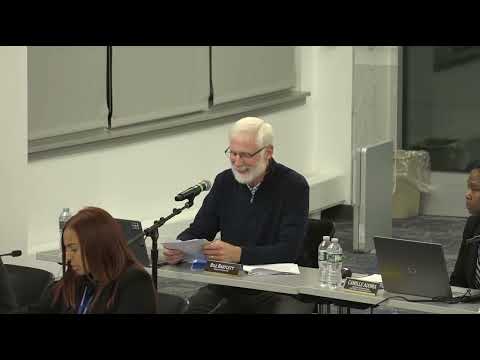
Assistant Superintendent Camille Adoma and the district assessment team told the board that proficiency among scholars who took the tests was modest: roughly 28% proficient in ELA and 30% in mathematics for grades 3–8, with opt-out rates rising at higher grade levels. Adoma said some student groups are exempted from particular tests and that evolving state scoring bands mean year-to-year comparisons can be difficult. She emphasized that the tests represent one point in time and the district uses multiple assessments and classroom measures to track growth.
Why it matters: Board members repeatedly noted that state test scores are publicly visible and can shape perceptions and funding, but staff said those measures do not capture the district’s full story and stressed the importance of longitudinal and classroom-based measures.
What the district will do: Adoma and her team described several targeted supports already in place or expanding this year. Extended Day Instruction (EDI) programs provide after-school remediation and enrichment, language-bridge supports for newcomers, regents preparation and a new pre-accelerated pathway for students being recommended for acceleration. At the high school the district has added a mandatory 10th-period on the master schedule for targeted interventions; the district also runs walk-in tutoring, Saturday sessions and a college-application boot camp.
Funding and access: Staff said most EDI offerings are free to families, funded in part by a federal Title IV grant, include transportation and snacks, and are designed to reduce barriers to participation. The district also offers lab makeup sessions so students can meet science regents laboratory requirements.
Opt-out trends and consequences: Board members asked why opt-outs rise in middle school; staff traced part of the trend to historical links between state tests and educator evaluations and to social pressure among older students. Adoma said the district conducts family outreach and encourages participation because state participation rates can affect district-level comparisons and potentially funding.
Board reaction and next steps: Trustees expressed concern about the public appearance of scores while commending staff for layered interventions. Several board members asked staff to continue community outreach, emphasize early literacy and sustain the data-driven, multi-tiered supports intended to move more students into higher proficiency levels.
The district said it will continue monitoring MAP and other internal assessments throughout the year, report on EDI participation and return to the board with progress updates.