Get Full Government Meeting Transcripts, Videos, & Alerts Forever!
Get email alerts on the Dark Store Loophole topic
No spam. Unsubscribe anytime.
Municipal leaders, school officials and municipal leagues urge lawmakers to close 'dark store' valuation loophole
Summary
A bipartisan package (HBs 5865–5868) to prohibit use of deed-restricted or vacant 'dark store' comparables and require appraisals at filing drew broad testimony from municipalities, school boards, libraries and appraisal experts who linked tribunal rulings to lost local revenue and service cuts.
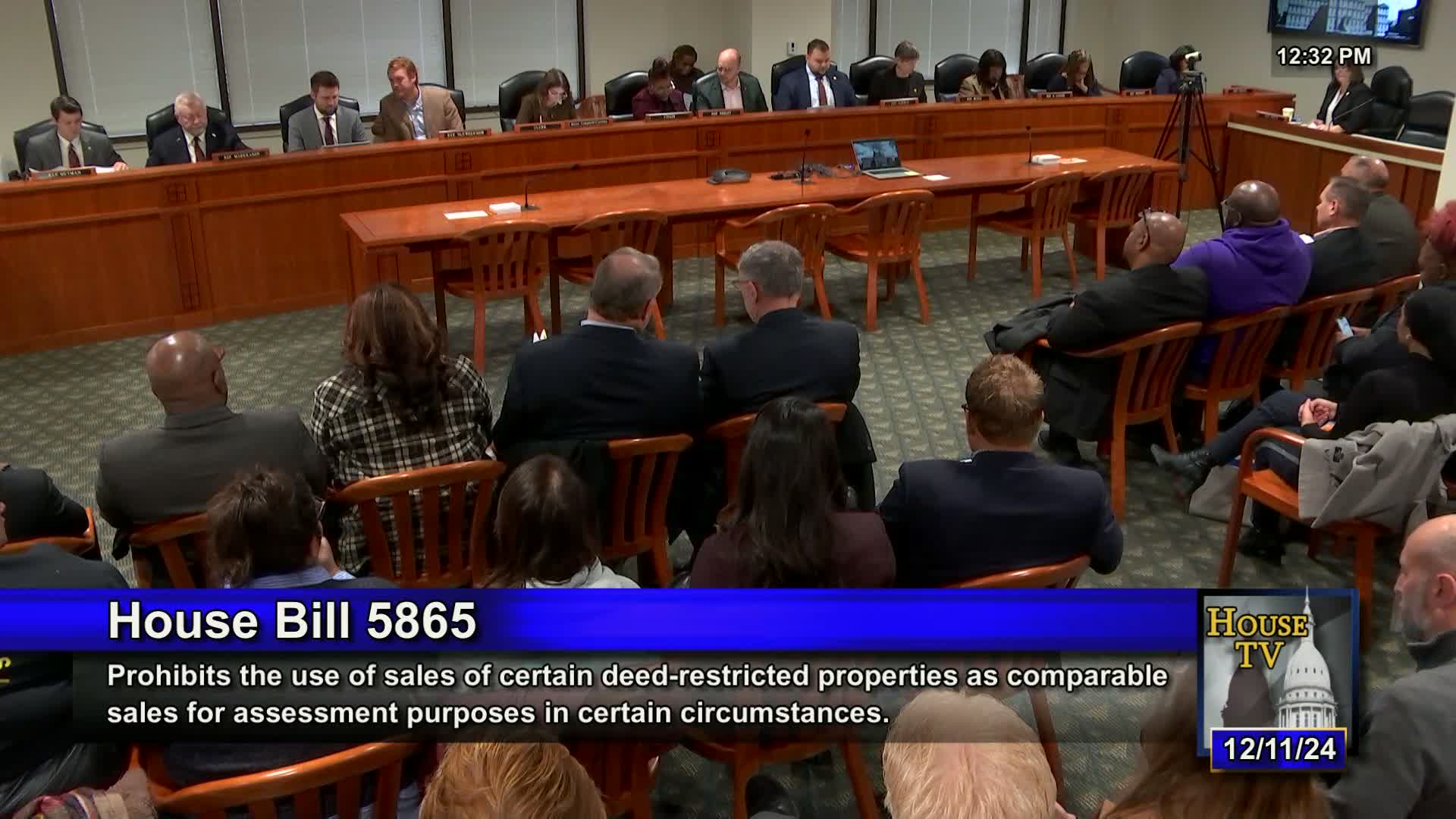
A bipartisan package of bills (HBs 5865–5868) aimed at closing the so‑called "dark store" loophole drew extended testimony at the House Tax Policy Committee. Sponsors and municipal officials said tribunal decisions that allow large retailers to use deed‑restricted or vacant comparables have reduced property tax revenue and forced local service cuts.
Representative Bridal, a sponsor of the package, told the committee the bills would bar assessors and the tax tribunal from using deed‑restricted vacant big‑box stores as comparables for active stores and would require petitioners filing appeals to provide appraisals with their filings. "This loophole has siphoned about $2,000,000,000 from local and state revenues to date," Bridal said, framing the bills as a way to level the playing field for small towns, schools, senior centers and local services.
Municipal and education witnesses described the local impact. Donnie Steele (state representative, District 54) and Andrea Ingmeier (Peter White Public Library) recounted lost revenue, service reductions and multi‑year refund liabilities imposed by tribunal settlements. "Our library had to set aside more than $215,000 to cover settlement payments," Ingmeier said, adding that Sunday hours and public programming were reduced as a result.
Appraisers and municipal groups urged passage. Kern Sluchter, a certified general appraiser, described settlement pressure and appraisal practice; Matthew Showalter (school board member and appraiser) and Dave Hodgkins (Michigan Municipal League) said the package would restore consistent valuation standards and protect local tax bases.
Opponents included the Michigan Retailers Association, the Michigan Chamber and Michigan Realtors, who warned the bills could undermine deed restrictions used for affordable housing and community development, and would constrain the Michigan Tax Tribunal's discretion. Amy Drummond (Michigan Retailers Association) said the changes "upend the current tax appeals process" and could increase litigation costs; Leah Robinson (Michigan Chamber) and Sean Cecil (Michigan Realtors) similarly cautioned about unintended consequences.
Committee members pressed witnesses on scope and impacts. Proponents said the bills mostly target cases using deed‑restricted vacant comparables and would not change the small‑claims process for homeowners; opponents argued the language could reach many commercial and industrial properties and burden the tribunal.
What happens next: The package was heard for testimony; the transcript does not record a final committee vote on HBs 5865–5868 during this session.