Get Full Government Meeting Transcripts, Videos, & Alerts Forever!
Get email alerts on the Municipal Procedure topic
No spam. Unsubscribe anytime.
Long Beach council adopts code and charter cleanups after public hearing amid concerns about presiding-officer power
Summary
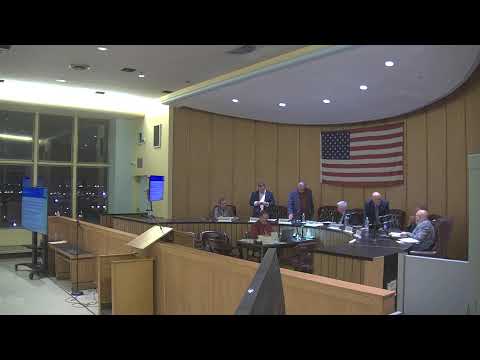
The Long Beach City Council on Dec. 3 adopted amendments to the city code and a local charter provision to formalize meeting procedures — including a 3-minute total speaking time rule and work-session rules — after a public hearing where residents warned the language could concentrate power in the presiding officer and limit public input.
The Long Beach City Council voted Dec. 3 to adopt a package of changes to the city code and a companion local law amending the charter intended to align written rules with current meeting practice.
The amendments codify procedures for canceling or moving meetings, add explicit rules for work sessions and an optional block-voting process, and clarify that individuals have three minutes of speaking time in total during public comment. A separate amendment updated special-meeting notice procedures to permit electronic and telephonic notice in emergency situations and to add phone contact for short-notice calls.
City Manager Dan Creighton and Clerk Dave Frazier told the council the changes are largely housekeeping to make the code reflect the way the city already operates and to avoid conflicts with New York’s Open Meetings Law. Frazier said the work “will bring the code in line with what we actually do.”
But several council members and residents pressed for more time and clarity before formal adoption. One long-time attendee, Eileen Hession, warned that repeated references to “permission of the presiding officer” gave a single official disproportionate control over who speaks. “One council member should not have the power to keep another from speaking,” she said, calling for the council itself to vet amendments instead of relying on staff drafts.
Council member Roy argued that contracting authority rests with the council, not the city manager, and cited a prior district attorney report that he said showed the risks of lax oversight: “The power to contract and to bind the city belongs to the council and not the city manager,” he told the dais.
Council members said the intent of the changes is not to reduce public participation but to provide clarity and to allow meetings to run efficiently so more residents can attend. Multiple speakers said the language was adjusted during the hearing to address concerns about the three-minute allocation; the council also added a separate hearing on a related “good and welfare” provision to allow additional public input.
The ordinance amending the code and the local law updating charter notice procedures were both adopted by roll call votes. Several council members thanked staff for the multi-year effort on code cleanups and said further refinements could follow as needed.