
Little Rock board advances 2025 budget reading amid firefighter impasse and scheduling dispute
Get AI-powered insights, summaries, and transcripts
Subscribe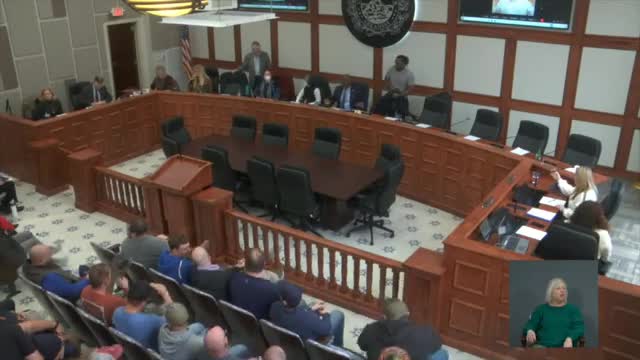
Summary
The Little Rock Board of Directors voted to advance the 2025 budget to a third reading and debated whether to meet again before Dec. 31 after firefighters raised a nonmonetary impasse; the mayor warned a failure to approve an emergency clause would delay raises for roughly 2,000 city employees.
Mayor Scott convened the special-called Little Rock Board of Directors meeting on Dec. 23 and the board moved to advance the ordinance to a third reading for the city—s 2025 budget.
The clerk read the ordinance title for the second reading, and after a motion and second the chair announced the ayes had it and the board used a roll call that the chair summarized as "6 to 2" on the motion to proceed. City Attorney guidance and board discussion then focused on timing: Arkansas state statute requires a budget by Feb. 1, while the city—s ordinance sets a Dec. 31 deadline.
Why it matters: Board members disagreed over when to reconvene and whether to prioritize completing the budget before municipal deadlines. Mayor Scott told directors they could hold a special meeting in roughly two hours, meet Dec. 24 at noon, Dec. 26 at noon, or wait until Jan. 7; the city attorney explained that meeting rules and the emergency clause require different vote thresholds.
Board members discussed consequences of not passing the emergency clause. "If it doesn't go immediately," Mayor Scott said, "what happens... is the other 2,000 employees in the city of Little Rock... won't even get that on January 1. I'm a be very clear that we will be delaying the raise of the other 2,000 employees in the city of Little Rock." He added that the emergency clause requires eight votes to take immediate effect, while six votes will pass the budget but delay its effective date by 30 days.
Several directors, including Director Peck, said they were not prepared to vote while firefighters in the room remained at an impasse. "I'm not prepared to do this while they're at an impasse," Director Peck said, adding she was "listening to my constituents who are firefighters." The mayor and staff repeatedly described the firefighters— dispute as primarily nonmonetary and therefore budget-neutral as they understood it.
The board also discussed options to remain in compliance with state law and the city ordinance. The city attorney outlined two approaches: pass an ordinance suspending the Dec. 31 provision or include a provision in the budget that would ratify later actions. Board members noted each approach would require additional readings and votes.
The meeting concluded with a motion to recess to executive session to discuss appointments; the board returned to the public meeting and completed two appointment votes before adjourning.
What happens next: The board indicated it would schedule another meeting for a third reading (options discussed included a two-hour special meeting, Dec. 24 at noon, Dec. 26 at noon or Jan. 7). If the emergency clause is not passed at that time, any raises or other budgetary changes would take effect 30 days after passage rather than immediately.