Get Full Government Meeting Transcripts, Videos, & Alerts Forever!
Get email alerts on the Elections Gerrymandering topic
No spam. Unsubscribe anytime.
House panel backs bill to add partisan-fairness metrics to county redistricting; 6-2 vote
Summary
The House Elections Committee voted 6-2 to report House Bill 6171, which would require counties to use objective measures—including the median-mean metric—and prioritize partisan fairness alongside federal requirements when drawing county commission districts; proponents said it prevents vote dilution while opponents warned it replaces elected members with unelected appointees and could shift legal burdens.
The House Elections Committee voted 6-2 to report House Bill 6171, a measure that would change how Michigan counties draw and apportion county commission districts by elevating partisan fairness and requiring objective metrics in the map-drawing process.
Representative Phil Skaggs, the bill sponsor, told the committee the legislation aims to "fix the system" by moving overall county partisan fairness near the top of redistricting criteria after compliance with the Voting Rights Act and district contiguity. "Gerrymandering is bad," Skaggs said, arguing that single-party county commissions can leave sizable minorities with no representation and reduce transparency and accountability.
Skaggs and supporters described the bill as a way to ensure county commissions reflect the electorate. "One of the things that this bill does is put partisan fairness overall county partisan fairness as one of the leading criteria to be considered so that the county commission looks like what the voters intended when they went out to vote," Skaggs said.
An academic witness credited by the sponsor told the committee the bill uses tested quantitative measures to detect and limit entrenched maps. Daniel Magleby, an associate professor at SUNY Binghamton who studies redistricting metrics, explained how gerrymanders can dilute votes and described the median-mean metric the bill would require counties to use "to evaluate whether or not the map will violate majority rule." He said the approach would, where possible, produce representation more proportional to the electorate and that the requirements impose minimal additional burden on counties.
Local officials gave personal examples of how current county maps can change electoral prospects. Julie Matuszak, a Clinton Township trustee and former Macomb County commissioner, said reapportionment turned a district she won by 215 votes into a safe single-party seat and left voters without a judicial path to challenge county reapportionment. "When I analyzed the newly drawn district for the 2022 race, it was very clear to me that no one running as a Democrat could win that district," Matuszak said.
Kent County Commissioner Chris Pakla, who represents a district in a county with near-even party registration, described his county's apportionment process as "not terribly transparent" and praised provisions that would remove two partisan elected officials—the county treasurer and county prosecutor—from apportionment bodies and instead add one member from each party chosen in the same manner as county canvassers.
Advocates including Jamie Lyons Eddy, executive director of Voters Not Politicians, urged passage, saying the bill applies the core principles of Proposal 2 (2018) to county-level districts, updates outdated population cutoffs, and contains partisan-fairness requirements to prevent extreme manipulation.
Opponents focused on changes to the composition of county apportionment bodies and legal risks. Washtenaw County Clerk and Register of Deeds Larry Kestenbaum, speaking for the Michigan Association of County Clerks (MACC) legislative committee and in a personal capacity, said the restructuring would leave the county clerk as the only elected official on the apportionment body and make that office "really, really vulnerable." Kestenbaum also warned that the bill appears to place the burden of proof on counties in litigation over district boundaries and criticized language that would allow unelected members chosen by commissioners to replace the treasurer and prosecutor on apportionment panels.
Representative DeBoer questioned why the bill would replace elected officials with non-elected party members, asking whether that change gives commissioners opportunities to influence the process. Pakla responded that the selection timing of elected officials can create a mismatch with reapportionment timing and that replacing them with party-selected members would avoid that time-lag and should produce a more representative outcome.
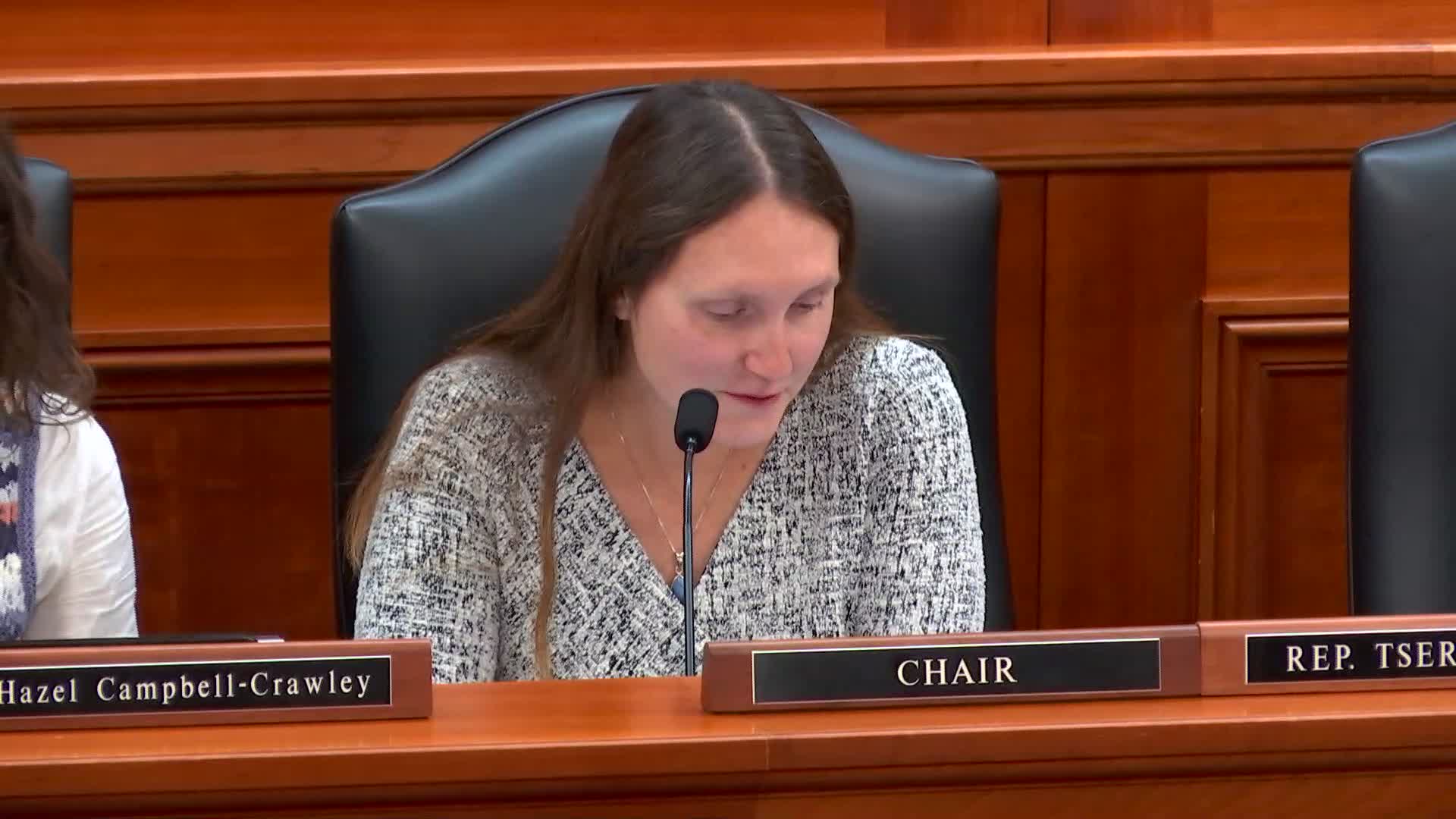
Before the vote, the chair read into the record a list of organizations and individuals on both sides: opposition from several county clerks and county associations and support from labor groups and the Michigan Department of State, among others.
Representative Hope moved to report HB 6171 with recommendation. The clerk called the roll: Chair Cernergloo (yes), Representative Zwighela (yes), Poe (yes), Cozart (yes), Burns (yes), Churches (yes), Smith (no), and DeBoer (no). The motion passed, 6-2, and the committee reported the bill with recommendation.
With no further business, the committee adjourned.
What's next: HB 6171 was reported out of committee; the committee did not take additional amendments on the record and no final enactment date was set in the hearing.