Get Full Government Meeting Transcripts, Videos, & Alerts Forever!
Get email alerts on the Medical Director Loan Repayment topic
No spam. Unsubscribe anytime.
House panel advances bill to let local health departments repay MPH debt for medical directors
Summary
The House Committee on Regulatory Reform voted to report House Bill 6010, which would let the Michigan State Loan Repayment Program cover Masters of Public Health debt for local health department medical directors to aid recruitment and retention.
House Bill 6010, sponsored by Representative Fitzgerald, was advanced out of the House Committee on Regulatory Reform after testimony from state health officials and local public‑health advocates.
Beth Nagel, senior deputy director for policy, planning and operational support at the Michigan Department of Health and Human Services, told the committee HB 6010 would amend the Michigan State Loan Repayment Program to ‘‘allow local public health departments to recruit and retain medical directors through offering medical education debt repayment in exchange for their service to our state.’’ Nagel said the program could repay up to $300,000 in medical education debt over 10 years of service for qualifying professionals.
Nagel and other MDHHS representatives said local health departments increasingly rely on medical directors with an MD or DO plus a master’s in public health, and that those roles often carry substantial education debt. ‘‘Since these physicians need advanced training in public health, it is highly likely that they carry a large amount of medical education debt, and this makes loan repayment an excellent tool for recruitment and retention,’’ Nagel said.
Norm Hasson of the Michigan Association for Local Public Health, testifying in support, said an MPH is ‘‘important’’ because physicians trained to treat individuals require different skills to oversee community‑wide public health programs. He asked the committee to support the bill to reduce barriers to recruitment.
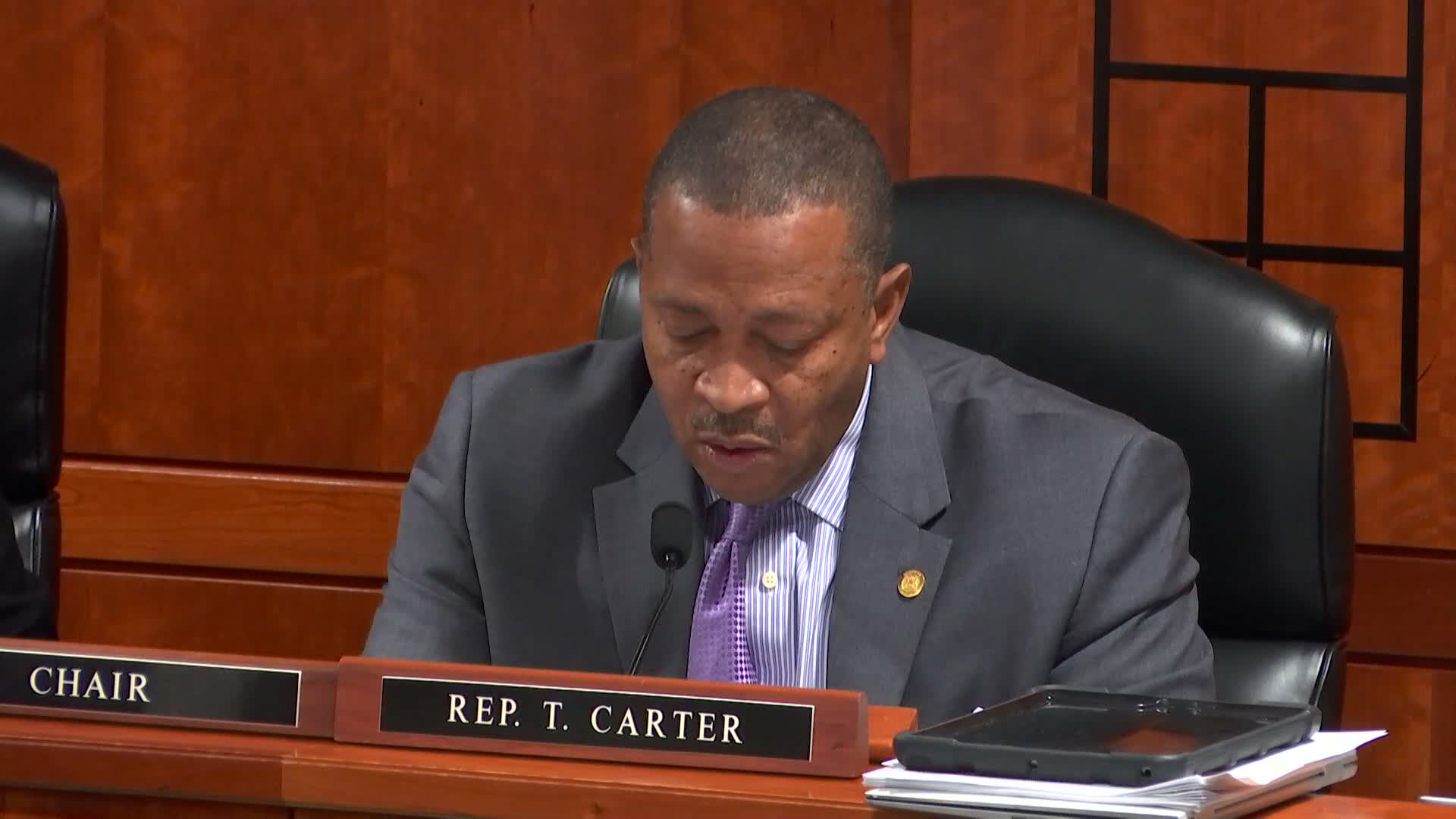
Representative Neely moved to report the bill with recommendation; the clerk called the roll and the committee recorded the bill as reported with recommendation.
Next steps: the bill was reported by the committee and may move to the full House for further consideration.