Get Full Government Meeting Transcripts, Videos, & Alerts Forever!
Get email alerts on the Infrastructure Reeser Wilbur topic
No spam. Unsubscribe anytime.
City staff recommend dwelling‑unit fee as preferred way to finance Reeser Road/Wilbur utility extension
Summary
Staff proposed coordinating with Walla Walla County to extend water and sewer alongside a county Reeser Road project and recommended 'Option 5' — a dwelling‑unit‑based trunk‑system special charge (approx. $30,000 per dwelling‑unit for Reeser; $27,000 for Wilbur at planning estimates) with design and interlocal steps to follow.
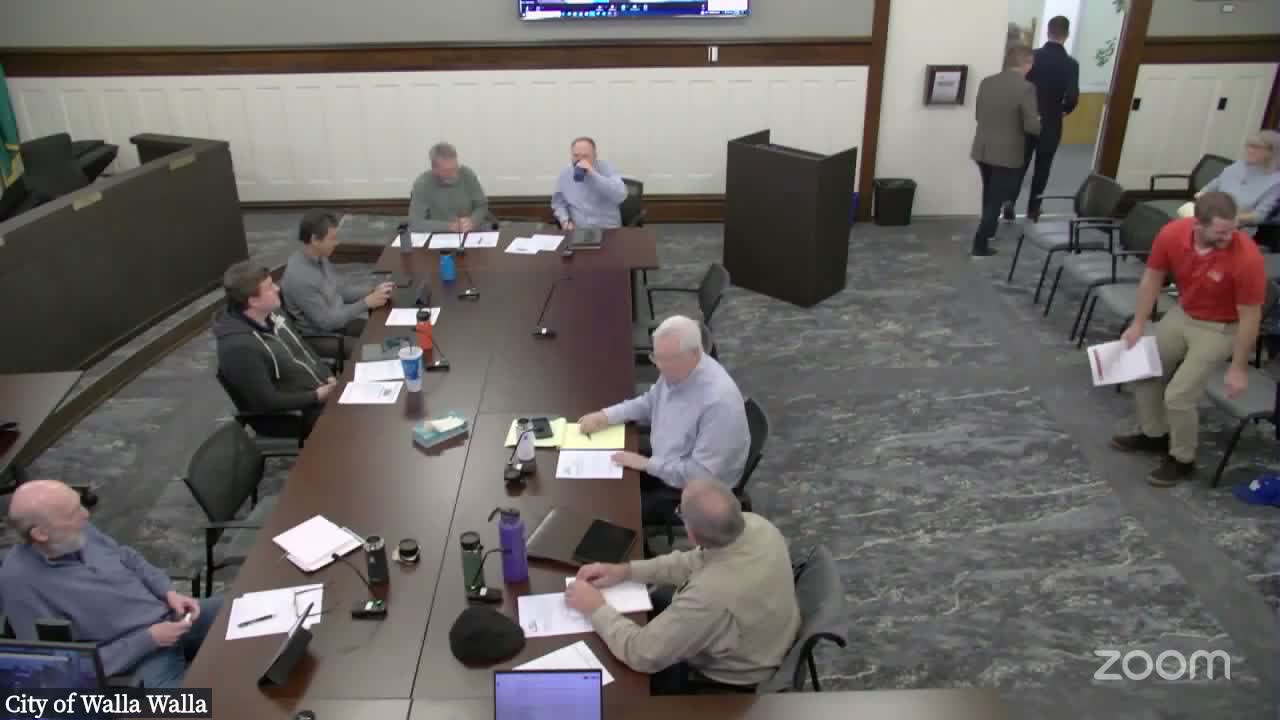
City public‑works staff told the Walla Walla City Council on Dec. 16 that extending water and sewer to the Reeser Road/Wilbur Avenue corridor can take advantage of a county construction project and recommended a financing approach tied to each parcel’s development potential.
Mr. Lowry, the staff presenter, said the county has a grant to construct Reeser Road between Fern and Wilbur, and the city’s analysis shows the sewer can be gravity fed — eliminating a pump station — which materially reduces long‑term costs. Staff presented five recovery options for assessing benefiting properties and identified Option 5 as the preferred approach because it allocates costs by a parcel’s realistic development potential rather than penalizing large or very small lots.
Under staff’s planning‑level estimates, the assessment under Option 5 would translate to roughly $30,000 per dwelling unit for the Reeser segment and about $27,000 per dwelling unit for the Wilbur segment; staff emphasized those are planning estimates and the final trunk‑system special charge would be set after construction bids and final costs are known. “Option 5…recovered the costs from each property based on its development potential,” Mr. Lowry said.
How it would be paid: Staff explained charges would be tied to a parcel and apply only when the parcel connects to city utilities (for instance, following septic failure or at time of development), not as an immediate forced connection charge. The city would likely front construction costs from water and wastewater fund balances and recoup the expenditures over time via the special charge; the mechanism is similar to capital‑facility charges that reimburse the city as properties connect.
Next steps and intergovernmental coordination: Staff recommended amending the city’s design contract (Anderson Perry) to complete full design services and drafting an interlocal agreement with Walla Walla County so the city can construct its extensions while the county’s contractor is on site. Staff noted 2026 as an optimistic construction year but warned the county may seek additional grant funds and the schedule could slip.
Why it matters: Coordinating with the county project could materially reduce construction costs for the city and property owners; the proposed assessment method spreads cost based on development potential rather than a flat per‑parcel fee, but it also means total cost recovery depends on future development intensity.
What’s next: Councilmembers voiced general support for staff proceeding with design work and interlocal negotiations; staff said the interlocal agreement and contract amendments will be brought to a regular council meeting for formal authorization before construction begins.
Attribution: Presentation and cost figures quoted directly from Mr. Lowry and city staff in the Dec. 16 work session transcript.