Get Full Government Meeting Transcripts, Videos, & Alerts Forever!
Get email alerts on the Homeless Shelter topic
No spam. Unsubscribe anytime.
Loveland council tables proposed shelter rezoning, asks staff for comprehensive impact study
Summary
The council voted 5–4 to table item 8.3 — a rezoning application to allow a full‑time adult homeless shelter — and directed the city manager to commission a comprehensive impact study covering infrastructure, cemetery effects, police calls, operational feasibility and comparative regional data.
Loveland City Council on Dec. 3 voted to table a proposed rezoning that would allow a full‑time adult homeless shelter, saying elected officials need more data before deciding where or whether the facility should be sited.
Councilor Troy McFall moved to postpone consideration of item 8.3 and directed the city manager to commission “a comprehensive impact study” that, as McFall described it, should include “an analysis of the economic and infrastructure impacts on surrounding residential and business areas, a review of the community impact including effects on public spaces such as a cemetery, a full report of police calls and emergency service costs related to similar facilities … and an assessment of the operational feasibility of the proposed shelter, including the incorporation of wrap‑around services, staffing, plans and security measures.” The motion carried 5‑4 after a roll call vote.
Supporters of delaying the vote said the council lacked a strategic implementation plan. “We have no plan,” Councilor Olson said during debate, urging the council to prefer an established strategic blueprint such as Wells Way Home before approving a facility. Councilor Foley said the matter is “novel” for the city and that additional data would help the council make a fact‑based decision.
Opponents of the delay argued the city has repeatedly asked for shelter capacity and that additional study could unnecessarily stall services. Councilor Black said Loveland has lacked facilities for people experiencing homelessness and cautioned against indefinite delay.
Public comment before the vote was lengthy and pointed. More than 20 residents spoke. Some, including Ward 4 resident Connie Luke, asked that any study be conducted by unbiased parties and that results be publicly shared. Others raised neighborhood‑safety, traffic and school‑proximity concerns. Olivia Lowe, a Ward 2 resident, described the city’s broader treatment of unhoused people and said she was frustrated with perceived inaction: “Move the goddamn needle,” she said.
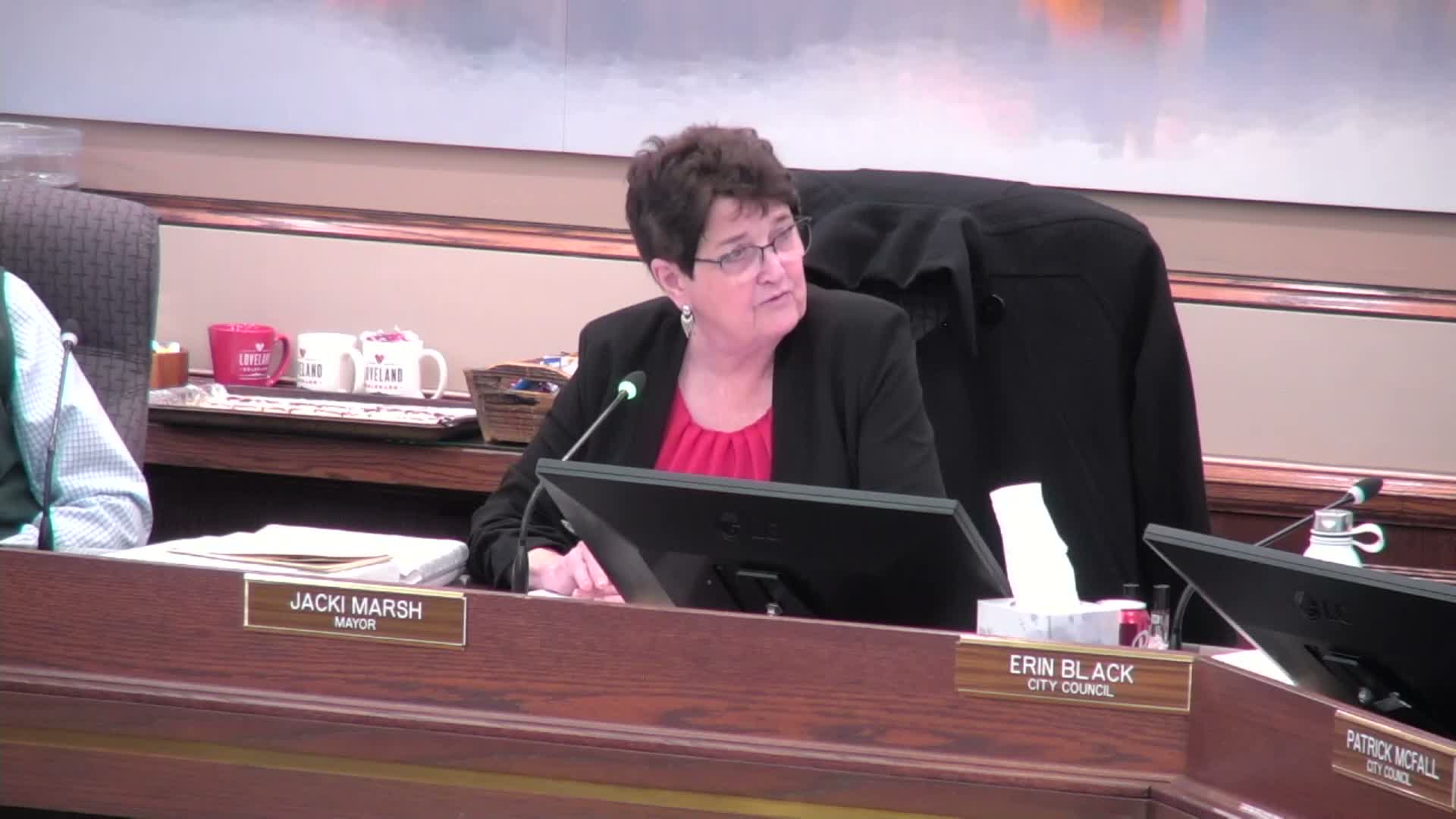
Mayor Marsh told the public the item was removed from tonight’s agenda and that staff will schedule a new date when the requested study is ready. The council did not vote on the rezoning itself; the tabling motion postponed formal consideration until staff delivers the requested impact analysis.
Next steps: the city manager’s office will commission the study and return the item to a future agenda; timeline and scope details will be set by staff in response to council direction.