Get Full Government Meeting Transcripts, Videos, & Alerts Forever!
Get email alerts on the Public Comment topic
No spam. Unsubscribe anytime.
Residents press Loveland council on homelessness, sales tax and Pulliam building operations
Summary
Multiple residents urged support for shelters, endorsed or criticized a proposed sales‑tax increase, and raised budget transparency concerns; speakers invoked the Grants Pass ruling, Housing First principles, and the Pulliam Community Building's $11.1M renovation gap in operating funds.
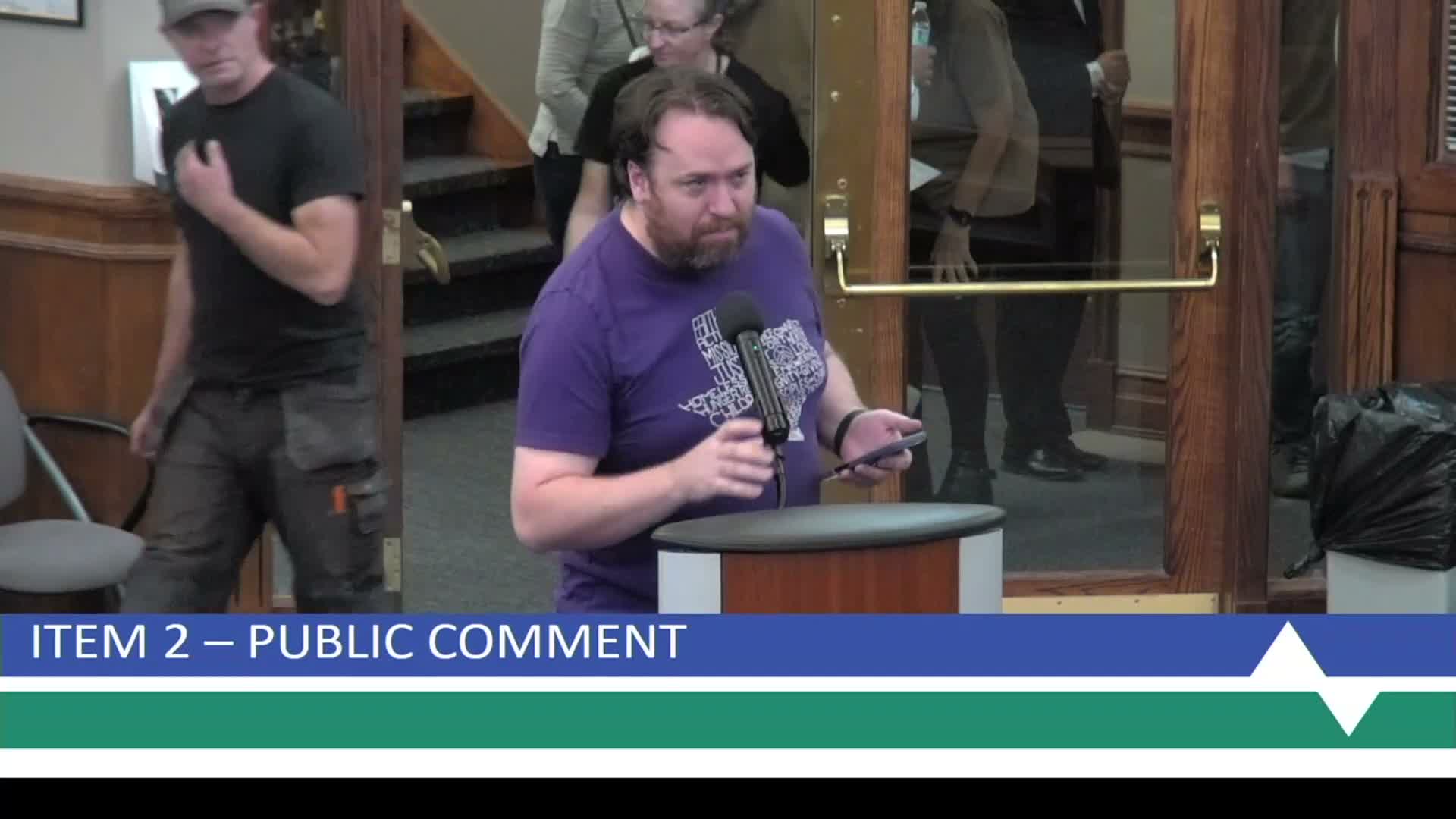
During the public‑comment period, residents urged the City Council to act on homelessness services and on the sales‑tax ballot measure under discussion in recent weeks.
Ben Nelson (Ward 1) cited the Grants Pass court ruling in arguing that local policy can limit certain actions (such as camping bans) without criminalizing homelessness, and he told council that enforceable encampment restrictions require shelter options be available under the city’s ordinance. "Until you amend those or replace those ordinances, you must have a shelter," he said.
Chuck Hubbard, calling in from Ward 2, read from Aristotle to advocate that government should promote the common well‑being and urged council to support a 1% sales‑tax increase (excluding food for home consumption) to fund a shelter and resource center; he also specifically endorsed Housing First approaches.
Several speakers raised fiscal themes tied to the sales‑tax debate: Darren Barrett cited CORA figures he said show midyear property‑tax receipts outpacing food‑tax losses for one six‑month period; Norm Ramey, president of the Pulliam Community Building Foundation, said $11.1 million has been spent or pledged for the Pulliam renovation (his foundation contributed about $2.5M) but operating funds were not included in the adopted budget, and he urged support for the tax measure to avoid leaving the renovated facility closed.
Other commenters urged resources over punitive rules, defended harm‑reduction services (noting Larimer County operates a mobile needle‑exchange), and cautioned council about unintended consequences when designing incentives.
Council did not take action on the subjects raised during public comment at this meeting; councilors noted several items would return to staff for follow‑up and that the finance presentation later in the evening would address some revenue questions raised by residents.