Get Full Government Meeting Transcripts, Videos, & Alerts Forever!
Get email alerts on the Municipal Finance topic
No spam. Unsubscribe anytime.
Loveland finance chief warns of $10M‑plus annual sales‑tax shortfall after grocery‑tax change
Summary
CFO Brian Waldy reported Q3 results showing a one‑time property‑tax backfill but an accrual‑basis $6.6M year‑to‑date sales‑tax shortfall, annualized to roughly $10.3–10.5M; council discussed reduced‑services budget cuts and that personnel/contractual costs continue to rise.
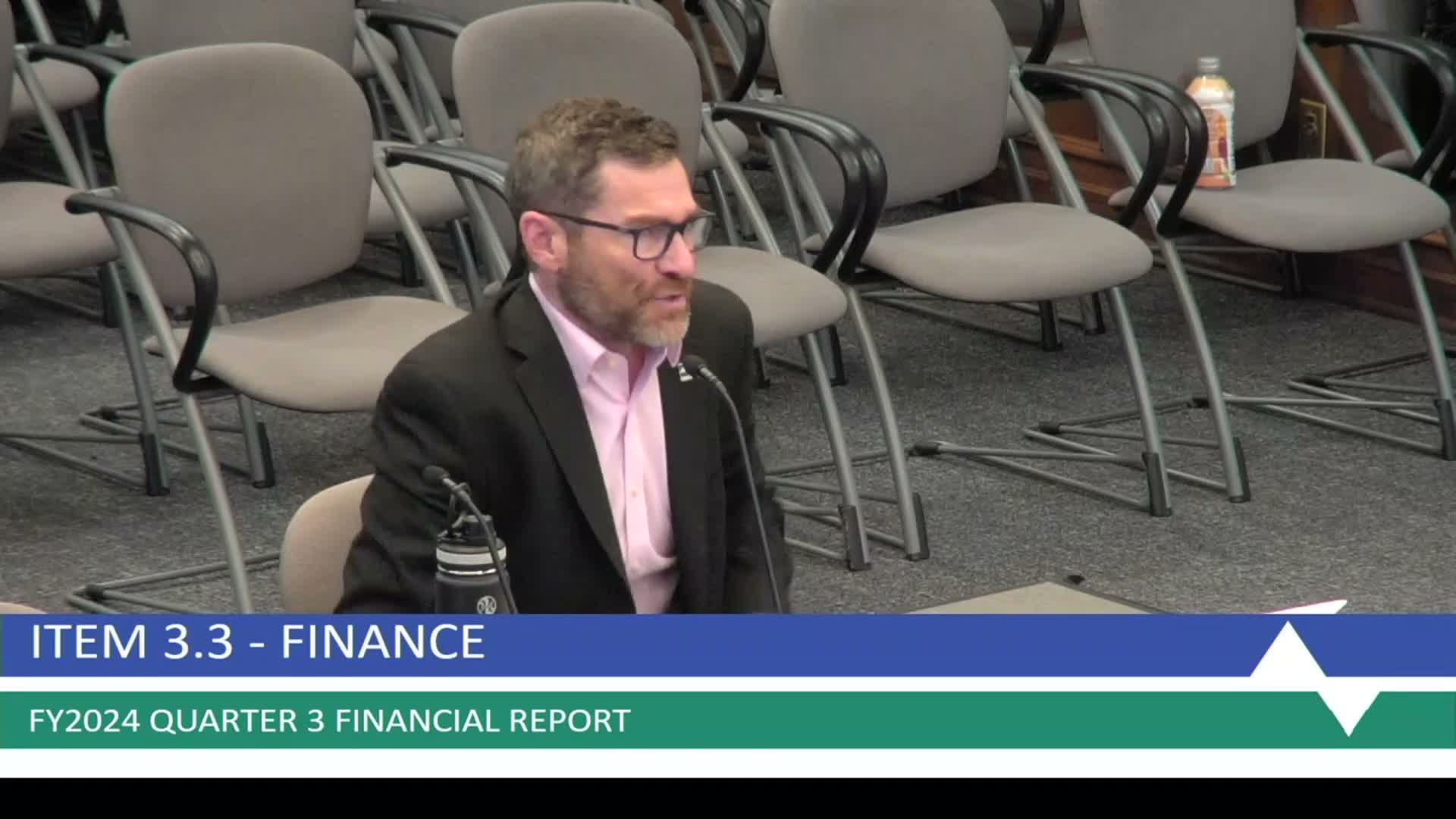
Brian Waldy, Loveland’s chief financial officer, told the City Council that while property‑tax receipts included a one‑time Department of Local Affairs (DOLA) backfill of about $883,000, the city is still seeing a substantial sales‑tax revenue decline tied to the change that removed the grocery/food tax on home consumption.
Waldy presented both cash‑basis and accrual‑basis figures and said the accrual report shows roughly $6.6 million down year‑to‑date through August; when annualized (accounting for heavier retail months in late year) that trend projects to about $10.3–10.5 million in lost annual revenue. "We are looking at a loss in the 10 to $13 million range," he said, and councilors and residents in public comment frequently referenced the same figures.
Waldy also cautioned that a property‑tax bump does not eliminate the structural budget gap because expenses — personnel, benefits and contracted services — continue to grow. He noted that the city’s 2025 reduced‑services budget incorporates personnel increases (steps and merit caps) and that the general fund will be tighter going into next year. "We had a one‑time payment in April," he said, referring to the DOLA backfill, "and we would not anticipate that recurring next year."
Councilors asked for clarifications about which sectors contributed most to the sales‑tax decline (grocery and large retail categories such as department stores and online purchases were highlighted) and whether the Centerra urban renewal sharebacks contribute materially to the gap; Waldy answered that the Centerra URA structure diverts a portion of retail tax receipts (roughly 1.25 percentage points) to approved public improvements and bonds.
No formal budget action was taken at the meeting, but the finance presentation reinforced earlier council direction to continue implementing the reduced‑services budget and to return with more detail on capital‑vs‑operating tradeoffs for 2025.