Get Full Government Meeting Transcripts, Videos, & Alerts Forever!
Get email alerts on the Lilac Park topic
No spam. Unsubscribe anytime.
City opts for low‑water turf conversion at Lilac Park; staff to seek grants for larger options
Summary
Parks staff presented three options to convert Lilac Park’s bluegrass to lower‑water landscaping. Council favored the lowest‑cost native/hybrid conversion (Plan A) because it reduces operations and pays back in about 3–4 years; staff will pursue grant funding for more elaborate designs.
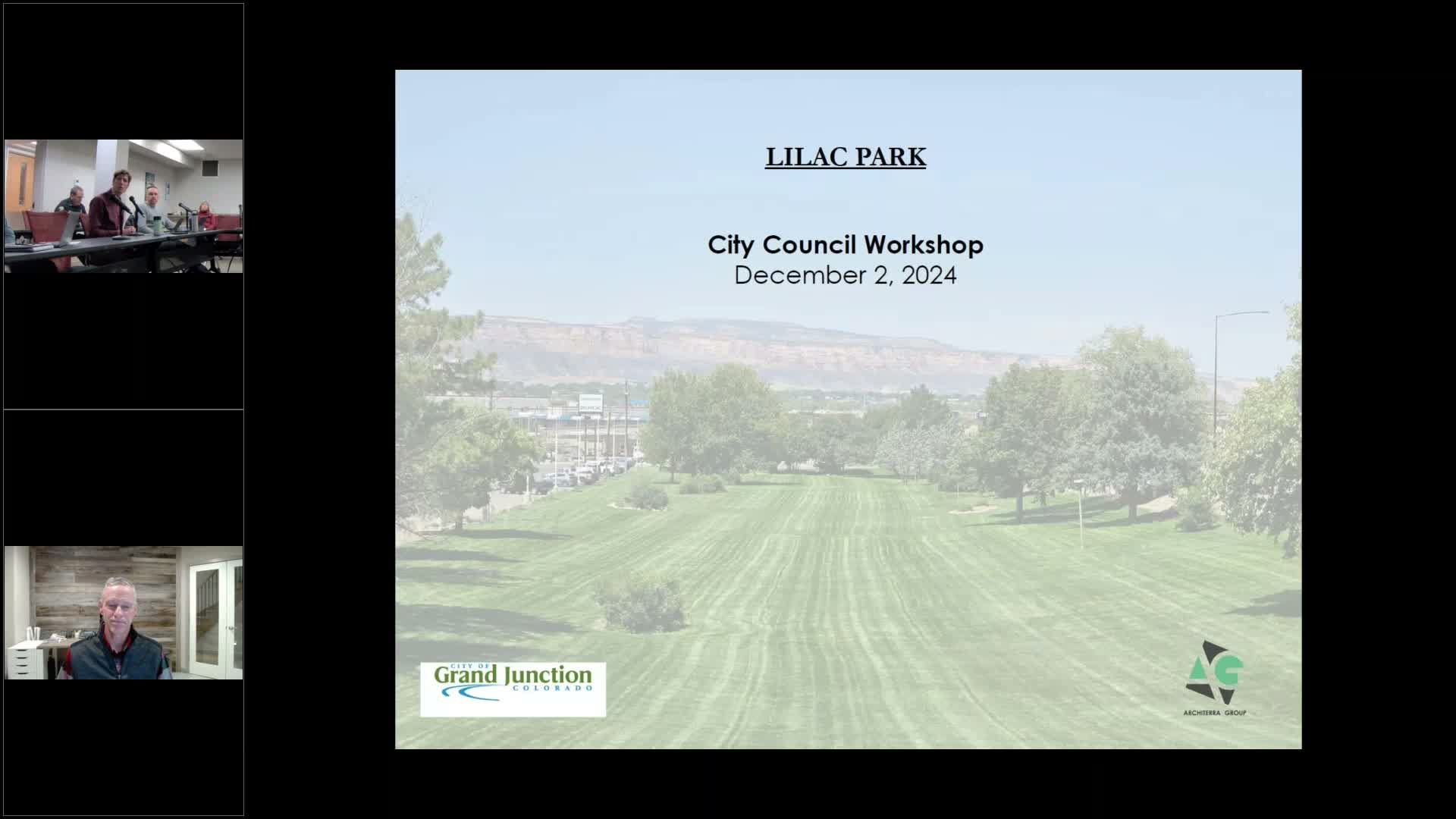
Parks and recreation staff, joined by landscape architect Dean Pearson of Arcaterra Group, presented three options to reduce water use at Lilac Park, a 3.5‑acre site currently planted in bluegrass turf. Option A proposes converting to native or hybrid low‑water turf and reusing the existing irrigation system with modest changes; staff estimated roughly $73,000 in capital work and an annual operations savings of about $21,700 (a payback of about 3.4 years). Option B would add meandering planting panels and additional trees (approximately $205,000 capital; ~9.5‑year payback), and Option C would be a larger aesthetic conversion with rows of flowering trees and rock mulch (about $330,000 capital; >15‑year payback).
Parks staff noted the department’s limited current budget for larger capital work but suggested the Colorado Water Conservation Board and other grant sources could reduce local capital needs. Several council members favored Option A for immediate conversion because the site is partly owned by others, is used primarily for sledding, and offers the quickest operational savings. Council also expressed interest in incrementally adding trees to meet canopy goals over time. Staff will pursue grant funding where possible and return with procurement and implementation plans.
No formal vote was taken; council provided direction to pursue Option A and explore grant support for larger options.