Get Full Government Meeting Transcripts, Videos, & Alerts Forever!
Get email alerts on the Epi Report topic
No spam. Unsubscribe anytime.
Louisiana 2023 STI, HIV and hepatitis C data show persistent racial disparities and high STI burden
Summary
State epidemiologist Sam Burgess presented 2023 surveillance showing declines in some STIs but persistently high rates overall: nearly 1,200 primary/secondary syphilis cases, 109 congenital syphilis cases (10 tied to infant death/stillbirth), 867 new HIV diagnoses and continued racial and geographic disparities concentrated in Black residents and several metro regions.
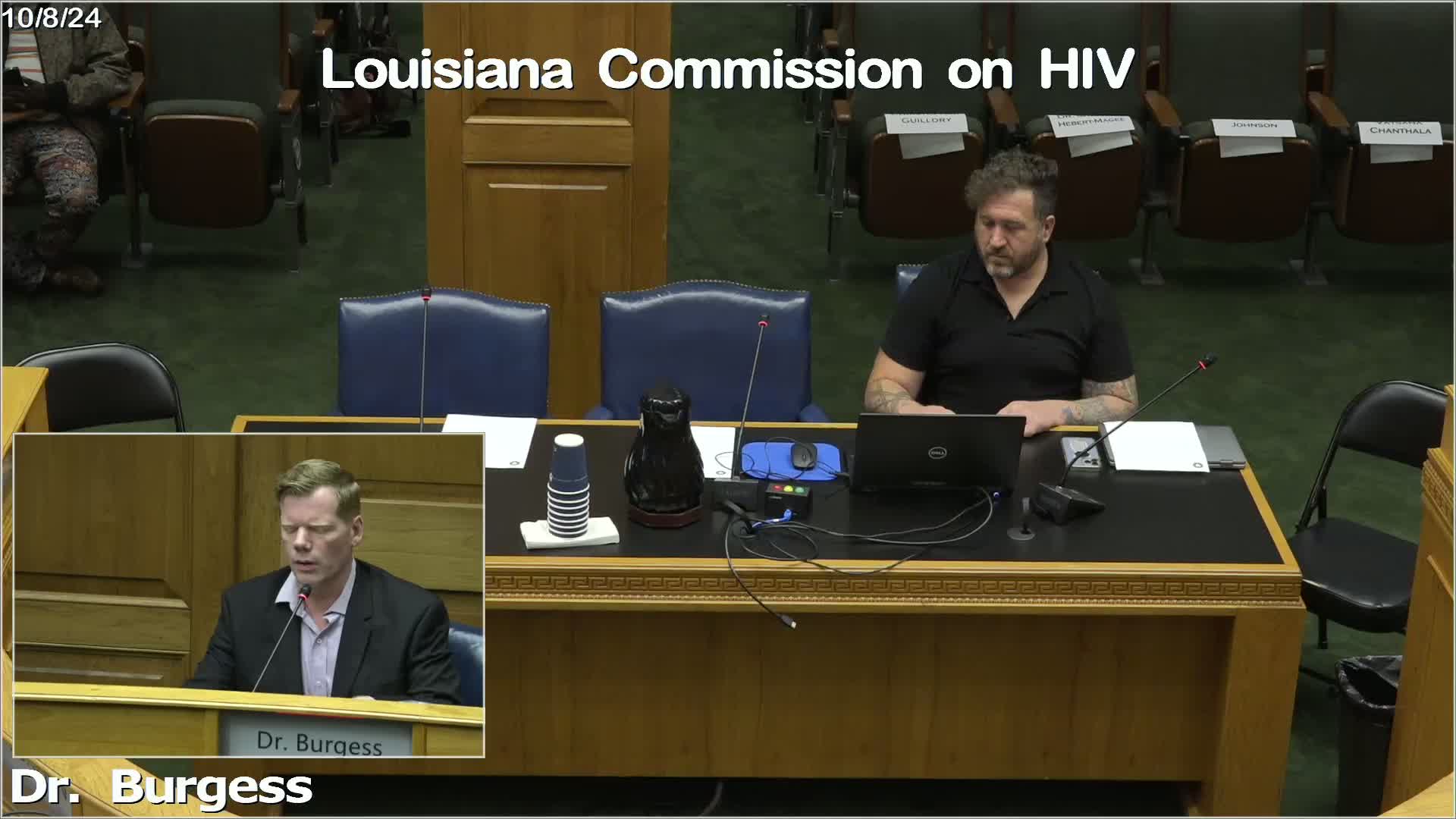
Dr. Sam Burgess, presenting the Louisiana 2023 epidemiology overview to the Louisiana Commission on HIV and Hepatitis C Education, Prevention and Treatment on Oct. 8, said some conditions edged down in 2023 but the state remains at historically high levels for several sexually transmitted infections.
Burgess told commissioners the state recorded just under 1,200 new primary and secondary syphilis diagnoses in 2023 and that Louisiana ranked ninth nationally by syphilis diagnosis rate in the most recent available comparisons. "We're still at a much higher level of new syphilis diagnoses than we had been many years ago," he said.
He said congenital syphilis fell by about six cases to 109 in 2023 but emphasized the persistent public-health toll: 10 of those cases were associated with infant deaths or stillbirths. "Congenital syphilis is completely preventable and we have definitely a lot of work to do here," Burgess said, noting low third-trimester testing coverage and that about 95% of congenital cases occurred among people covered by Medicaid.
Gonorrhea and chlamydia remain common. Burgess reported more than 13,000 gonorrhea diagnoses in 2023 and just over 36,000 chlamydia diagnoses, a condition for which women account for the majority of reported cases because screening is recommended for women. "Chlamydia is the STI we track where women account for the majority of diagnoses," he said, adding that younger people drive much of the burden.
HIV diagnoses have trended downward since about 2014 but progress slowed after COVID-related testing disruptions, Burgess said. He reported 867 new HIV diagnoses in 2023; 196 of those included an AIDS diagnosis, an indicator of late testing. "The majority of people impacted by HIV in our state are Black," Burgess said, stressing that Louisiana's Black population (about 32% of the state) experiences a disproportionate share of STI and HIV diagnoses.
Burgess also summarized hepatitis C reporting: after a 2019 reporting law change that added negative test results to surveillance, Louisiana now consistently reports over 400,000 hepatitis C tests per year and saw new hepatitis C diagnoses decline to under 4,000 in 2023. He said the paper annual reports for 2023 will be released later in the year and are expected to include more geographic and demographic detail.
Kendall and other commissioners said they plan to use the completed 2023 reports to examine whether trends seen in 2022 for specific groups (including Black women) persisted and to place rural HIV trends on the November agenda for a focused review.
What's next: the commission will receive and circulate the full 2023 epi reports when published; because the panel lacked quorum, any formal business tied to the data was deferred to the November meeting.