Get Full Government Meeting Transcripts, Videos, & Alerts Forever!
Get email alerts on the Tax Policy topic
No spam. Unsubscribe anytime.
Senate committee advances broad tax overhaul: 3% flat personal tax, 6% corporate rate, eliminate franchise tax
Summary
A Senate Revenue and Fiscal Affairs committee advanced multiple bills Nov. 19 that together flatten personal income tax to 3%, set a negotiated corporate income tax at 6%, eliminate the franchise tax and change several tax credits and sunsets; members adopted technical and policy amendments and rejected a foreign trade zone protection amendment.
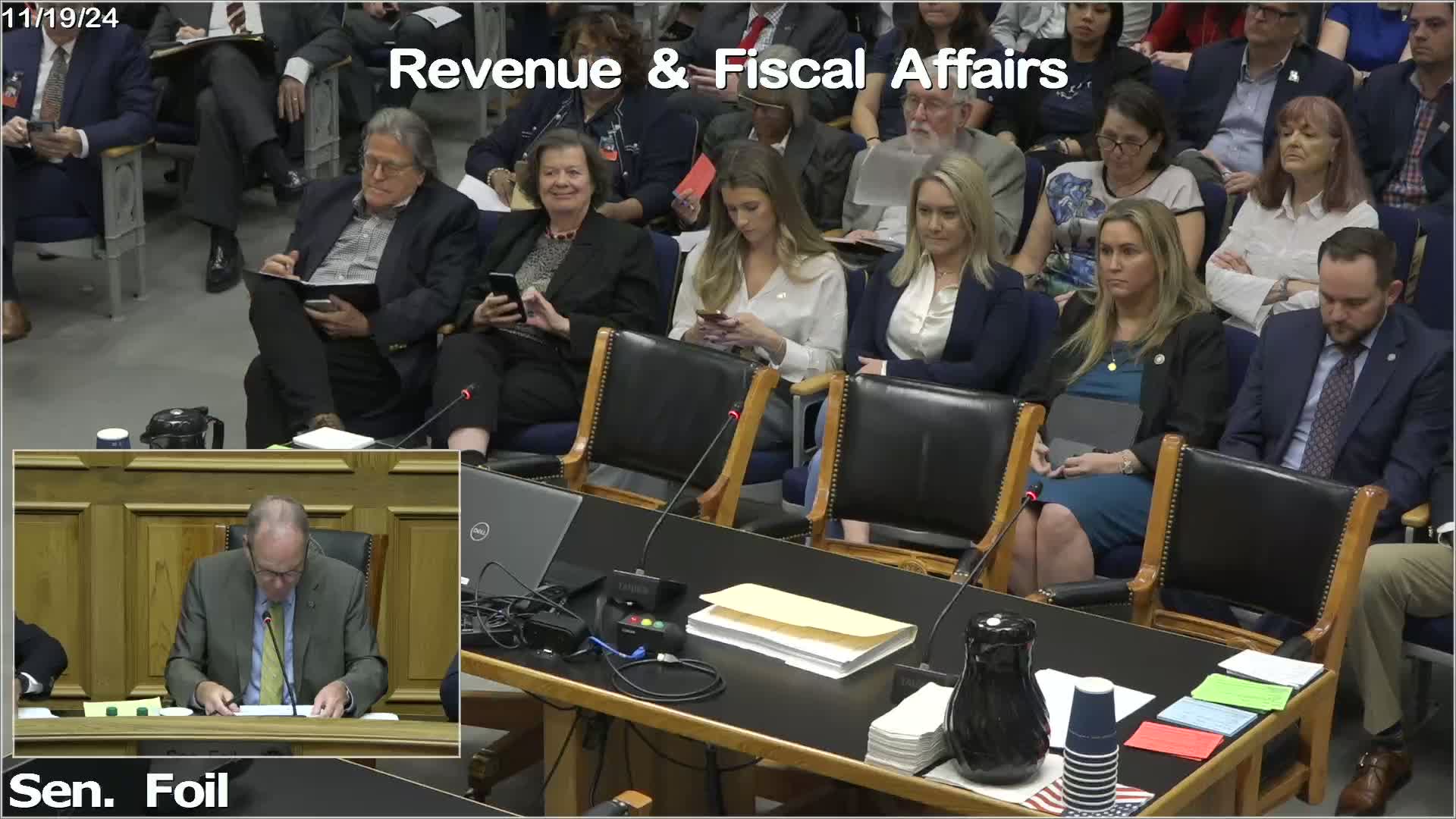
The Senate Committee on Revenue and Fiscal Affairs on Nov. 19 approved several bills and amendments to consolidate a broad tax package that sponsors say will lower rates while capping or reshaping credits. Chairwoman Emerson and staff said the package moves the state to a single 3% personal income tax bracket, increases the standard deduction and removes so-called automatic “triggers” that would lower rates without a legislative vote.
The committee also reported House Bill 2 as amended, setting the corporate income tax at a flat 6% under amendment set 97. Chairwoman Emerson said the 6% figure replaces an earlier step-down schedule and that the rate will remain in effect “until the legislature makes further changes.” Secretary Richard Nelson and fiscal staff described a suite of coordinated adjustments — including caps and changes to the motion-picture, research-and-development and historic rehabilitation tax-credit programs — intended to pay for lower rates. Miss Klepinski told members the R&D credit would be capped at $12,000,000 per year and the motion-picture program caps would be reduced to $125,000,000 beginning July 1, 2025; the historic rehabilitation credit cap would be reduced to $85,000,000 for applications received on or after July 1, 2025.
Committee members repeatedly emphasized the package is an integrated deal: several senators said lowering rates broadly required narrowing or capping targeted incentives. Senator Jenkins praised preserving the film and historic tax credits, calling them “wise investments” that spur economic activity and have accountability measures. Senator Reese and others said some local protections and mechanisms were added to prevent unintended local revenue harms.
Not every change passed. Senator Lambert offered an amendment (set 130) to preserve a foreign trade zone exemption that would have kept certain FTZ firms’ current corporate-income apportionment treatment in place. Secretary Nelson told the committee, “we are the only state that basically applies this special exemption from corporate income,” and cautioned that the exemption creates an imbalance when combined with other provisions in the package. After debate, the amendment failed on a roll call.
The committee also adopted amendment set 126 to restrict refundability of certain tax credits so credits cannot reduce a taxpayer’s liability below zero, which sponsors said prevents larger firms from receiving refunds funded by smaller taxpayers. Separately, House Bill 3, which eliminates the franchise tax, was reported favorable; staff noted franchise-tax receipts currently flow to the revenue stabilization fund rather than the general fund.
The committee reported House Bills 1–3 and related amendment bundles as amended and moved them on to the next stage. Where changes leave open further negotiation — such as whether the corporate rate can be lowered in future sessions or how local inventory tax changes will be implemented — sponsors said they will continue to work with members and local officials before floor votes.
What happens next: the bills were reported out of committee for further consideration by the Senate. Sponsors said some technical changes remain possible, and they expect additional floor amendments and continuing work with local officials and stakeholders.