
Senate committee probes HB 10 sales‑tax rewrite as retailers and nonprofits warn of fallout
Get AI-powered insights, summaries, and transcripts
Subscribe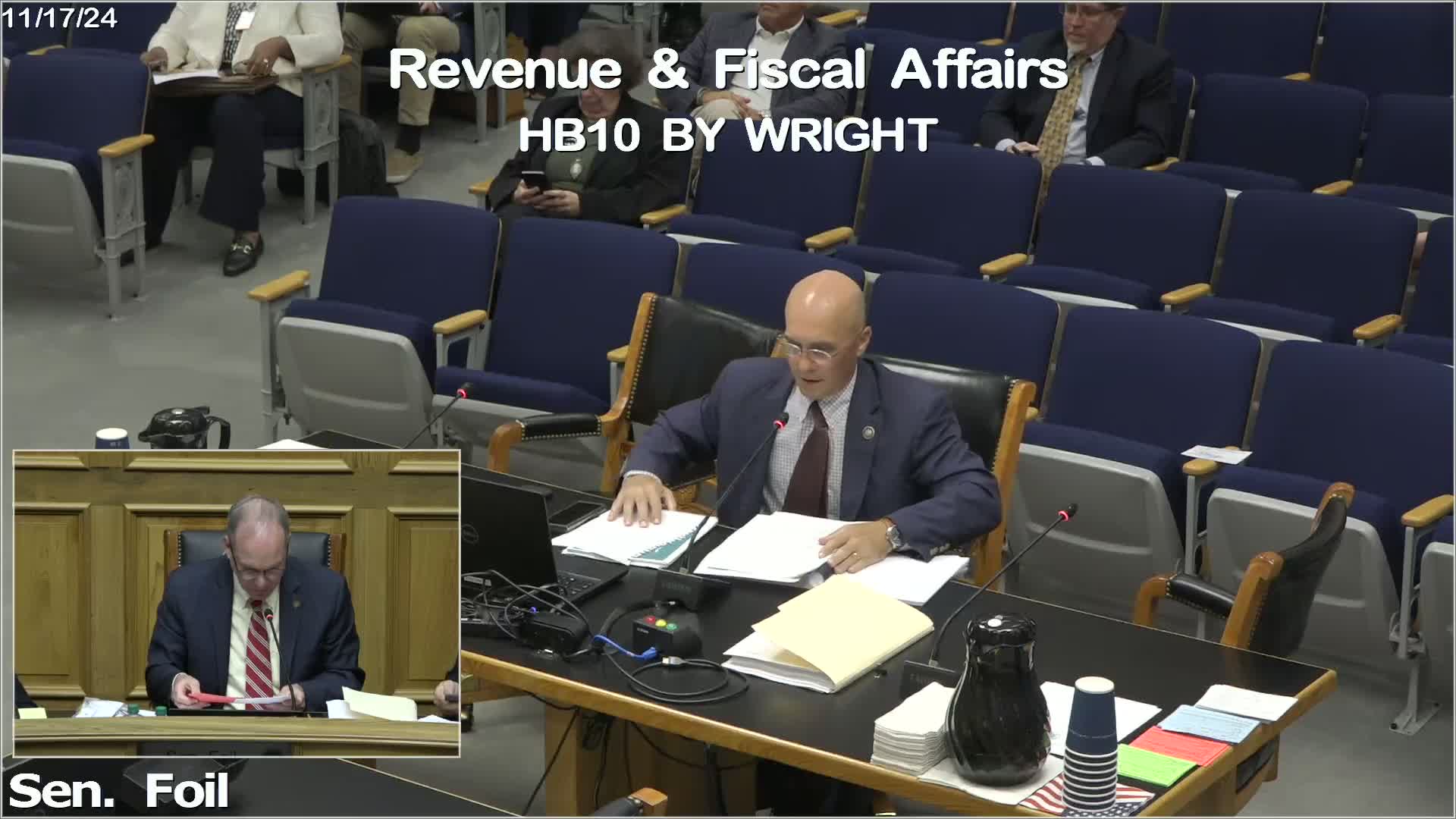
Summary
Representative Wright's lengthy sales‑tax rewrite would make some temporary levies permanent, align state and local bases and remove many exemptions; retailers sought to retain vendor compensation, blood centers and co‑ops warned of nonprofit and rural ratepayer impacts, and car‑rental firms urged preserving the rental vehicle purchase exemption.
Representative Wright presented House Bill 10, a broad reorganization and partial permanency package for sales taxes, to the Senate Revenue and Fiscal Affairs Committee on Nov. 17. The bill would make aspects of the temporary sales tax permanent (notably a 0.4% base that had been 0.45%), reorganize the sales‑tax statutory structure, and remove or reinstate a long list of exemptions with the stated goal of aligning state and local bases.
Retailers and trade groups urged retention of vendor's compensation — a modest monthly credit (capped at $1,500 monthly per filer) that compensates merchants for the administrative cost of collecting and remitting sales tax. Grocery and supermarket representatives explained that card processing fees and complex multi‑jurisdictional reporting impose real costs, and that vendor's comp encourages timely compliance.
Other witnesses asked the committee to retain specific exemptions: blood banks warned the repeal of exemptions for the medical supplies used in blood collection would impose nontrivial costs on nonprofit operations; electric co‑ops said a wholesale repeal in title 12 could force unpaid sales taxes onto rural ratepayers; the car‑rental industry said removing an established exemption for rental vehicles would create double taxation and raise costs for Louisiana residents and insurers.
Committee members and staff acknowledged the complexity and lack of consensus and reported that targeted amendments are being drafted to protect narrow industry and nonprofit interests. The chair deferred HB 10 to the next day's session to allow further amendment work.