Get Full Government Meeting Transcripts, Videos, & Alerts Forever!
Get email alerts on the Road Transfer topic
No spam. Unsubscribe anytime.
Lawmakers press DOTD on $350M road‑transfer backlog and plan to 'right‑size' state highways
Summary
Committee discussion focused on the road-transfer program backlog (~$350M), how roads are deemed eligible for transfer or abandonment and DOTD's effort to document eligibility and encourage local governments to accept transfers or credits.
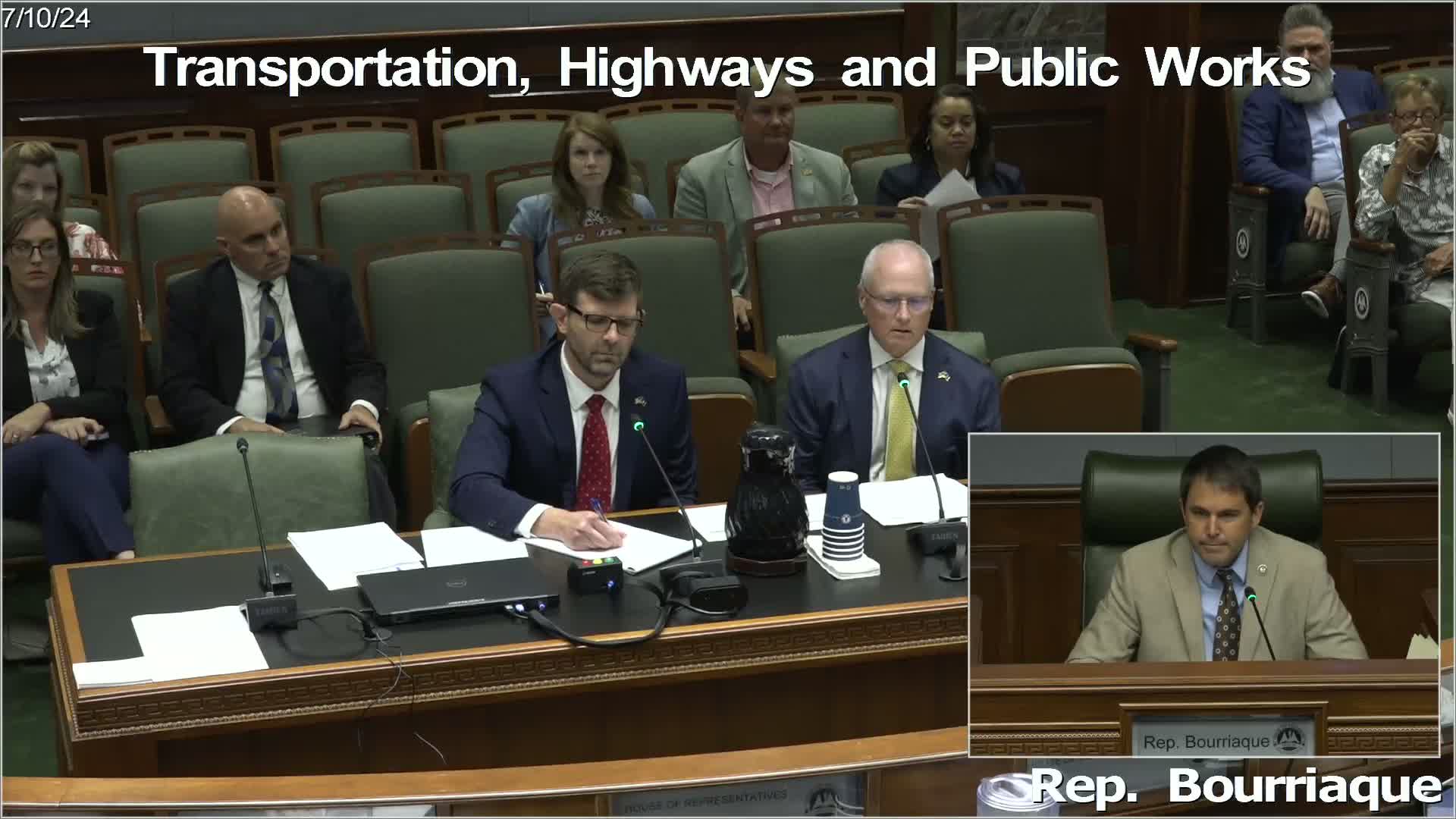
Legislators used the July 10 House Transportation Committee hearing to press DOTD on a persistent backlog in the road-transfer program and on plans to pare back state responsibility for roads that are better handled locally.
Deputy Secretary Barry Keeling and Secretary Joe Donahue told the committee that nearly $350 million in road-transfer projects/credits are signed or queued and that DOTD is undertaking a formal process to document why specific roads qualify for transfer, reversing years in which records on eligibility were incomplete.
Why it matters: Rightsizing the state highway system can reduce recurring maintenance costs on roads that no longer serve statewide connectivity, freeing state funds for higher‑priority corridors. Legislators asked for a statewide inventory, estimates of mileage reducible from the state system, and the fiscal impact of transfers.
What DOTD said
• Keeling described the transfer process: local governing authorities submit a resolution requesting transfer, DOTD brings the roadway up to standard, and DOTD provides an estimated maintenance-equivalent credit (40 years) as an incentive for the local jurisdiction to accept the road.
• Donahue and DOTD planning staff (Connie Porter Betts) said DOTD has an identified list of eligible roads on its website but acknowledged ‘‘there is no record of how they meet the eligibility criteria’’ and that DOTD is creating a documented form to memorialize each eligibility determination.
• Donahue said abandoning (divesting) state roads is legally possible without credits, but DOTD prefers to provide credits to avoid foisting costs on locals and because some eligible roads have residences or businesses that would lose service if abandoned.
Legislators seek metrics and timelines
Vice Chair Fontenot and others asked how many miles could be offloaded and how much recurring maintenance savings might follow. Donahue said DOTD is compiling those numbers with assistance from Boston Consulting Group and expected to provide a report to the legislature in mid‑January, including estimates of staff reductions and cost savings tied to rightsizing exercises.
Next steps
DOTD said it will publish the eligibility documentation, continue outreach to parishes and municipalities, and provide the committee with a data-driven assessment of which miles can be divested, the estimated fiscal savings and the timeline for those changes.