Get Full Government Meeting Transcripts, Videos, & Alerts Forever!
Get email alerts on the Elections topic
No spam. Unsubscribe anytime.
Committee advances change to judicial election timing and eligibility to floor
Summary
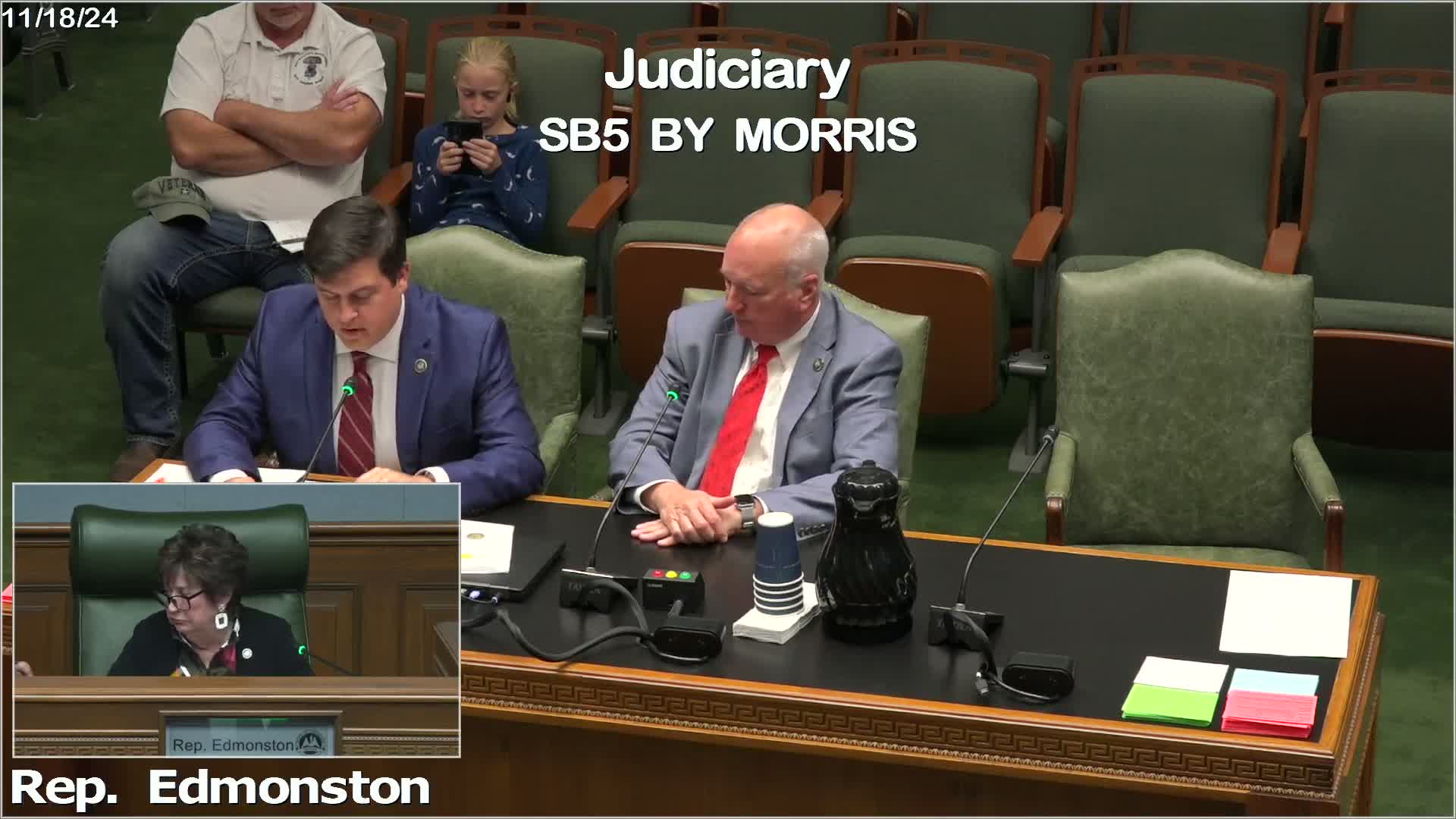
The House Committee on Judiciary advanced SB5, which adjusts timing for judicial special elections under closed party primaries and allows limited exceptions for appointed judges in certain specialized courts; the measure passed committee 7–6 and moves to the floor.
On Nov. 18 the House Committee on Judiciary voted to advance Senate Bill 5, a constitutional amendment sponsor Senator Morris told the panel is intended to resolve conflicts between a one‑year vacancy rule in the state constitution and the implementation of closed party primaries.
Representative McMakin explained the measure would allow a special judicial election to be held at the next gubernatorial or congressional election when that date falls within applicable law, rather than always requiring a separate special election. "We have a conflict between our constitution and the election code because of closed primaries," a sponsor said, noting a stand‑alone special election can cost "about $12,000,000 to $13,000,000."
Catherine Newsom, first assistant secretary of state, told the committee that the new closed‑party primary schedule (starting in 2026) could leave odd years without statewide elections and create situations where a vacancy could persist more than 12 months unless the constitution is adjusted. "2026 will be our first years to implement closed party primary," Newsom said, explaining the timing challenge.
The bill also includes a narrow provision allowing, by legislative law and at the Supreme Court's request, appointees to run for seats in courts of limited or specialized jurisdiction. Representative Zarang and others opposed that aspect, arguing it could create a de facto appointment advantage. "I can't see any attorney in their right mind going up against that," Representative Zarang said of a sitting appointee with institutional support.
After debate and a roll‑call prompted by an objection, the committee recorded a 6–6 split and the chair cast the tie‑breaking vote in favor, producing a 7–6 result to advance SB5 to the House floor. Sponsors said they are willing to work on amendments on the floor if members want to narrow or remove the appointee provision.
What happens next: SB5 will be calendared for consideration by the full House; sponsors expect floor amendments to address concerns about appointee eligibility if necessary.