Get Full Government Meeting Transcripts, Videos, & Alerts Forever!
Get email alerts on the Health And Human Services topic
No spam. Unsubscribe anytime.
Senator Harden Elected HHS Chair as Colleagues Raise Concerns About DHHS Rulemaking and Medicaid Changes
Summary
During organizational sessions Jan. 8, 2025, senators elected committee chairs across standing committees; the Health and Human Services chair race drew substantive discussion about DHHS rulemaking via provider bulletins, oversight and Medicaid reimbursement, with Senator Brian Harden elected HHS chair.
Senators used the first-day organizational session to select chairs for standing committees that will influence the 2025 legislative agenda, including Appropriations, Education, Revenue and Health and Human Services (HHS). A contested HHS chair nomination produced extended discussion about legislative oversight of DHHS rulemaking and Medicaid policy.
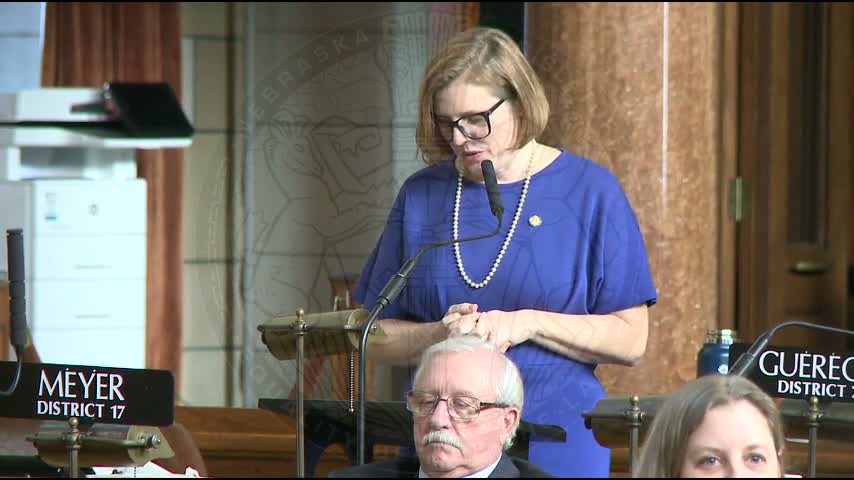
Senator Mikaela Kavanaugh briefly placed her name in nomination for HHS chair but withdrew it so she could pose pointed questions about DHHS practices. Kavanaugh warned that Nebraska Medicaid had been implementing provider-facing changes by provider bulletin, which she argued can sidestep the agency’s formal rulemaking process and public comment opportunities: “In implementing drastic changes via provider bulletin, the state is skirting its own rule making process,” she said, urging candidates to explain how they would handle oversight and transparency for the department.
Brian Harden, who was nominated and accepted the HHS chair position, framed his priorities around oversight, workforce development and Medicaid reimbursement. Harden noted the scale of HHS responsibilities and budgetary impact, saying oversight will be a priority because HHS “spends one third of the state’s budget in excess of $5,300,000,000 each year.” He also cited workforce shortages, telling colleagues the state was short an estimated 5,400 registered nurses and described rural medical deserts and the need to expand mobile and scope-of-practice solutions.
Other committee chair selections proceeded by nomination, acclamation or ballot as required. Examples from the session: Senator Armendariz was chosen chair of the Committee on Committees; Senator Hanson was elected chair of the Executive Board; Senator Merman was re-elected chair of Education; Senator Clements was elected chair of Appropriations; and multiple other chairs for Judiciary, Natural Resources, Revenue, Transportation, Urban Affairs, Rules and Enrollment and Review were named during the day.
The HHS discussion included references to state audit work: a state auditor’s finding of fraud in DHHS home care programs was cited during remarks as a reason to strengthen oversight. Senators said they would pursue oversight, potential rule-review enhancements and legislative scrutiny of administrative changes brought through agency bulletins.
Next steps: the new chairs will convene committees and begin receiving bills and agency reports; senators signaled a priority on oversight of HHS rules and Medicaid implementation at early committee hearings.
Representative quotes from the day include Kavanaugh’s critique of agency rulemaking and Harden’s summation of HHS priorities and concerns about workforce and oversight.