Get Full Government Meeting Transcripts, Videos, & Alerts Forever!
Get email alerts on the TOPS Enrollment Trends topic
No spam. Unsubscribe anytime.
LOSFA data shows falling TOPS eligibility and acceptance; officials point to smaller graduate cohorts, lower ACTs and out‑of‑state recruitment
Summary
LOSFA research director and executive director told lawmakers TOPS eligibility and acceptance rates have fallen, driven by a smaller pool of graduates, lower statewide ACT averages and more top students taking richer out‑of‑state offers; part‑time enrollment and delayed acceptance also reduce TOPS uptake.
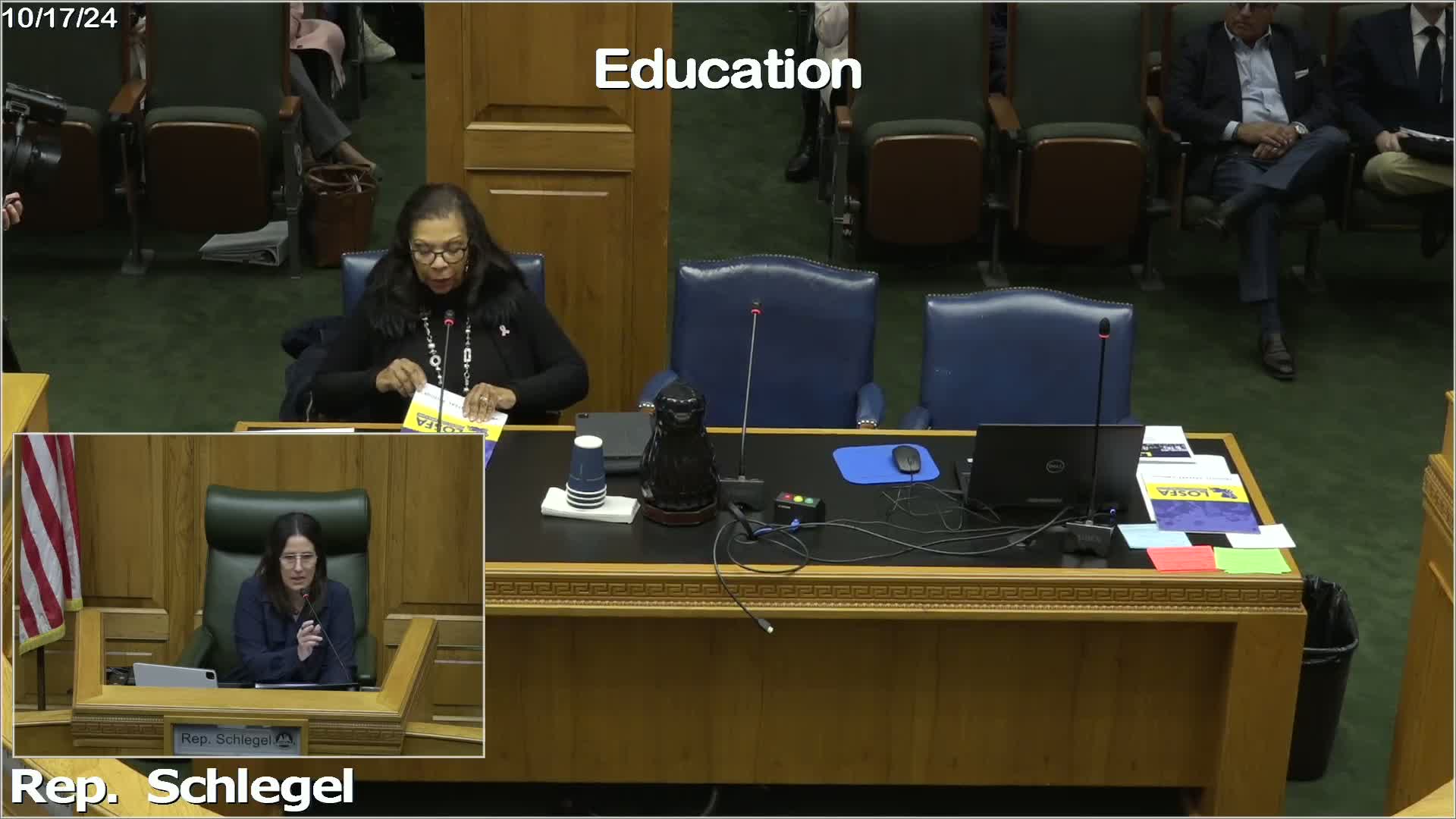
Siwan Bute, executive director of LOSFA programs, and Shauna Estee, director of research and business intelligence, presented detailed empirical findings on the TOPS merit‑aid program and college‑going patterns to the House Education Committee.
Bute summarized a multi‑year trend: fewer Louisiana high‑school graduates are in the TOPS candidate pool and a smaller percentage of that pool meets TOPS eligibility thresholds. "When TOPS was decoupled from tuition... fees kept going up," Bute said, stressing that the gap between the static TOPS award and rising cost‑of‑attendance reduces the award's purchasing power.
LOSFA data presented to the committee showed TOPS acceptance rates falling over several years; Bute cited a 23–24 academic‑year acceptance rate of about 76.44% overall and noted distinct patterns by award tier: opportunity, performance and honors recipients display different acceptance and retention behavior. The department’s analysis points to three principal drivers:
• A smaller pool of graduates to process (the denominator has shrunk since 2016–17).
• Lower average ACT scores statewide (LOSFA cited a statewide average ACT near 18.2), which reduces the share of students eligible for the higher TOPS tiers.
• Out‑of‑state recruitment and larger scholarship offers from other states and universities that cover room and board beyond what TOPS provides.
Bute said TOPS recipients sometimes do not accept awards because they enroll part‑time (TOPS typically requires continuous full‑time enrollment), or because they delay acceptance beyond the one‑year window. LOSFA also reported that most TOPS exception appeals are approved when students provide documentary evidence; mental‑health exceptions have risen and are now a significant category of appeals.
Shauna Estee described LOSFA’s data sources, including National Student Clearinghouse matches and Board of Regents records, and said the agency provides granular parish‑level and award‑tier breakdowns to legislators on request. "We look at the cost of attendance and how TOPS coverage compares — when TOPS doesn't cover the cost to attend, families make different choices," she said.
Lawmakers asked about potential remedies and LOSFA noted policy options under consideration: adjustments to TOPS structure or award levels, expanding outreach to counselors and families, improving appeal processes, and supporting dual enrollment and pathways that lead to credentials with strong labor‑market outcomes. LOSFA said the full statewide financial‑aid report will be delivered to the legislature in February.
Committee members pressed for parish‑level data and for LOSFA to provide more information about where declining TOPS recipients enroll and how retention and earnings outcomes compare across program types. LOSFA said it will supply those datasets to the committee.