
Jeff White Skatepark committee debates concrete builds, pump-track idea as RFQ review continues
Get AI-powered insights, summaries, and transcripts
Subscribe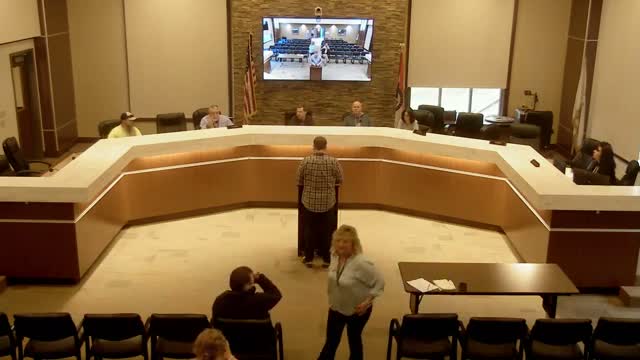
Summary
At its inaugural meeting, the Jeffrey White Memorial Skatepark Project Committee discussed competing RFQ submissions and whether to prioritize an all‑concrete park (durability) or prefabricated elements (lower initial cost); public comment urged an inclusive redesign that could add a pump track. The committee tabled any selection pending further outreach to designers and grant reviewers.
The newly formed Jeffrey White Memorial Skatepark Project Committee met Dec. 27 and spent much of its first session weighing competing engineering and design proposals for the proposed skatepark in Pacific, Missouri. Johnny Phelps was selected as committee chair at the start of the meeting; after public comment, members debated whether to favor an all‑concrete park for durability or accept prefabricated elements that some designers propose.
John Onias, a 52‑year‑old lifelong skateboarder from Pacific, told the committee the current conceptual plan “heavily favors technical skateboarding, a style inaccessible to younger riders and even older riders like myself” and urged the committee to “imagine integrating a pump track, a dynamic looping course that supports riders of all wheels.” His remarks framed a recurring theme at the meeting: how to balance advanced technical features with elements approachable to children, families, scooters and cyclists.
Committee members discussed two lead approaches in RFQ materials. One path — as represented in the existing 2022 conceptual work produced with American Ramp Company — includes a prefabricated metal half pipe installed on a concrete pad. Several committee members and parks staff raised concerns about prefabricated ramps’ longevity and maintenance, saying concrete elements are easier to repair and can “hold up the best” over decades. One committee member noted online feedback about prefabricated ramps that described durability and heat concerns and recommended asking American Ramp Company to revise its approach if chosen.
The alternative presented in the RFQs is an all‑concrete design offered by a firm in the RFQ list (referred to in discussion as Spahn Ranch in the transcript). Committee members said an all‑concrete park would likely require a separate, full design process and asked whether bringing a California‑based designer would require out‑of‑state crew costs; committee members were told local subcontractors (named in the meeting as Brian Bedwell of Always Hard Concrete) are commonly used and could be engaged for construction.
Members repeatedly emphasized budget limits and grant constraints. A committee member reminded the group that the project’s Land and Water Conservation Fund grant covers the submitted conceptual design, and “anything made any major changes to that conceptual design will have to go for approval from Land and Water Conservation Fund,” meaning major design alterations could require program review before funds are released.
The committee agreed not to make an immediate selection. Chair Phelps and others asked staff to contact American Ramp Company to confirm whether the firm can revise its design to incorporate more inclusive, concrete vertical elements and to reach out to the Land and Water Conservation Fund program to clarify what changes would trigger review. The RFQ discussion was tabled pending those consultations and additional committee research.
Next steps: the committee tentatively scheduled a follow‑up meeting for Jan. 6, 2025, to revisit RFQs after staff and committee members have contacted designers and grant administrators.