Get Full Government Meeting Transcripts, Videos, & Alerts Forever!
Get email alerts on the Extraordinary Session topic
No spam. Unsubscribe anytime.
Newsom proclamation prompts extraordinary session to fund litigation; Senate adopts extraordinary-session rules after floor debate
Summary
Gov. Gavin Newsom—s proclamation called an extraordinary session to authorize funding for litigation and defenses against federal actions; the Senate debated fiscal prudence versus legal defense and adopted rules for the special session and joint rules by recorded votes of 29–9.
Governor Gavin Newsom—s proclamation convening the 2025–26 1st extraordinary session was read to the Senate, directing the Legislature to consider legislation to provide additional funding to the California Department of Justice and other state entities to pursue affirmative litigation and defend against legal actions by the incoming federal administration.
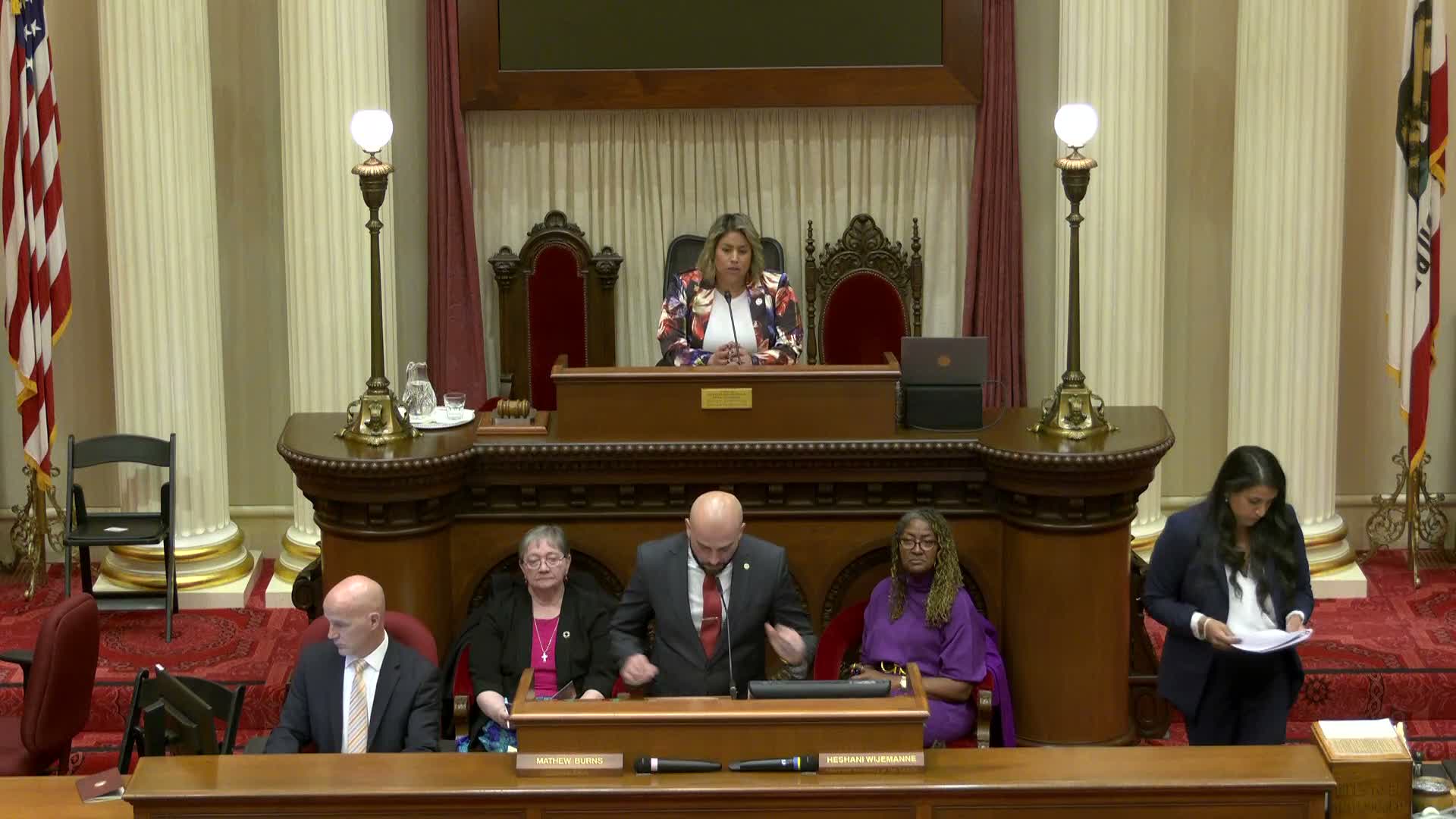
Majority Leader Gonzales moved to adopt the standing rules (except Senate Rule 12) for the extraordinary session. Floor debate during the "condition of the file" raised two clear positions: Senator Grove warned against giving a broad, open-ended authorization to sue the federal government and urged fiscal prudence, calling the measure a potential "blank check" to the Department of Justice; other members, including Senator Wiener, defended the need to protect Californians and pointed to prior litigation successes where the state prevailed and saved public resources.
After exchanges that emphasized both legal risk and fiscal constraints, the Senate adopted the motion to apply standing rules to the extraordinary session on a roll call (Ayes 29, Noes 9). The chamber then adopted joint rules specific to the extraordinary session by the same recorded margin. Proponents framed the special session as necessary to preserve state programs and enforce state law; opponents cautioned about escalating adversarial relations with the federal government and additional taxpayer costs.
Members will now proceed under the extraordinary-session rules to consider legislation directed by the governor's proclamation. The debate highlighted the tension between using state funds to defend and enforce state law and the fiscal implications of expanded litigation authority.