Get Full Government Meeting Transcripts, Videos, & Alerts Forever!
Get email alerts on the Tourism Contract topic
No spam. Unsubscribe anytime.
Carter County won't auto-renew tourism contract; commissioners offer one-year alternative after public outcry
Summary
After hours of public comment and commissioner debate, the county voted not to extend the Chamber-run three-year tourism contract automatically and directed staff to offer a one-year amended agreement requiring quarterly reporting and clearer performance benchmarks.
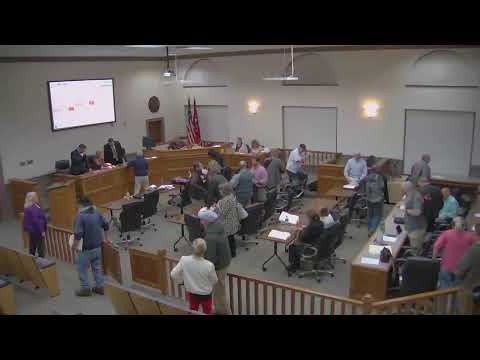
Carter County commissioners voted on Jan. 7 to stop the automatic three-year renewal of the county's tourism contract with the Elizabethton/Carter County Chamber of Commerce and instead instructed staff to draft a one-year amended agreement that would require quarterly reporting to the commission.
The move followed more than two hours of public comment from business owners, chamber leaders and residents who said canceling the contract without an immediate replacement would interrupt advertising, shutter the visitor center and take months to recover. "If we aren't funded beyond March, we would have to close our visitor center, shut down the tourcartercounty.com website, and stop distributing our brochures," Luke Freeman, director of tourism at the Chamber, told commissioners. "It will throw a wrench in the machine that's been running effectively since 2016." (Luke Freeman, director of tourism at the Chamber)
The budget committee had placed a motion on the floor that, as written, would prevent the contract from automatically renewing under its current three-year terms. During discussion, commissioners repeatedly described the vote as a choice between allowing the contract to roll forward under existing terms or giving the county time to seek alternatives and more oversight. After debate the commission voted to not renew the contract on its current auto-renew schedule.
Shortly after that vote, Commissioner Donnie Cable moved, and Nancy Brown seconded, an amended course: staff should offer the Chamber a one-year contract that would keep tourism services operating while the county evaluates options and secures clearer performance reporting. The commission approved sending that one-year proposal to the Chamber for its board's consideration and asked the county attorney to draft the document.
Chamber leaders and business owners had told the commission the program drives local lodging tax revenue and supports events and volunteer coordination during disasters. "We had 4,000 volunteers come through United Way; many of them connected through the Chamber," Joy McCrae, executive director of the Chamber, said in public comment. "We help people find lodging, mechanics, and emergency assistance. We are the welcome center for many visitors." (Joy McCrae, executive director, Chamber)
Commissioners who backed the budget committee's original motion said their aim was not to cut tourism funding but to be better stewards of public dollars: to require more transparent budgets, to consider competitive bids and to set clearer expectations in future contracts. County attorneys and staff advised the commission that the county must keep tourism funds within the scope of the private act and that any new arrangement still must be executed with a qualifying nonprofit or civic entity.
Next steps: county staff and the county attorney will draft the one-year offer and present it to the Chamber; if the Chamber accepts the one-year terms the commission expects to receive quarterly written reports documenting advertising spend, impressions, and local economic indicators. If the Chamber declines the one-year offer, commissioners signaled they will pursue a competitive process or other nonprofit partners to carry the tourism program.