Get Full Government Meeting Transcripts, Videos, & Alerts Forever!
Get email alerts on the Budget Fy26 topic
No spam. Unsubscribe anytime.
Stoughton superintendent recommends 3.8% FY26 budget; committee warned of possible staff reductions if state aid falls short
Summary
Superintendent Dr. Baieda recommended a school-based FY26 budget with a 3.8% overall increase and new transparency tools, but said roughly $1.06 million of adjustments could mean 14–30 FTE reductions unless additional Chapter 70/SOA funds arrive.
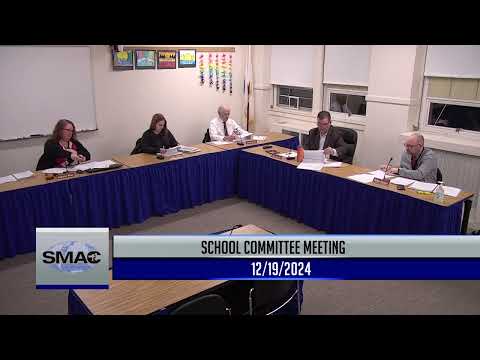
Stoughton — At a Dec. 19 special meeting, Superintendent Dr. Baieda presented the school department's recommended fiscal 2026 budget: a 3.8% overall increase packaged in a new school-based template designed to show spending and FTEs by building, and to improve transparency for parents and residents.
"We have put together a school committee budget that will go forward as a recommendation of a 3.8% increase," Dr. Baieda said, describing a cover page and line-by-line approach that allows users to see enrollment, staffing and spending per school. He said the format is intended to let principals manage site-level decisions and to make longer-term staffing and program choices easier to trace.
The superintendent and working-group members told the committee the recommendation reflects a trade-off. The line-level budget as drafted would reflect a 5.5% increase, but administration adjustments of about $1,060,000 would reduce that to 3.8% to meet the town's budget guidance. "I'm recommending that we change this for the purposes of meeting the goals that we said we were, which means that we will be cutting, I'll be taking from this approximately, approximately, a $1,060,000," Baieda said. He noted those reductions would be primarily in personnel unless the committee pursued other offsets.
Baieda gave the FY26 bottom-line total as $65,257,429 and described the kinds of offsets the district shows on the last page of the budget: circuit breaker special education funds, shelter-aid, IDEA preschool funds and anticipated retirement savings. He urged the committee to forward a budget that meets the Dec. 31 charter deadline while pursuing Chapter 70 Student Opportunity Act (SOA) allocations and other state sources in mid-January.
Committee members pressed the superintendent on enrollment trends and academic impacts. Baieda said the district commissioned NESDAC enrollment estimates and expects steady growth over the next decade — moving toward roughly 4,200 students from the current ~3,810 — which would increase staffing needs over time. He also warned that repeated cuts and higher K–3 class sizes would likely harm achievement: "Class size in K–1 is incredibly important," he said.
On potential staffing impacts, the administration described a range: the net FTE reduction needed to meet the 3.8% target could be a minimum of 14 positions and as many as about 30, depending on offsets and specific line-item choices. Baieda said the district has already absorbed reductions in prior years (noting about 17 part-time and full-time interventionist positions were not restored) and that some savings identified for FY26 are from positions previously supported by now-reducing shelter funds.
Several committee members urged clearer public-facing explanations to help residents understand why the committee might send a 3.8% budget forward and later seek to restore services if state money arrives. The superintendent repeated that final Chapter 70/SOA figures and House 1 allocations typically come in late January, after the town's Dec. 31 filing deadline, and recommended sending a deadline-compliant budget while keeping options open to restore items if additional revenue is secured.
The committee agreed to gather specific questions for the administration and to hold a longer follow-up meeting on Dec. 30 to review details before the charter deadline.
Next steps: The committee is scheduled to meet again on Dec. 30 for a deeper review of line items; town meeting will still vote on the bottom-line appropriation and could reallocate funds later if necessary.