
DHHS unveils multi‑year roadmap; commissioner reports improvement on ER boarding and flags staffing gaps
Get AI-powered insights, summaries, and transcripts
Subscribe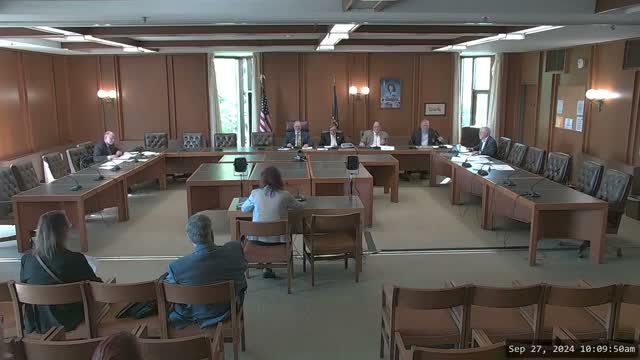
Summary
DHHS presented a public roadmap prioritizing workforce, thriving communities and customer service. Commissioner reported about a 50% reduction in emergency department boarding wait times since May 2023 and outlined follow‑ups on school clinics, juvenile facility census management and staffing shortages.
The Health, Human Services and Elderly Affairs Oversight Committee heard a presentation from the Department of Health and Human Services on a new multi‑year roadmap and several program updates.
At the meeting the department outlined three central commitments — “invest in people and culture,” “promote thriving communities” and “improve customer service” — and said the document will guide priorities during the upcoming legislative and budget seasons. “These circles represent the commitments,” the commissioner told the committee, describing initiatives that range from workforce retention and recruitment to Medicaid billing for school‑based services and environmental health work with other agencies.
On Mission 0, the department’s initiative to reduce emergency‑department boarding, the commissioner said the state is "definitely trending in the right direction" and reported that from May 2023 to May 2024 the department has seen about a 50% reduction in wait‑time days for patients held in EDs. The commissioner added that typical daily ED hold counts vary by weekday and that on average they are "probably less than 10," while some days spike higher.
Committee members pressed the department on staffing and caseloads. The commissioner said statute caps the number of permanent full‑time positions at 3,000 and that the department does not have that many filled; in the transcript she said, "I only have a little over 27 100 filled," a phrase the committee noted was unclear in the record. On casework, the commissioner described family‑service and child protective assessment caseloads as generally within policy limits based on the sample workers she checked but acknowledged vacancies and turnover remain problems.
Representative Edwards pressed for a future oversight presentation on the school‑based clinics program, saying some community members believe the program has experienced "scope creep" and that parental‑consent and notice rules may have been affected by federal directives. The commissioner agreed to bring the right staff to a future meeting to lay out the program’s history, financing and parental‑consent protocols.
On juvenile justice, the commissioner said transformation efforts reduced facility populations by about half in two years; the department has averaged roughly 16 youths over the last two years and is targeting a census of 12 with the ability to go up to 18 if needed while staff and courts develop contingency plans.
The committee did not take formal votes on the roadmap; members asked for follow‑up briefings and data (including benchmarking and clearer staff‑count reporting) at future oversight meetings.
The committee will reconvene in October with several related items on the agenda.