Get Full Government Meeting Transcripts, Videos, & Alerts Forever!
Get email alerts on the Senior Services topic
No spam. Unsubscribe anytime.
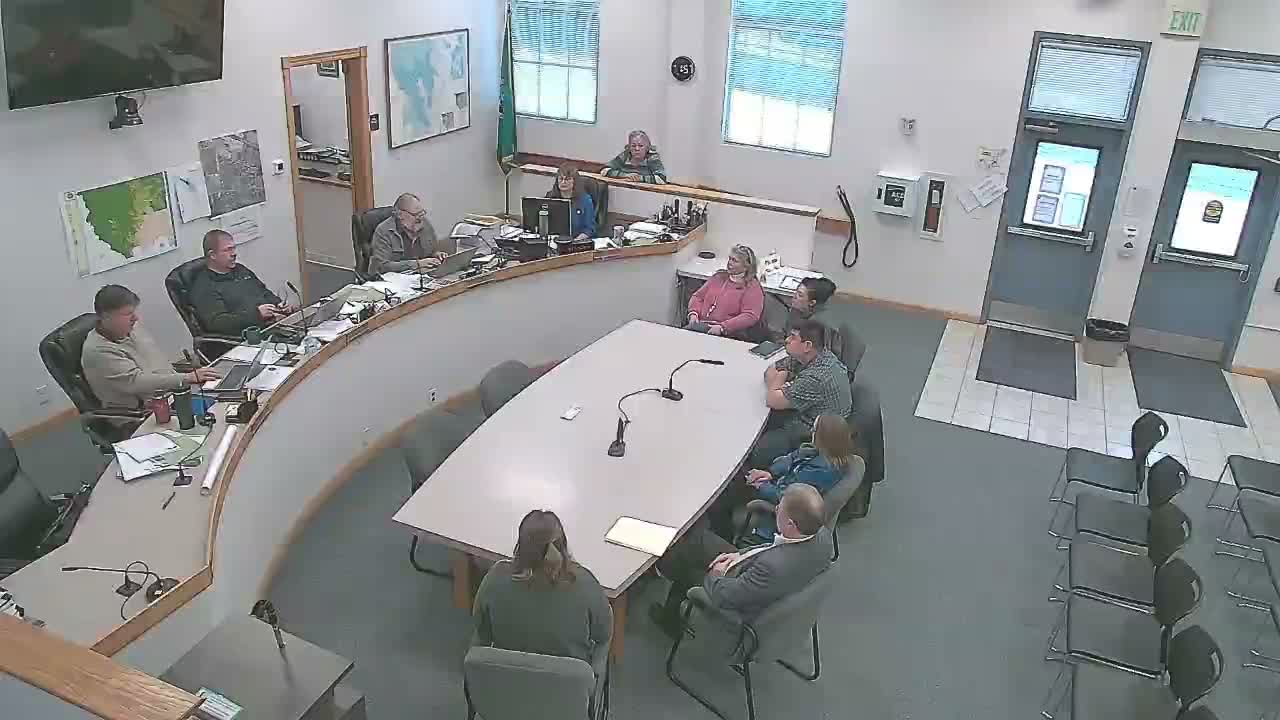
Commissioners meet nutrition and transit partners about home-delivered meals and program funding
Summary
OCTN and Aging & Adult Care asked the county to consider a $15,000 increase to support home-delivered meals; staff described delivery models (bus-based in outlying areas, car delivery in towns), waitlists and federal grant constraints on using commodity food for congregate vs. home-delivered meals.
Representatives from Okanogan County Transportation & Nutrition (OCTN), Community Action and the county's Aging & Adult Care staff briefed commissioners on senior-nutrition operations and a request for an additional $15,000 to support home-delivered meals next year. OCTN described delivery arrangements: in outlying communities the agency uses buses to deliver meals; in-town deliveries have relied on cars or staff, and volunteer delivery is more common in neighboring counties.
Aging & Adult Care explained that commodity-food grants provide substantial food product but typically do not pay operating costs such as staffing, packaging or transportation; programs were supplemented by ARPA funds in recent years, and those temporary funds have ended. OCTN said it served about 214 Okanogan County residents with prepared home-delivered meals (end of September snapshot) and maintains a waitlist of 30–40 people; approximately 290 people are on the broader service list referenced in meeting materials.
Commissioners encouraged coordination and recommended the partners present a community-by-community breakdown of meals delivered and client counts so county funding discussions can be more targeted. They also suggested engaging the other counties that partner on the program to consider matching or supplemental contributions.