Get Full Government Meeting Transcripts, Videos, & Alerts Forever!
Get email alerts on the Coroner Prosecutor Conflict topic
No spam. Unsubscribe anytime.
Clallam County weighs options after attorney general opinion forces prosecutor to resign coroner duties
Summary
An August attorney general opinion and a change in state statute mean Clallam County’s elected prosecutor can no longer serve as coroner; county counsel recommended appointing a district court judge temporarily, with charter amendment or litigation as alternatives. Commissioners expect to act before year‑end.
Clallam County officials on Dec. 16 laid out a fast‑moving plan to fill a coroner vacancy after a state law change and an attorney general opinion concluded the same person cannot serve as both prosecutor and coroner.
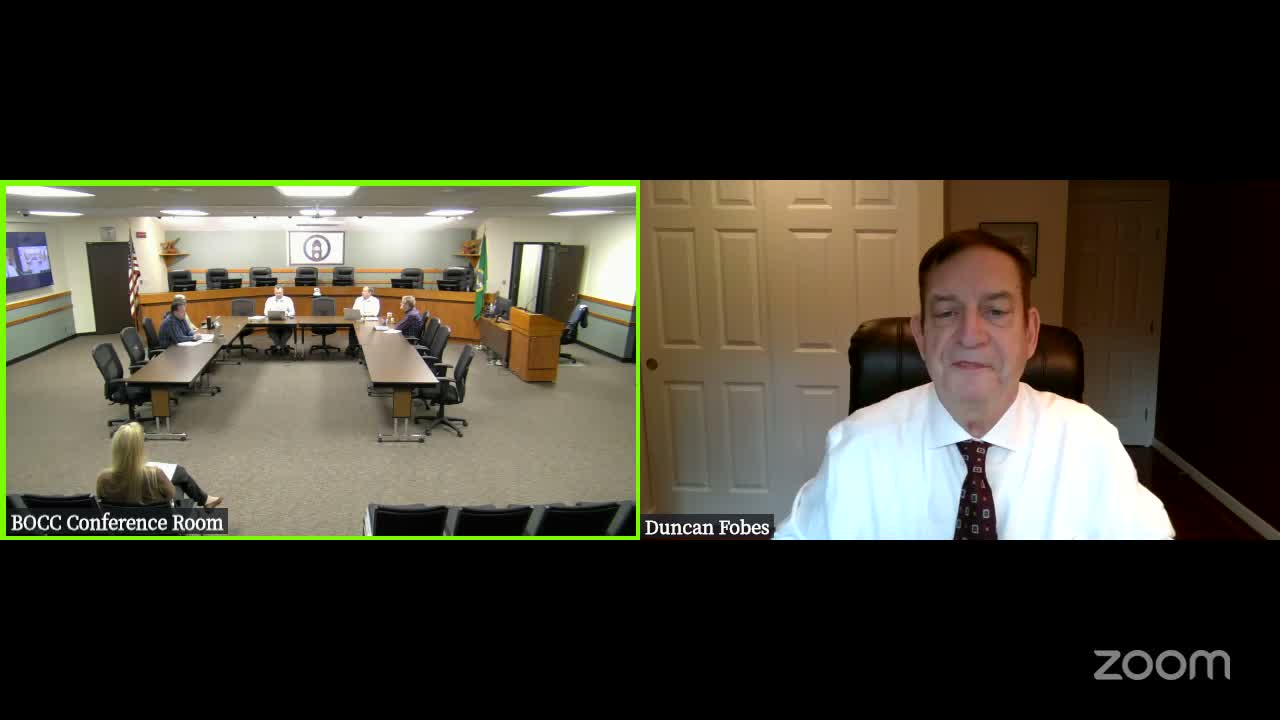
Outside counsel Duncan Folkes, of the Patterson Buchanan firm in Seattle, told commissioners the legislature amended statutes that take effect Jan. 1, 2025, and that an August attorney general opinion interprets the amendment to bar a prosecutor from concurrently serving as coroner. According to Folkes, Prosecutor Mark Nichols submitted a resignation as coroner effective Dec. 31, 2024, leaving the county without the official who signs death certificates and performs other coroner duties.
"There is a statutory option for filling this vacancy," Folkes said, recommending that district court judges be asked to serve temporarily as coroner while the county develops a longer‑term approach. He said district court judges can assume coroner duties in a vacancy and that existing, trained county death investigators would continue field work while a judge handles paperwork and certifications.
Folkes outlined three pathways: appoint a district court judge to serve temporarily (the first recommended option), appoint an interim coroner under county charter section 3.50 and then amend the charter so an elected coroner can run at the next election, or file litigation seeking a court order permitting the prosecutor to continue as coroner (the least preferred option because it is costly and uncertain).
Commissioners asked whether any of those options could be completed in the last days of the year. Folkes said the board could act on Dec. 31 and that staff had already briefed Clallam County Judges Neupert and Hanafi about the temporary judge option. He added that charter amendment via the Charter Review Commission is likely to take longer and would be pursued in 2025.
The county attorney and administrator emphasized that the vacancy is operationally urgent because coroners sign death certificates used for insurance, benefits and court matters, and because trained death investigators in the county rely on an authorized official to finalize paperwork.
Next steps the board identified include seeking formal feedback from the two district court judges on whether they will accept a temporary appointment, preparing any interim appointment documentation for possible action at the commissioners’ Dec. 31 meeting, and referring charter amendments and broader legal risk analysis to the Charter Review Commission and outside counsel as needed.
No formal vote on a filling method was recorded at the work session; commissioners directed staff to continue negotiations with judges and to prepare options and any necessary documents for the regular agenda at the end of December.