Lifetime Citizen Portal Access — AI Briefings, Alerts & Unlimited Follows
Committee hears advocates for allowing special‑needs scholarships to be combined with EdChoice
Loading...
Summary
Supporters of SB 311 told the Senate Education Committee that students receiving John Peterson or autism scholarships should also be eligible for EdChoice or Cleveland scholarships so families do not have to choose between services and tuition; testimony emphasized fairness and described program mechanics under discussion.
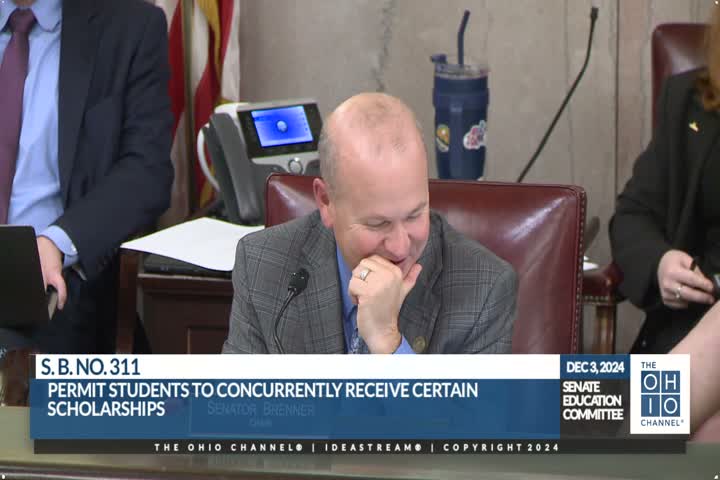
At a second hearing on Senate Bill 311, advocates described how current rules force some families of children with disabilities to choose between intervention services funded by the John Peterson or autism scholarships and tuition support available through EdChoice or Cleveland scholarships.
Tom Radican of the Catholic Conference of Ohio testified that the current single‑scholarship rule forces families to decide between services and tuition and said the law should allow eligible students to receive both tuition assistance and special‑needs services. "A family and a child with documented special needs should not have to decide how much of a special needs scholarship they should have to divert from services to tuition," Radican said.
Multiple private school leaders and parents said the John Peterson scholarship often covers expensive intervention services (speech, occupational therapy, aides or ABA‑style supports) and leaves little or nothing for tuition, which is why allowing an EdChoice or Cleveland scholarship on top of Peterson funding would provide equitable access for students educated in private settings. Committee members probed whether the combined amounts would exceed the total cost of services and tuition and whether category‑1 Peterson recipients (who by statute cannot use their Peterson scholarship for tuition) would be treated differently. Staff pointed to a statutory limit in draft language that a student's combined scholarships "shall not exceed the total amount paid for services or tuition and fees provided to a student under those scholarships."
No committee vote was taken; the hearing closed with additional written testimony and committee members indicating the bill merits further study on fiscal and implementation details.