Lifetime Citizen Portal Access — AI Briefings, Alerts & Unlimited Follows
Parents and private‑school leaders urge non‑chartered ESAs as committee hears SB 304
Loading...
Summary
At a second hearing on SB 304, proponents including parents, non‑chartered school leaders and school‑choice advocates testified that non‑chartered educational savings accounts would expand access and relieve tuition burdens; lawmakers questioned funding sources, accountability and differences from EdChoice.
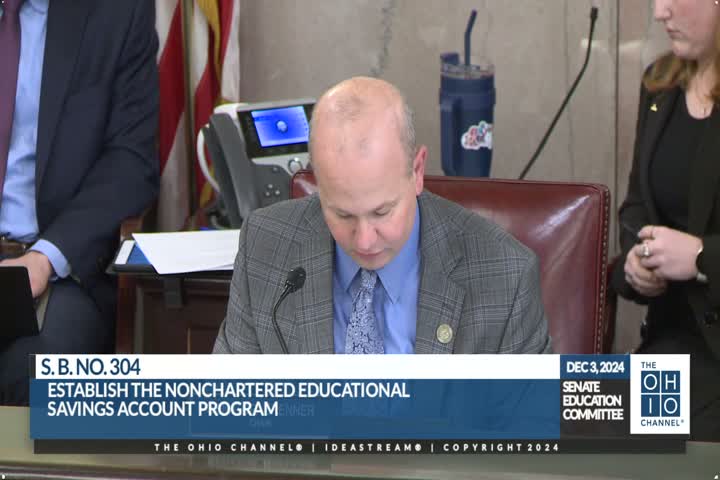
The Senate Education Committee heard multiple proponent testimonies in support of Senate Bill 304, which would establish educational savings accounts (ESAs) for families whose children attend non‑chartered nonpublic schools.
Robin House opened proponent testimony describing how her family moved their children to a non‑chartered school and the financial strain that creates. "Educational dollars should fund students, not systems," she testified, arguing ESAs would give parents more choice.
Janine King of Columbus Classical Academy and other school representatives described religiously affiliated or classical schools that have declined state charters and said those families need comparable access to state education funding. Troy McIntosh of the Ohio Christian Education Network and other witnesses argued ESAs would not necessarily harm public finances and asserted parental choice provides accountability. McIntosh noted recent state investments in career technical education and said documentation can be improved to count work‑based learning experiences toward readiness measures.
Committee members pressed witnesses on where ESA funds would come from and how accountability would be ensured given non‑chartered schools do not report data the same way as public schools. Witnesses generally said the money would follow the student and that financial and market pressures would enforce accountability, while acknowledging details of eligibility and funding tiers would need to be resolved in drafting.
No committee vote was taken; the hearing concluded with additional written testimony to be reviewed by members.