Get Full Government Meeting Transcripts, Videos, & Alerts Forever!
Get email alerts on the School Accountability topic
No spam. Unsubscribe anytime.
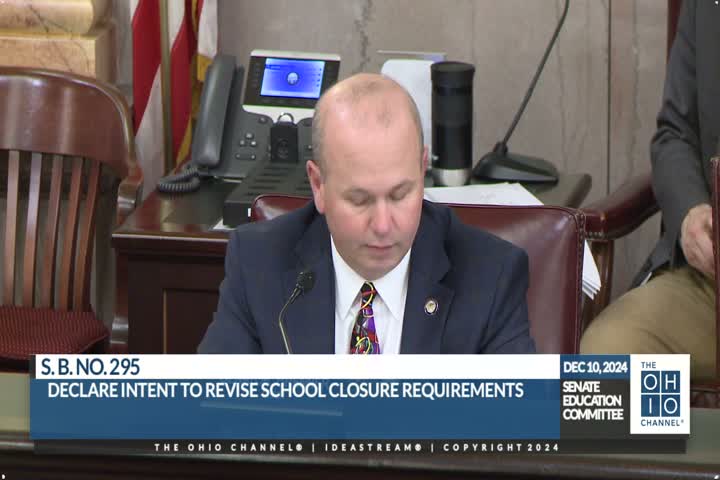
Advocates and educators oppose changes to school‑closure rules in substitute for SB 295
Summary
Witnesses including the Ohio Federation of Teachers and Ohio Education Association told the Senate Education Committee that substitute SB 295 would use bottom‑percent thresholds to force closures or restructuring, strip local control and weaken supports for underperforming schools, urging alternatives such as community learning centers and fuller implementation of fair school funding.
A substitute to Senate Bill 295 that changes how failing schools are identified and which alternatives they may use drew sustained opposition from teachers' unions and education groups during the committee's third hearing.
Melissa Cropper, representing the Ohio Federation of Teachers, said SB 295 "will mandate the closure or restructuring of schools every year" and criticized a compressed public vetting timeline. Scott DeMauro of the Ohio Education Association testified the substitute pivots to punitive measures and would destabilize communities by forcing closures or wholesale staff replacement rather than addressing root causes such as poverty and staffing shortages. "Instead of offering significant support, SB 295 proposes significant punishments," DeMauro said.
Chad Aldis of the Thomas B. Fordham Institute said he supported accountability but opposed the current substitute because it could weaken charter accountability and allow schools to restart the clock on performance strikes. He recommended strengthening sponsor evaluations and limiting restructuring opportunities for chronically underperforming charters.
Sponsors and some senators argued the substitute preserves options intended to improve persistently low‑performing schools, while opponents warned the measure relies too heavily on test scores and lacks supports such as wraparound services and fully implemented fair funding. Committee discussion highlighted tradeoffs between state intervention and local autonomy.
The committee accepted the substitute language in committee procedure and proceeded to other agenda items; many witnesses asked lawmakers to refine accountability measures and prioritize supports that address the social determinants of learning.